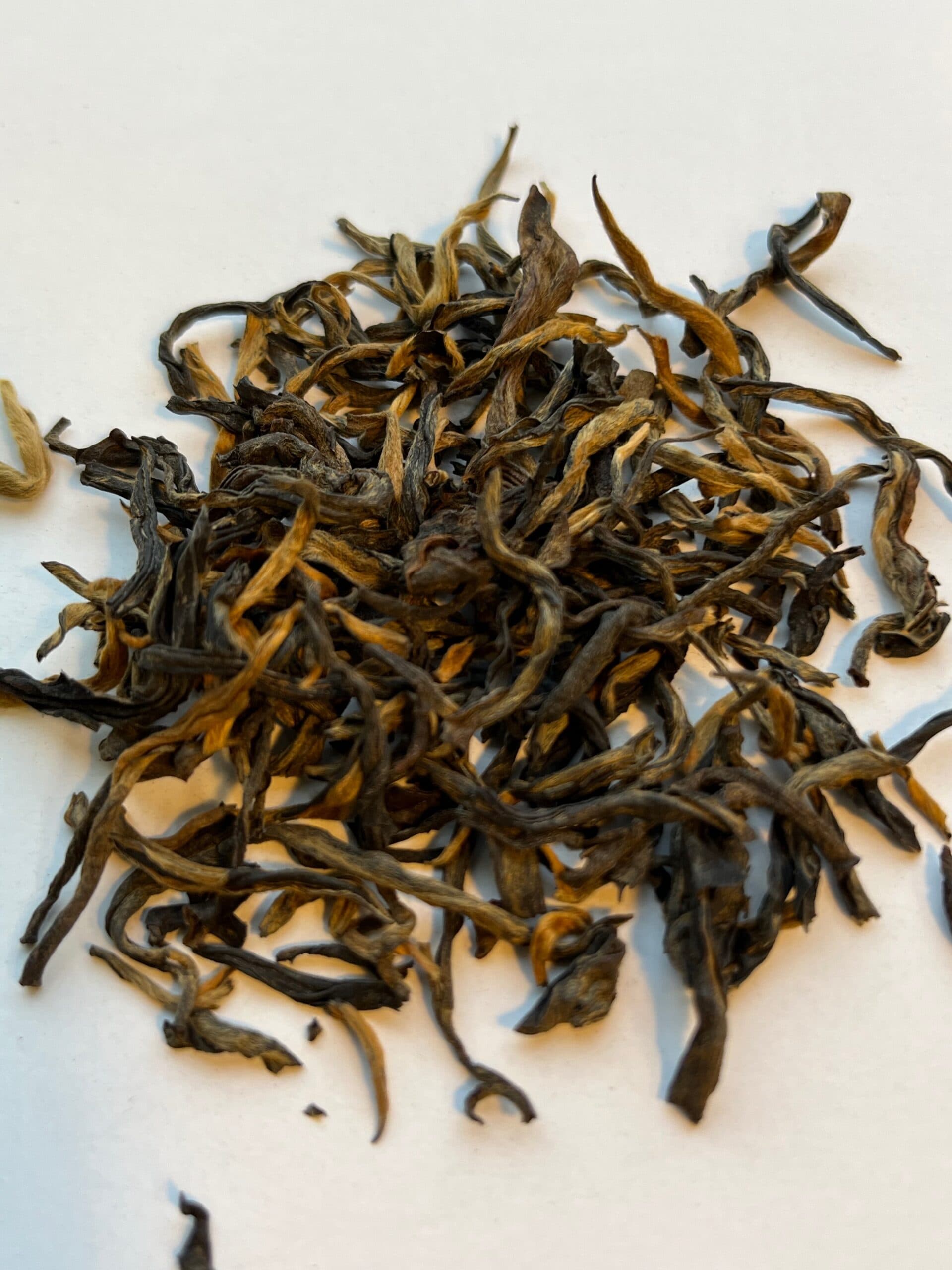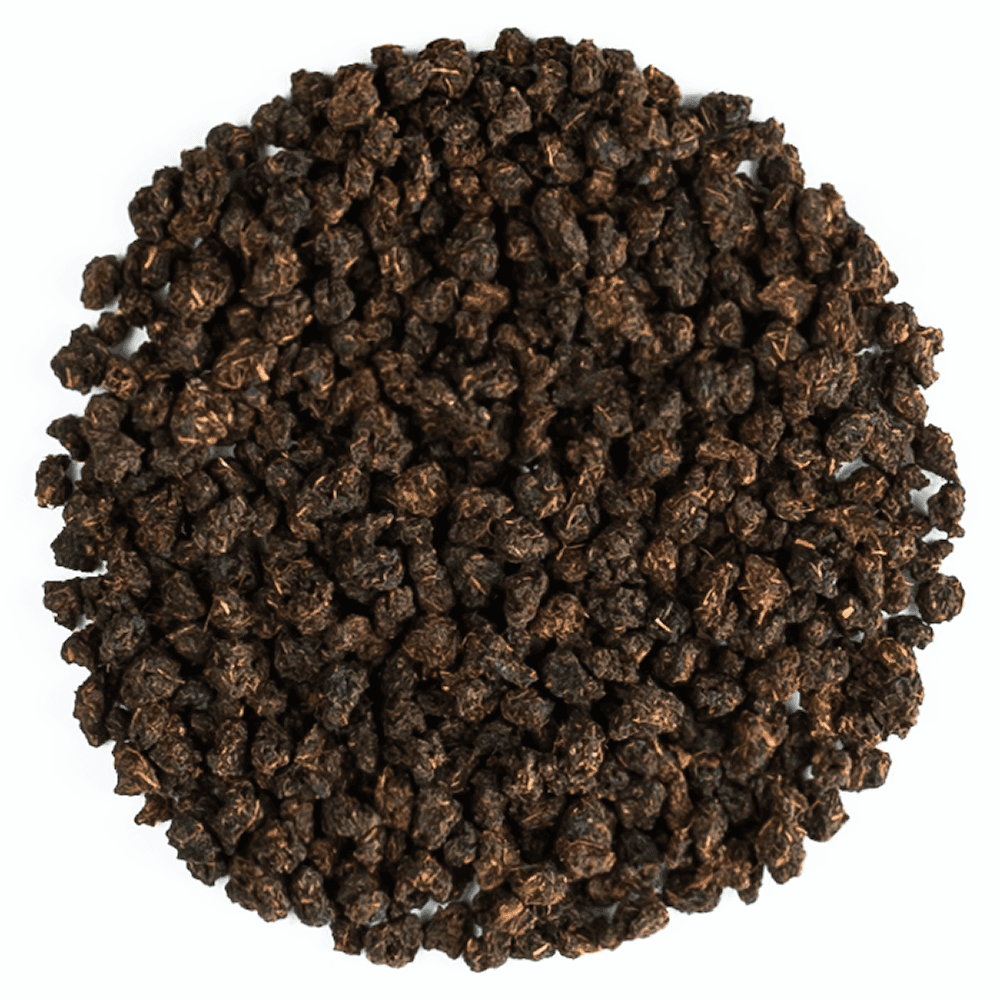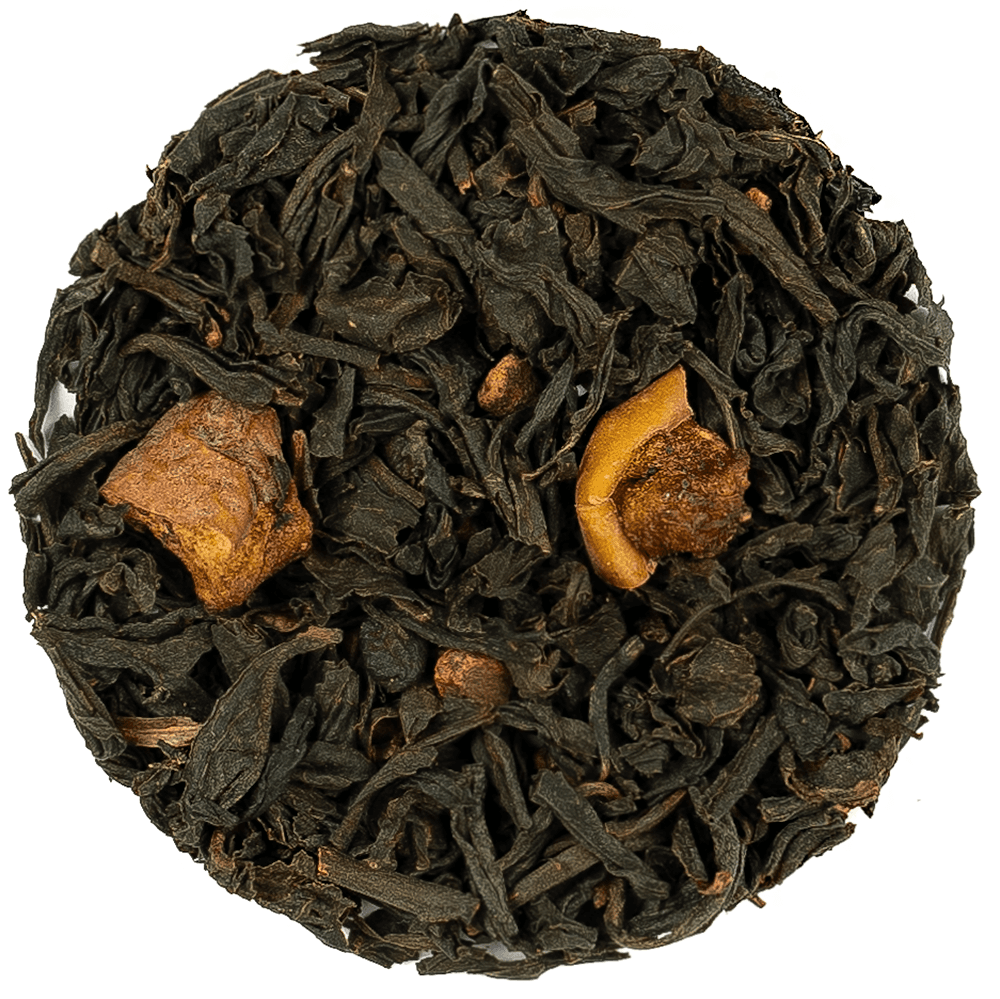
Ning Hong takes its name from the Ninggang district of Jiangxi province, where this black tea is made — "Hong" for the red liquor that marks Chinese black teas, "Jing Hao" for the golden downy buds picked into the leaf. The tea's roots go back to the late Ming Dynasty, when producers in the region worked out how to fully oxidise leaves, effectively giving rise to black tea as a category. By the 19th century it had found buyers as far as Russia, on the strength of its quality. The production method has stayed within the region for generations, kept close and largely unchanged, and Jiangxi's climate and soil are credited with giving the leaf its particular character.
In the cup it runs full-bodied and malty, gently sweet rather than sharp, with a robust, layered aroma of roasted nuts. The liquor comes out a bright gold-red. Teatico's tasting notes echo this: roasted nuts, malt, date, and a coffee-like thickness sit alongside the tea's nutty, roasted core.
Black tea generally carries 45-90mg of caffeine a cup, and Ning Hong has long been drunk in that tradition — valued for a steady lift without the jitters some get from coffee, and for tannins that some find settling after a meal. As with any black tea, that's a matter of traditional use rather than established fact, best enjoyed for the flavour first.
Brew it with leaves given room to unfurl: about 2-3 grams per 200ml of water, heated to somewhere in the 90-95°C range rather than a full boil, which can scorch the buds and flatten the taste. Steep for three to five minutes — closer to three for a lighter cup, the full five if you want more strength — then strain it out so the leaves don't keep working after you've poured. Serve it while it's still warm, when the aroma is most present.