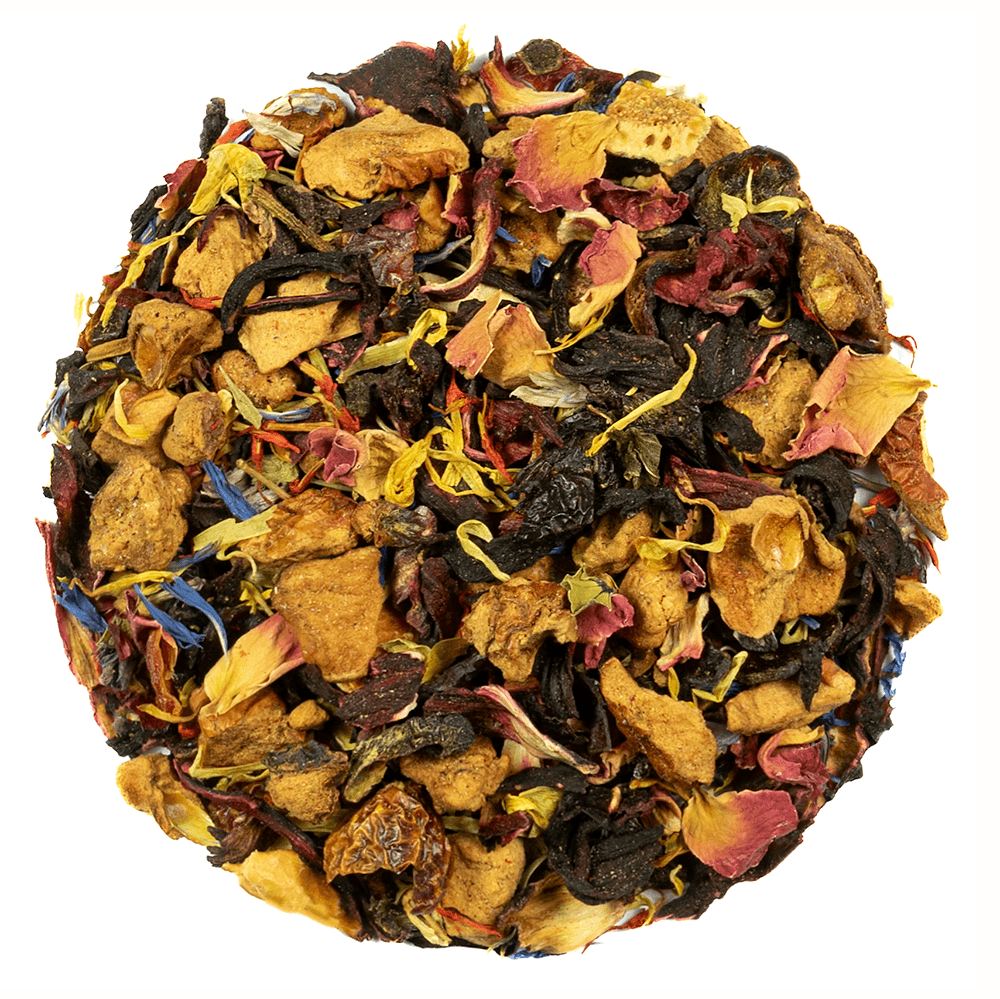
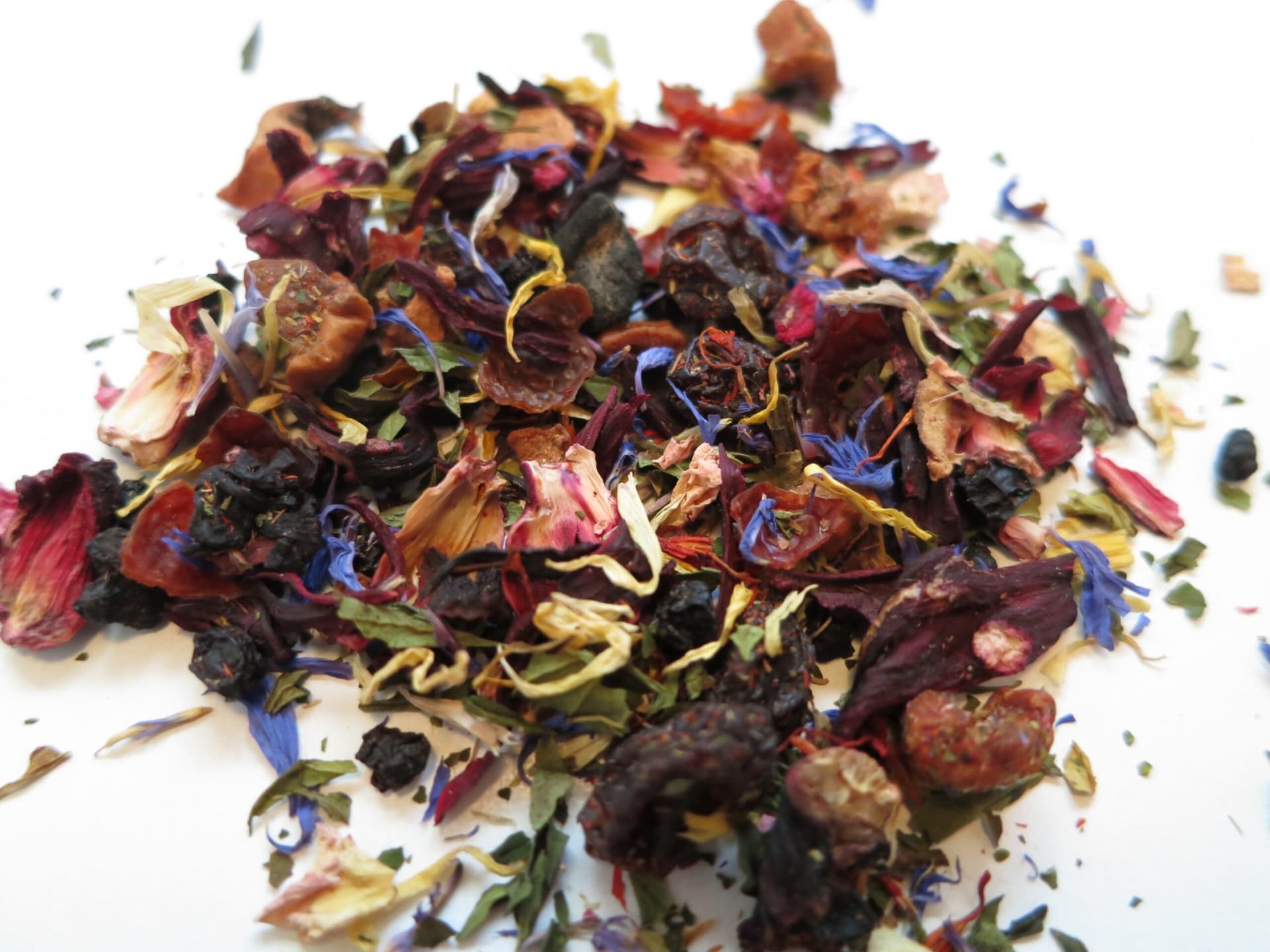
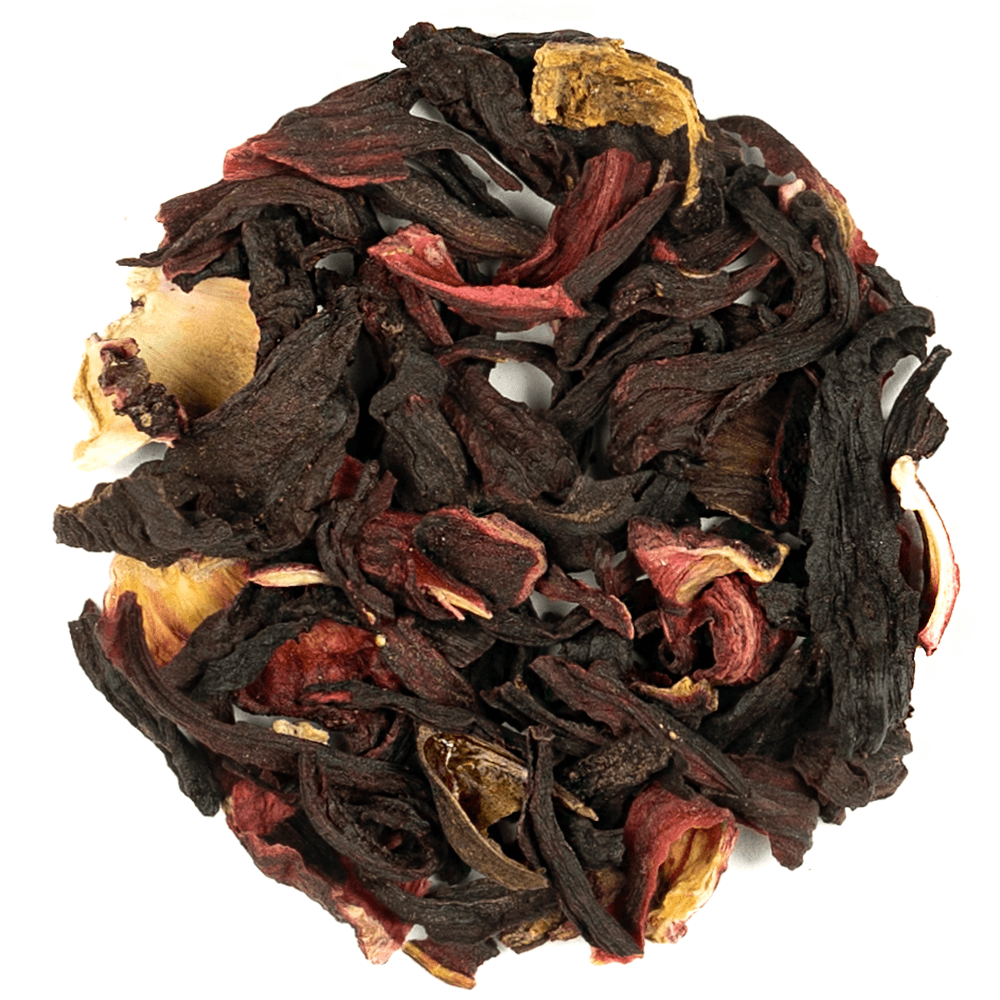
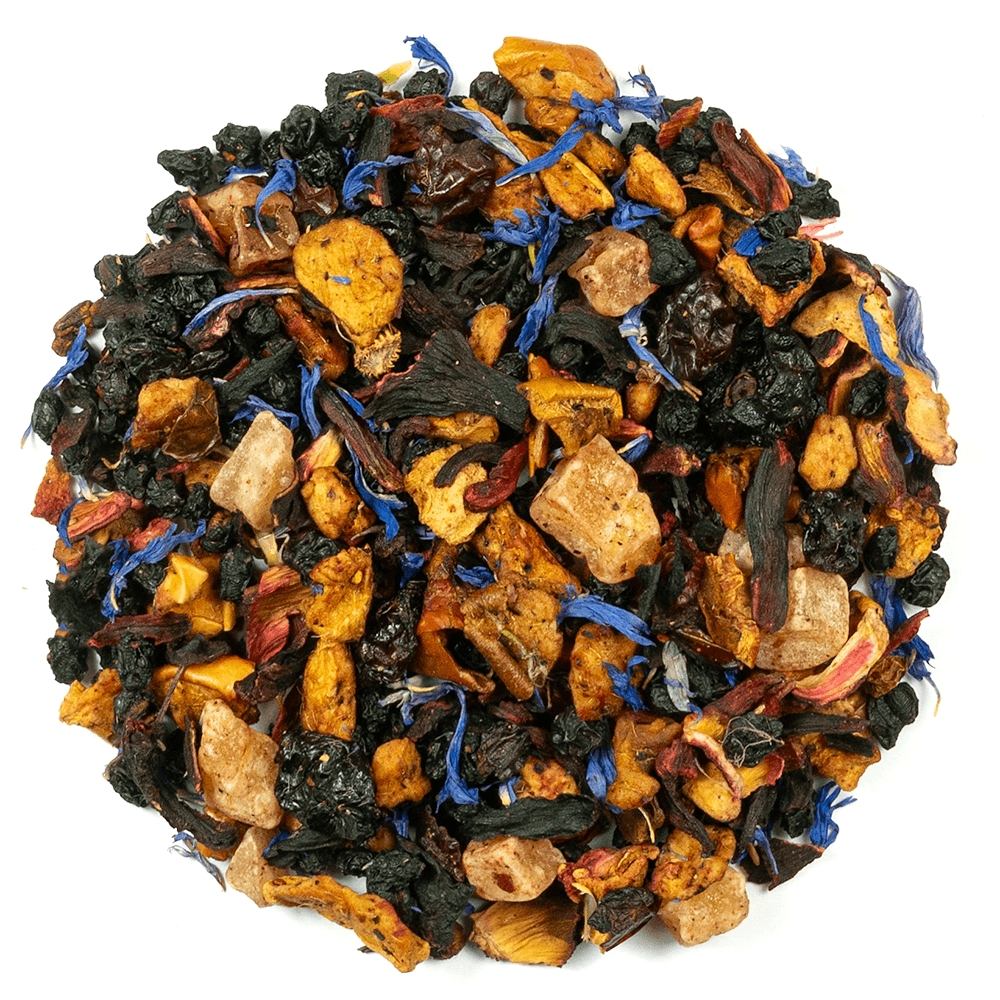
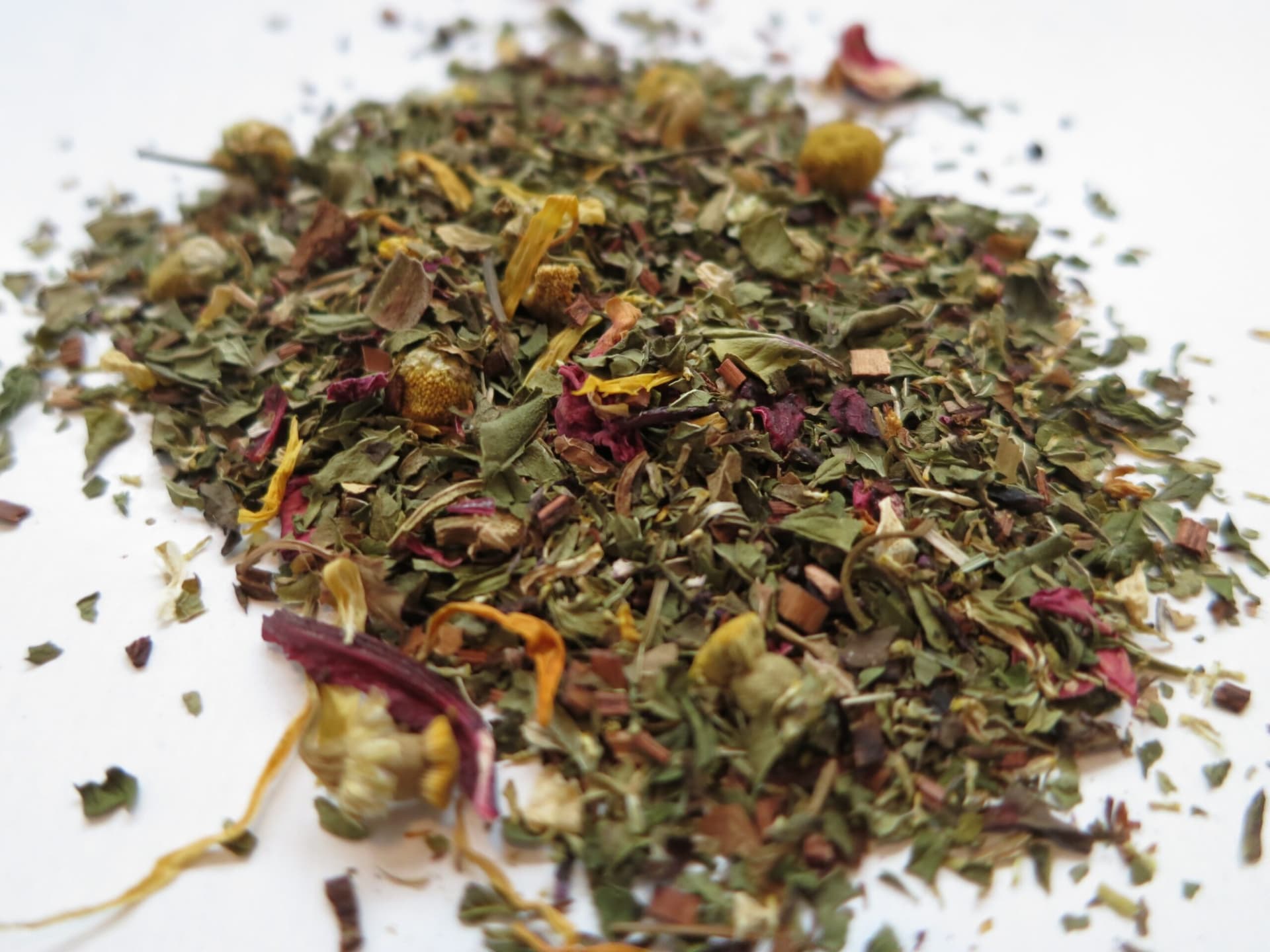
Hibiscus gives this one its backbone: a tart, almost cranberry-like edge that keeps the cup from tipping into candy territory even with strawberry folded in for sweetness. The liquor pours a deep red, dark enough to look almost like a fruit cordial in the cup, and the taste follows through on that promise — fruity and layered, with the tartness lingering pleasantly after each sip. Alongside strawberry and hibiscus you'll pick up notes of orange, peach, tropical fruit, and something faintly vegetal underneath, which is typical of hibiscus-based blends and keeps the fruit from feeling one-note.
Hibiscus itself is a huge genus — something like three hundred species in the mallow family — grown across Africa, Europe, and North America, and it adapts equally well to tropical, subtropical, and temperate conditions, or even a pot on a windowsill. The flowers themselves range from white and pink through red, orange, peach, yellow, and purple, and the plant collects names wherever it travels: Rosella in Australia and Indonesia, Sorrel in the Caribbean, Karkade in Egypt and Sudan, Gudhal in India. Different names, same drink at the core of it.
Its history stretches back further than most herbal teas people reach for casually. Egyptian Pharaohs drank it along the Nile as a way to cope with desert heat, and from there it moved through India, China, Mauritius, Hawaii, Fiji, and Madagascar before reaching Europe in the 18th century and the United States in the 19th. That long trade history is part of why hibiscus tea remains one of the most widely drunk herbal teas anywhere, strawberry version or otherwise.
On the health side, hibiscus has long been drunk in the belief that it supports healthy blood pressure, and some traditions also turn to it for menstrual discomfort or as a metabolism aid — worth treating as traditional use rather than anything more.
Brew it with freshly boiled water and give it a long steep, ten minutes, to let the tartness fully develop. It doesn't need milk, sweetener, or dressing up — drink it as it comes and let the fruit and hibiscus do the work.