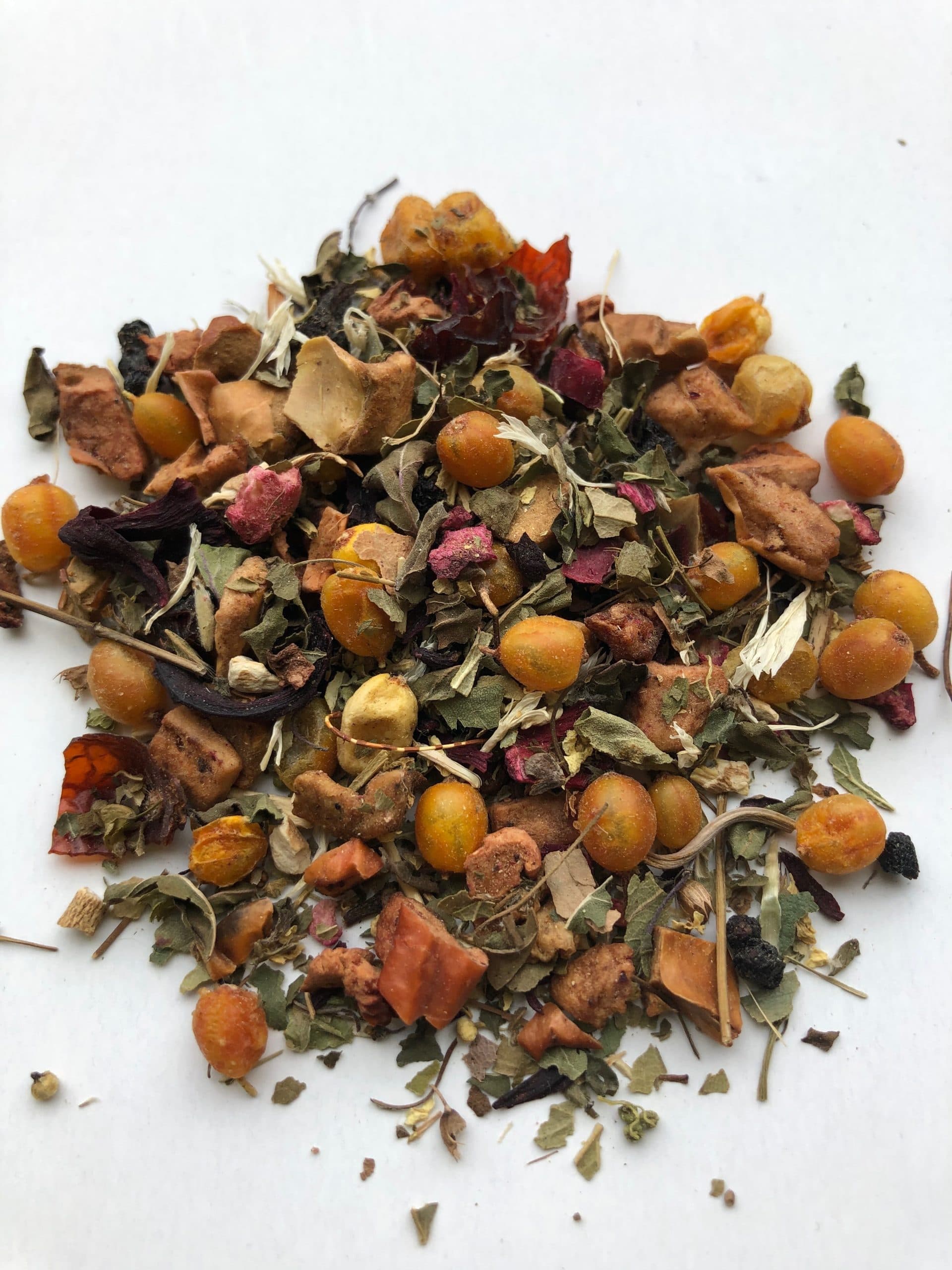
Sea buckthorn's small orange berries carry an outsized reputation. In this infusion they come through bright and tart, with an opening burst of citrus that drinkers often compare to orange or lemon, sometimes with a passionfruit edge. As the cup develops, a gentle sweetness settles in behind the sharpness, and some drinkers pick up hints of mango or pineapple. Brewed longer, or with crushed berries, the tartness turns more pronounced and puckering, closer to hibiscus or cranberry. The body is light to medium, the finish clean and crisp, and the aroma carries the same zesty citrus with a faint herbal edge underneath.
The plant itself grows in harsh coastal and mountain climates across Europe and Asia, including the shores of the UK, Scandinavia, Russia, and the Himalayas, and its berries are prized for a dense concentration of vitamin C and other nutrients. Its Latin name, Hippophae rhamnoides, translates roughly to "shiny horse" — a nod to the old Greek practice of feeding the plant to horses for a glossier coat. Tibetan, Mongolian, and Russian herbal traditions have long used sea buckthorn, where it was believed to support digestion and vitality, though those are traditional uses rather than proven effects. The tea itself is naturally caffeine-free.
To brew it, use one to two teaspoons of dried berries per 250ml of water just off the boil, around 95°C, and steep for five to ten minutes depending on how robust you want the cup — longer steeping brings out more tang. Strain out the berries before drinking. A little honey, lemon, or another sweetener balances the natural tartness well, and the tea holds up equally hot or poured over ice. Crushing the berries before steeping intensifies the flavour, and a slice of ginger or a cinnamon stick added during steeping gives it a warmer, spicier character.