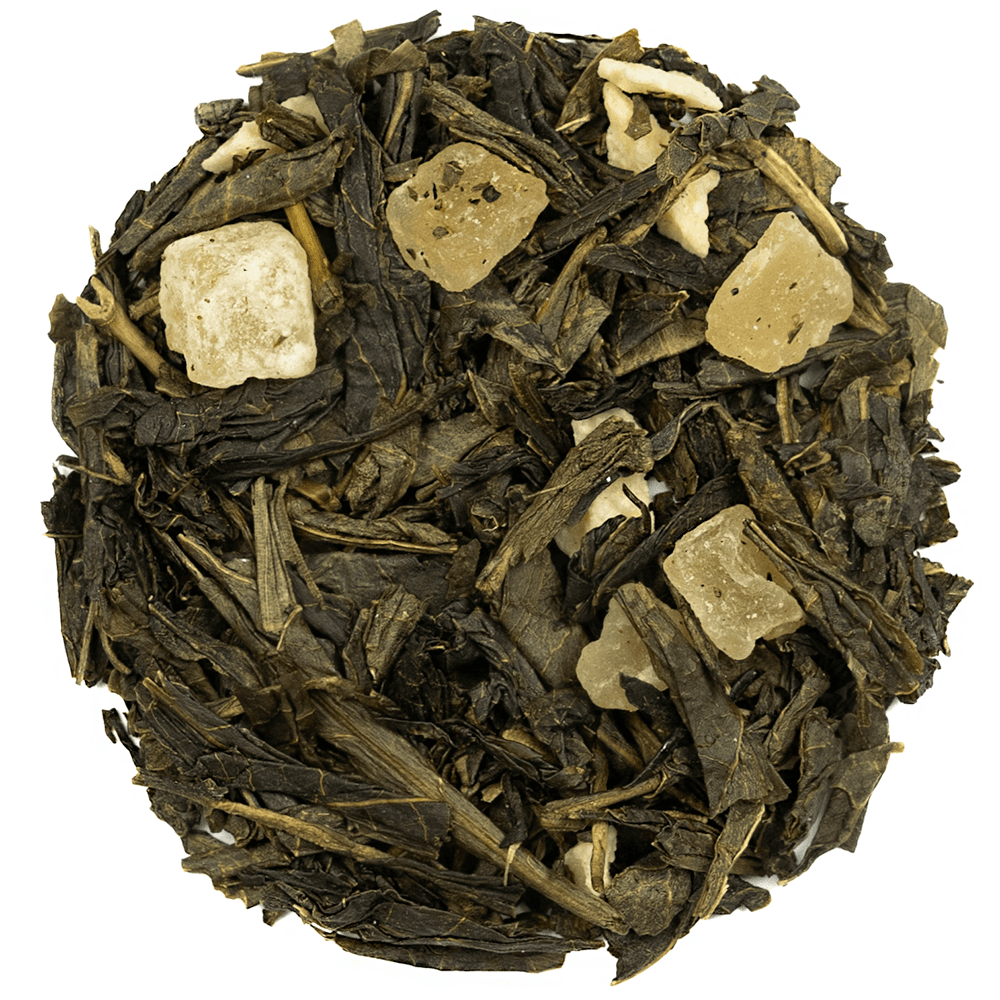
Green tea drinkers often skip decaf because the stripped-out caffeine tends to take the character with it. This one holds onto the parts that matter: a brisk, smooth cup with vegetal and grassy depth, a floral lift, and a bright edge of lemon on the finish.
It starts life as ordinary Camellia sinensis, then goes through CO2 decaffeination — carbon dioxide under high pressure binds to caffeine molecules and pulls them out while leaving the essential oils and flavour compounds largely intact. That's the reason a decaf green tea can still taste like green tea rather than a faded copy of one. Antioxidant compounds such as catechins and polyphenols are mostly retained through the process too, and green tea has long been drunk for its association with heart health and general wellbeing, though a decaffeinated version won't offer the alertness lift some people brew green tea for in the first place.
Brew it gently. Water around 80°C is right — a full boil will scorch the leaf and pull out bitterness instead of the sweetness underneath. Give it about two and a half minutes to steep, using roughly a teaspoon of leaf per cup, and pull the leaves out promptly rather than letting them sit. Filtered water helps here more than with heartier teas, since there's less caffeine and tannin to mask off-flavours from tap water. A pre-warmed pot keeps the temperature steady through the steep, and a slice of lemon afterward plays well with the tea's own citrus notes rather than fighting them. Because the character is light and the margin for over-extraction is narrow, it rewards a bit more attention than a robust black tea would — but for anyone who wants the ritual and flavour of green tea in the evening, or simply drinks more cups than their caffeine tolerance allows, it's a way to keep both.