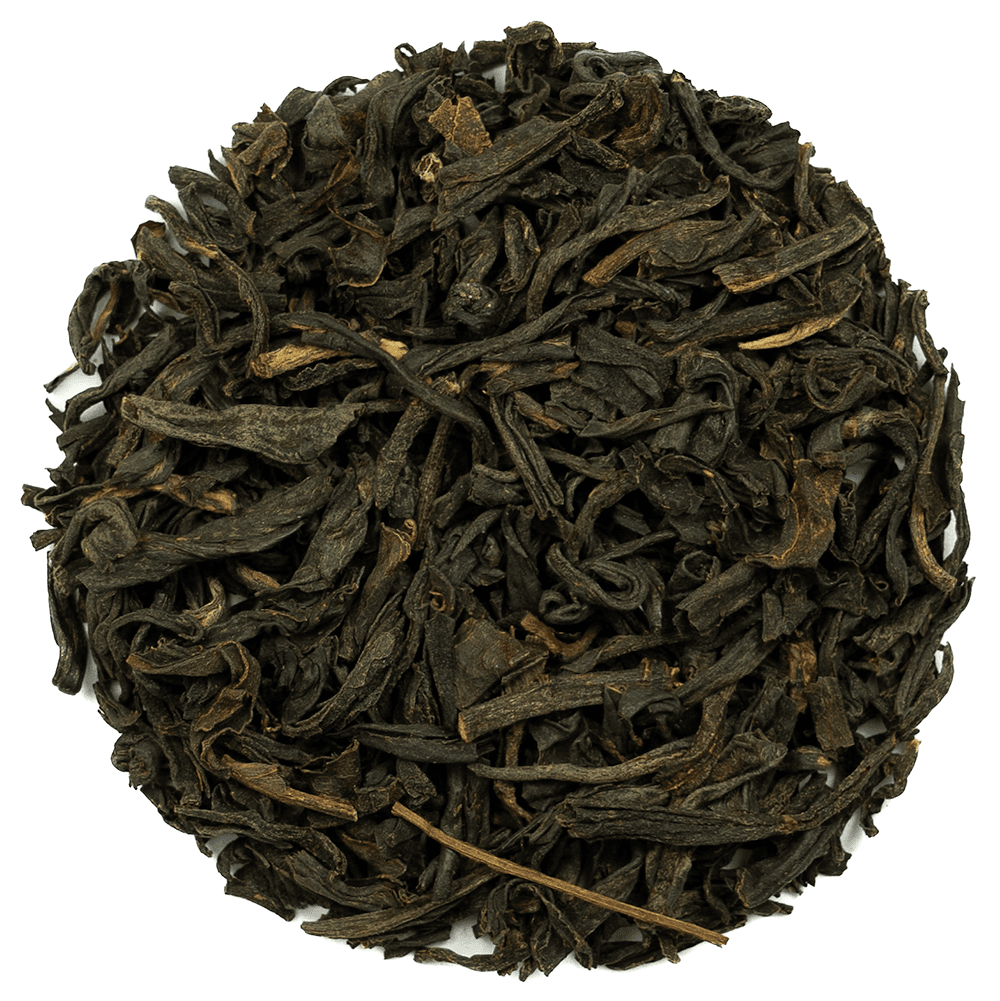
Uva province tea, from Sri Lanka's high country, built for a hearty morning brew rather than a delicate afternoon one. Aislaby Estate sits at 4,200 feet in the Malwatte valley, on 326 hectares first planted in 1927, and leaf quality peaks during the Southwest monsoon between July and September, when the region's climate does the most for flavour. What ends up in the cup is a coppery, dark liquor with a strong, almost spicy character: lemon and orange alongside honey, milk and spice notes, with a coffee-like thickness that traditionalists associate with a proper Ceylonese cup.
This is graded BOP, Broken Orange Pekoe, meaning the leaves are broken into smaller pieces rather than left whole. That processing generally gives a more robust cup than a whole-leaf FOP grade, and it accounts for much of the strength here. Caffeine runs around 45mg per serving, in keeping with the tea's overall intensity. The Kent and Sussex Tea and Coffee Company packs it fresh to order at its Pluckley factory in the Kent countryside.
Ceylon tea itself dates to the 19th century, when the Scotsman James Taylor turned to commercial tea planting after the region's coffee crops failed, and tea quickly became central to the local economy. The country renamed itself Sri Lanka in 1972 but kept "Ceylon" as the name for its tea.
Brew with freshly boiled water and let it steep for three to five minutes. It takes milk, sugar, honey or lemon well, or can be served black, and its body holds up to whichever you choose. Some research points to antioxidant compounds in black tea such as theaflavins and thearubigins, and it has long been drunk with the belief that these support general health, though that is a traditional association rather than a guarantee.