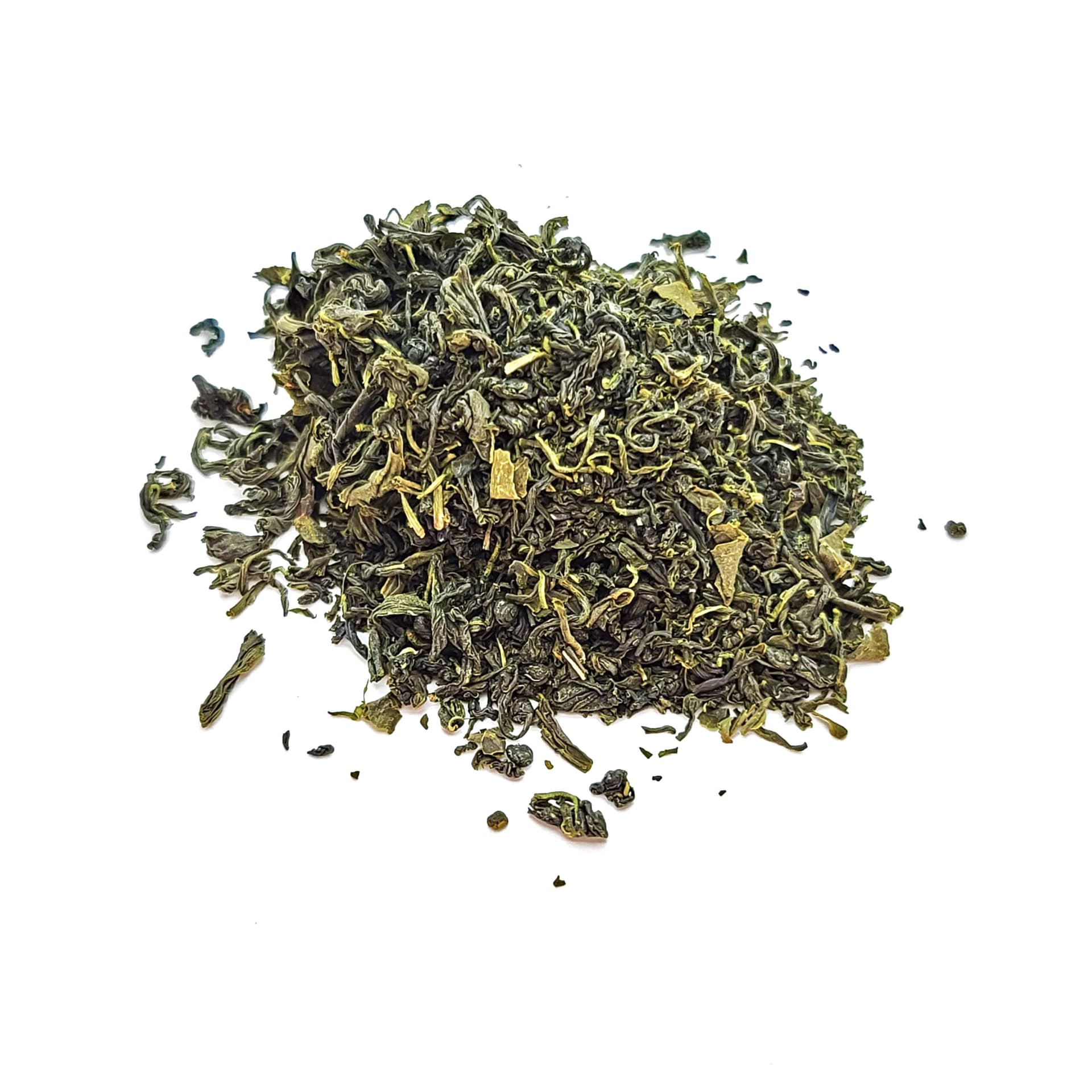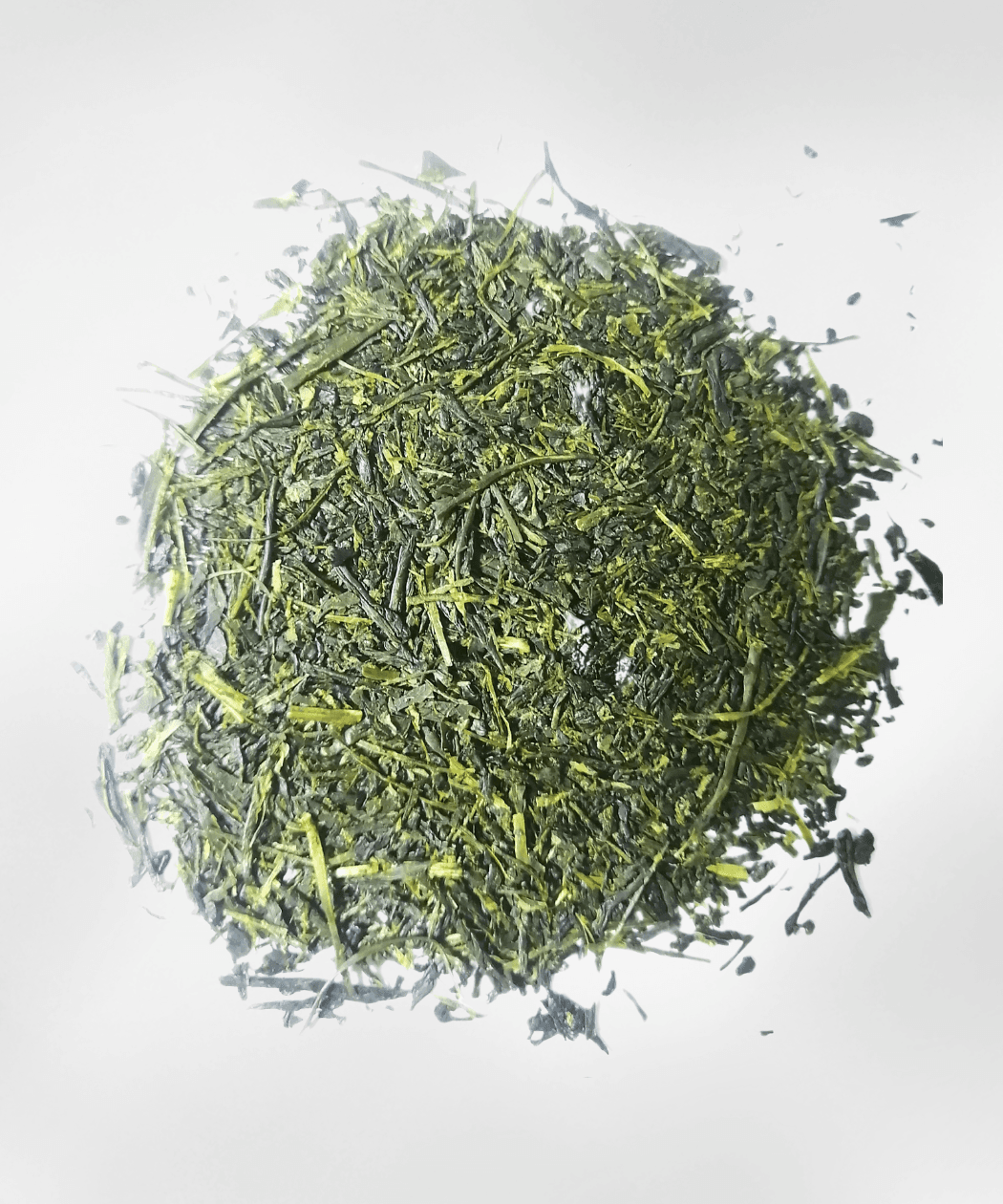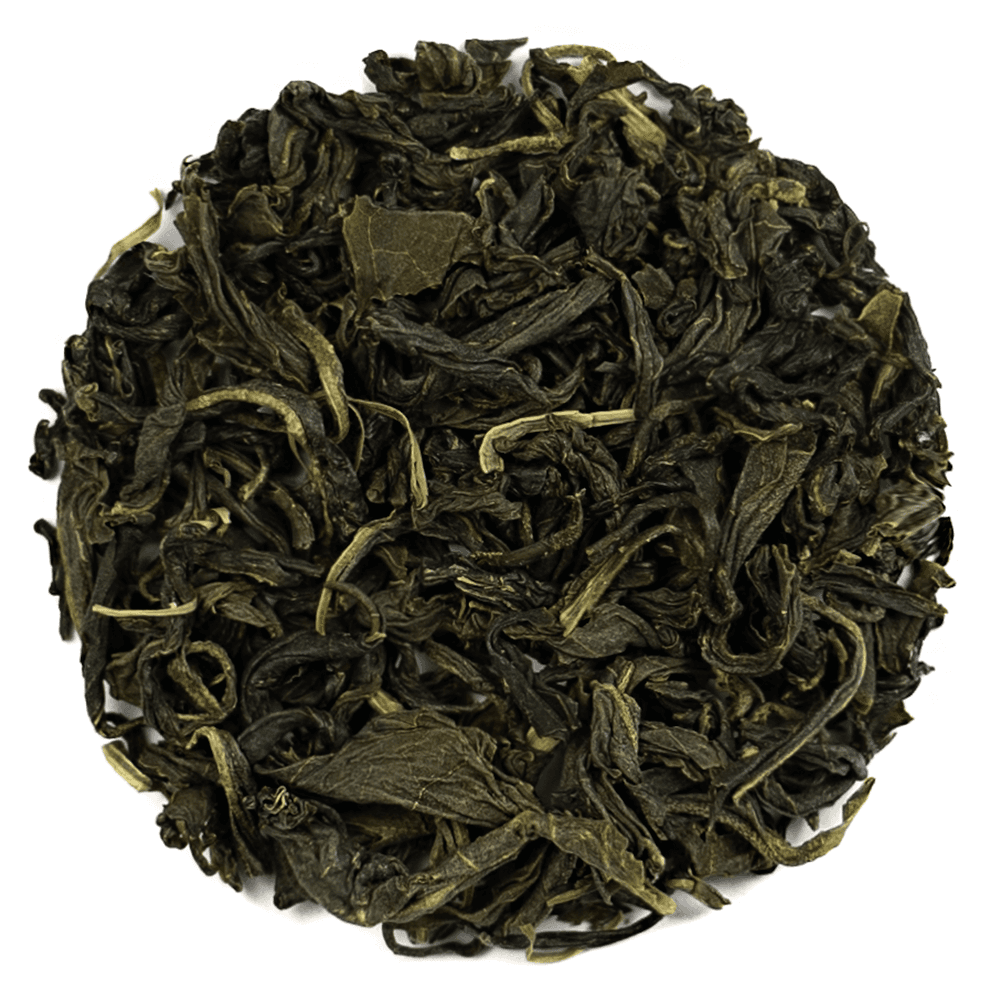
Kagoshima is Japan's second-largest tea-producing prefecture, and the growing conditions there are part of the reason this sencha stands out: a subtropical climate with heavy rainfall, and soil laced with ash from Sakurajima, the active volcano nearby. That volcanic ground leaves the tea unusually rich in minerals, though it has to be cleared regularly to keep producing good leaf. Locals call that clearing process shirasu, and growers treat it as the step that makes the difference between an ordinary tea and one sought after well beyond the region. The cup shows it: a clean, grassy note sits alongside something distinctly mineral and faintly volcanic.
Production follows the traditional Japanese sencha method. Leaves are steamed right after harvest to stop oxidation early, then rolled into thin strands and dried before being sorted and graded by size, a process refined over generations of local producers. That steam-and-roll approach is what gives this sencha its bright, herbal character and light, complex fragrance.
Caffeine sits low to moderate. Green tea in this style has long been drunk for its polyphenols, including EGCG, with antioxidant compounds like these the subject of ongoing research into inflammation, cholesterol, and general wellbeing — worth knowing, though no cup should be mistaken for medicine.
To brew, use water cooled to about 70-80°C rather than a full boil, with roughly a teaspoon of leaf per cup. Three minutes is usually enough; the amount of leaf and length of steep both shift the strength noticeably, so it's worth adjusting to taste. Skip the milk and sugar; the leaf's natural sweetness and mellow character hold up better on their own, hot or over ice.