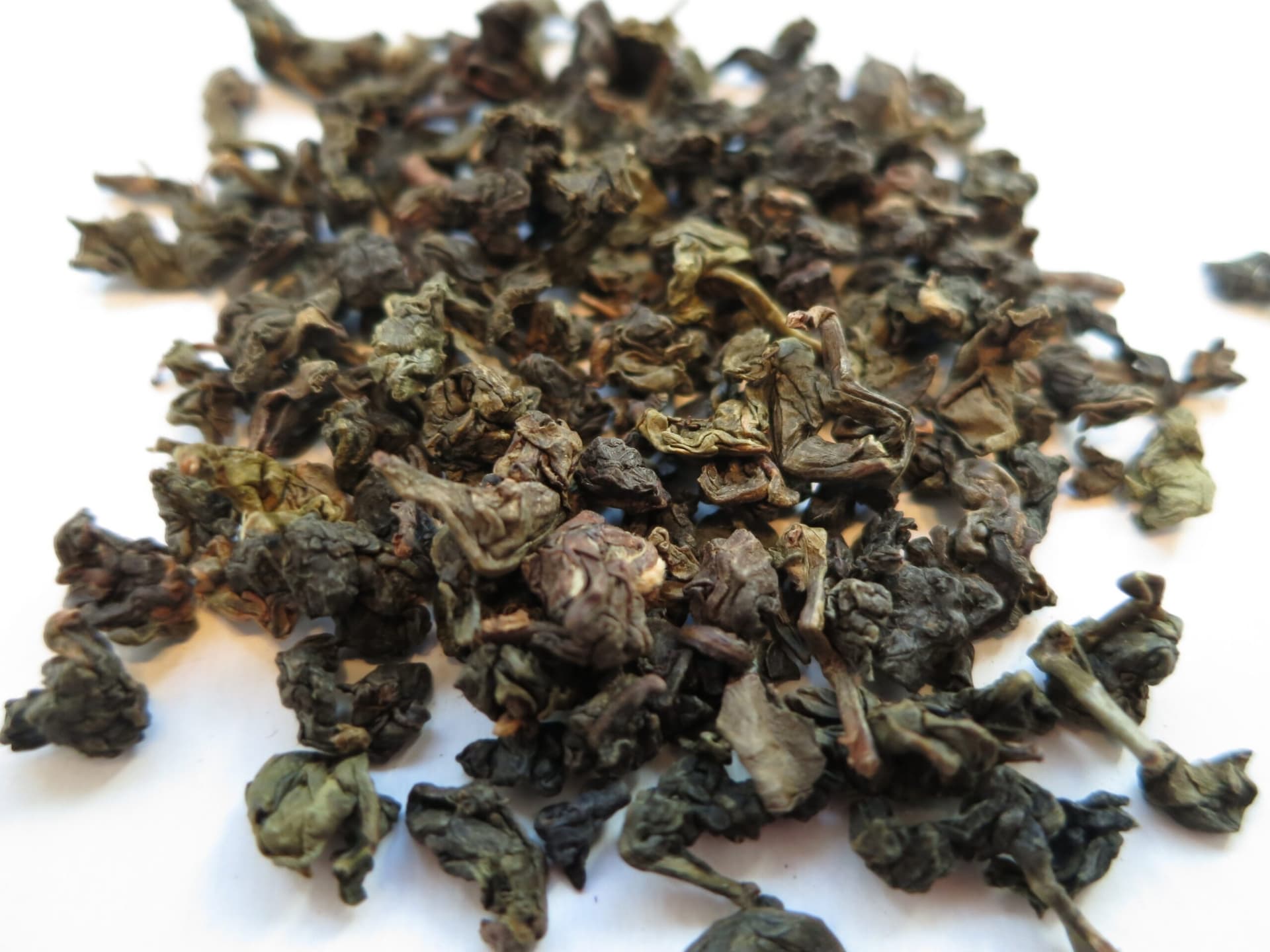
Bai Hao Oolong, better known as Oriental Beauty, comes from the hills of northern Taiwan, where a warm, humid climate suits the tea plant well. What sets it apart starts in the field: tiny leafhopper insects are allowed to nibble on the leaves, and that stress is what coaxes out the honeyed, fruity character the tea is known for. Only the tender buds and topmost leaves are hand-picked, usually in late spring or early summer, once the insects have had time to work.
After picking, the leaves are withered, gently bruised to start oxidation, and left to oxidise much further than most oolongs, to around 60-70 percent, which puts this tea closer to a black tea than a green one. A brief heating stops the oxidation, then the leaves are loosely rolled, dried and sorted. The name itself is said to come from a Western tea merchant who marvelled at the tea's quality; older stories also credit an emperor who prized it, and a farmer who stumbled on the process by accident after an unplanned bout of oxidation in the field.
In the cup, the leafhopper bite shows up as a rounded honeyed sweetness laced with ripe fruit and a floral lift, with a herbaceous, earthy edge underneath and a hint of muscatel running through it. The liquor runs a warm gold, and the texture is soft rather than brisk, with a finish that lingers well after swallowing. It has long been drunk as an easy afternoon cup, valued as much for its aroma as its taste, and is often described as a tea that sits between the black and green tea families.
Use water cooled to 80-90 degrees Celsius and about 2 grams of leaf per cup, steeping for two to three minutes depending on the strength wanted. A slice of lemon can bring out the floral side if that appeals; milk tends to flatten the tea's natural sweetness, so it is best left out. Oriental Beauty carries a moderate amount of caffeine, roughly 30-50mg a cup, varying with how long it is steeped and how much leaf is used. Keep it in an airtight container away from light and heat to hold onto the aroma over time.