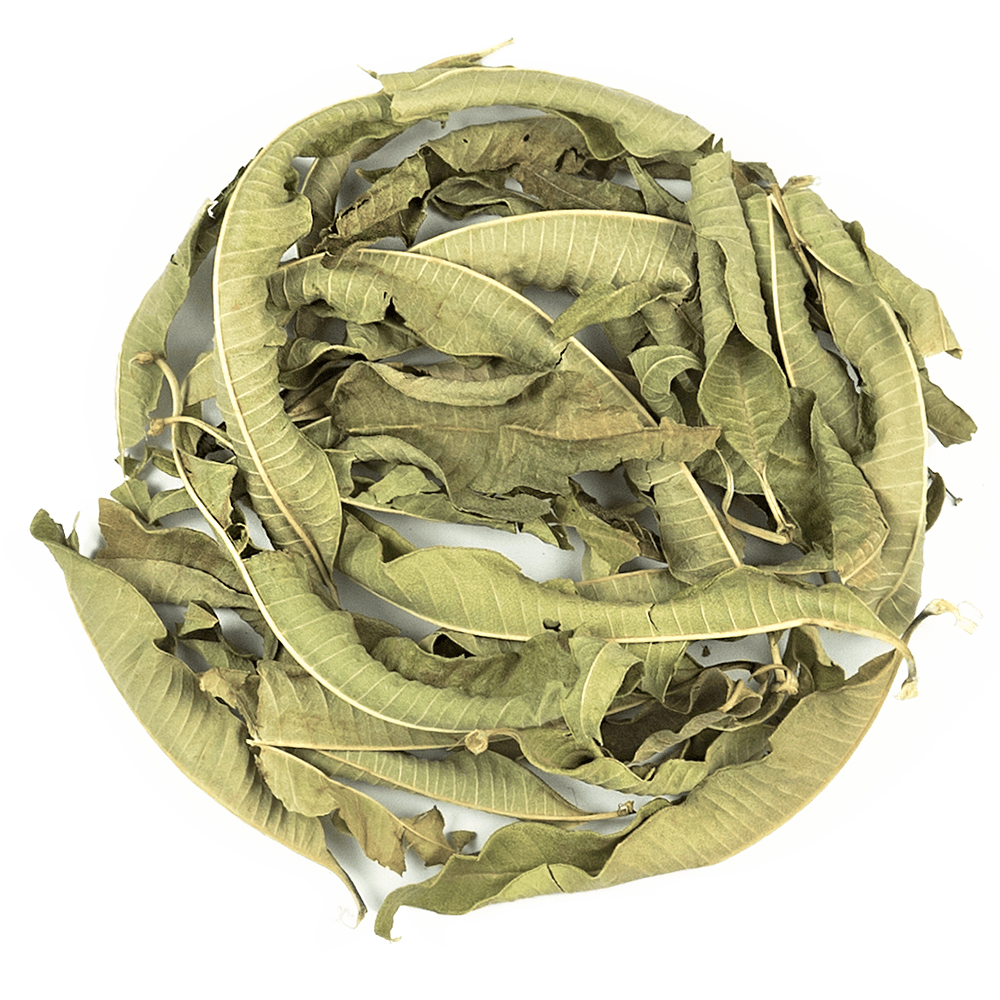
Lemon Verbena grows across Argentina, Brazil, Chile, and neighboring regions, and its story in Europe traces back to the eighteenth century, when the botanist Philibert Commerson carried specimens home to Spain. There the plant was renamed for Queen Maria Luisa, giving it the name Aloysia citrodora, and it spread through Europe as both a tea and a fragrance ingredient for perfumes and potpourri.
The leaves are cut and dried whole, and what lands in the cup is a light, clean citrus character with a soft sweetness behind it — closer to the scent of lemon than its sharpness. Tasting notes run to lemon, general citrus, and a trace of honey. The liquor pours golden, and the aroma is delicate rather than punchy, lingering quietly on the palate. It suits an afternoon slowdown or an evening wind-down as easily as a morning cup, since it carries no caffeine.
As a naturally caffeine-free herbal infusion, it has been drunk for centuries both on its own and as a cooking ingredient, and it settled into herbal medicine traditions in South America, where it was used as a diaphoretic to help ease fevers. Some contemporary research points to possible benefits around exercise recovery, digestion, immune support, and respiratory comfort, though these remain traditional uses rather than established treatments and shouldn't stand in for medical advice.
To brew it, use one to two teaspoons of the cut leaf per cup, pour water at a full boil over it, and let it steep for about seven and a half minutes, adjusting toward five or ten depending on how strong you like it. It stands well on its own, or with a little lemon for brightness and honey to round out the sweetness.