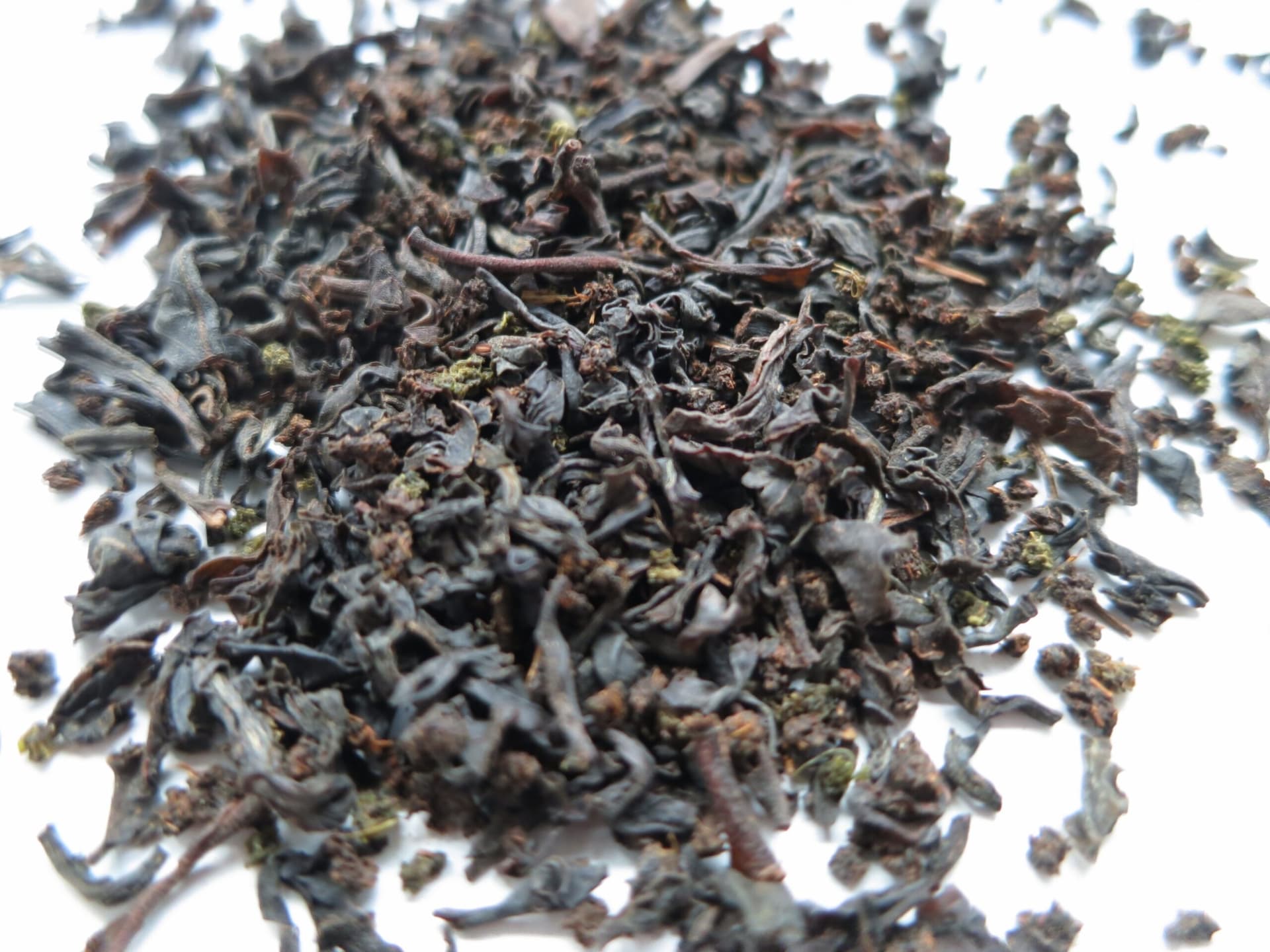
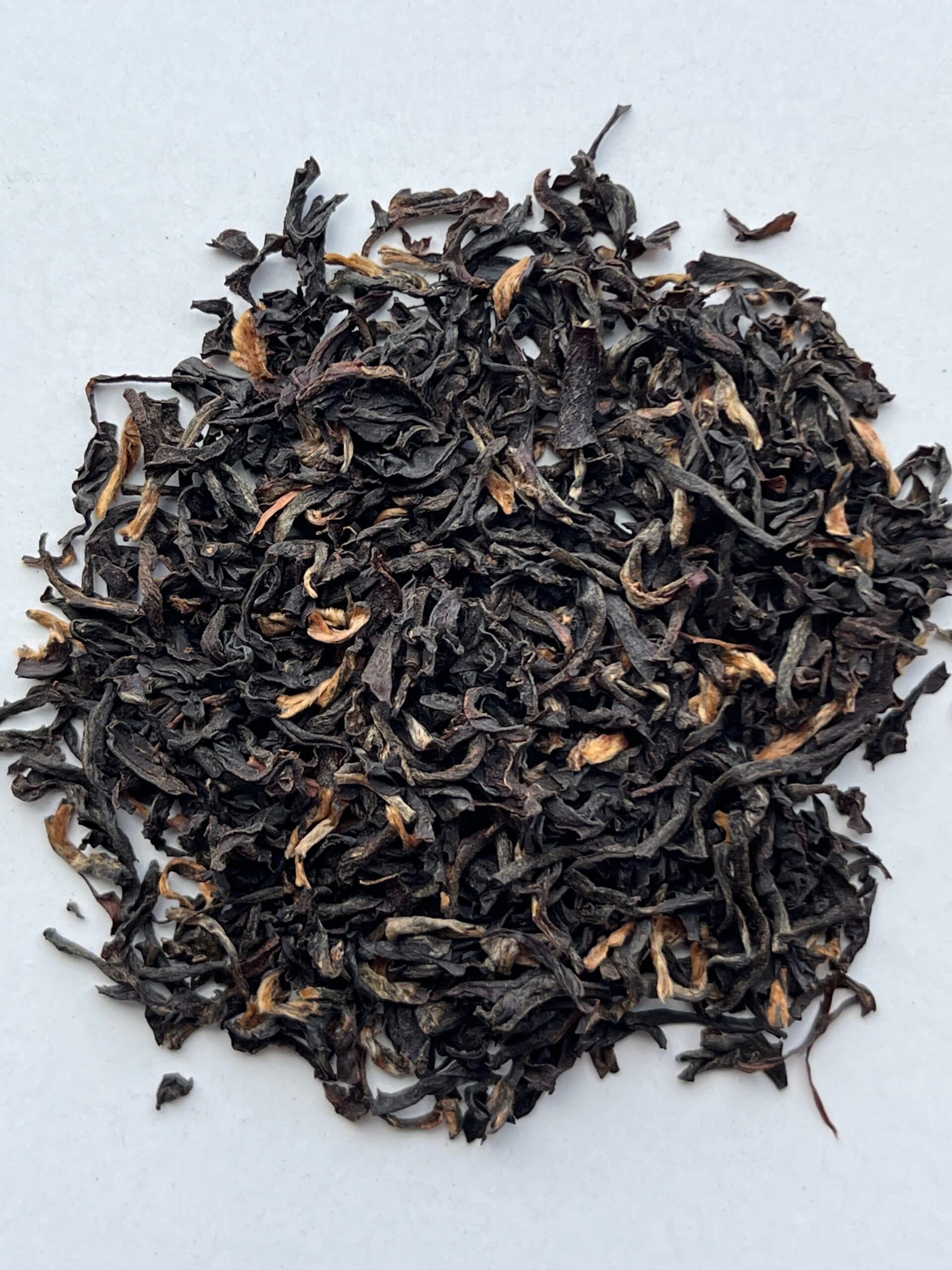
Rose petals layered into a fine Chinese black tea give this blend its name, Congou, drawn from the same root as "kung fu": time and effort, a nod to the patience the blending takes. Few Chinese black teas carry quite the same reputation, and the work behind each batch shows up in the cup. Expect delicately sweet notes with refined floral undertones running through a malty base, so the tasting profile reads as much rose and cream as it does leaf.
Black tea carries caffeine, and this blend comes in around 45mg per 8-oz cup, enough to count as a genuine morning lift rather than a token amount. The NHS advises pregnant women keep caffeine intake under 200mg a day, which works out to roughly four cups of this tea, so it can still have a place in a pregnancy routine as long as the daily total gets tracked alongside other sources. Black tea and rose petals both carry a long history in folk use. Black tea has traditionally been associated with sharper focus and mental alertness, and some drinkers credit it with supporting long-term cognitive health, though that is tradition and anecdote rather than settled fact. Rose petals have long been used to ease mild menstrual discomfort, to help balance mood around the cycle, and to take the edge off everyday anxiety and stress. None of that amounts to a medical claim, just the reputation these two ingredients have carried for a long time.
To brew it, add the loose leaf to an infuser or filter, set it in a cup or mug, and pour water just off the boil at 100°C over the leaves. Let it steep for three to five minutes. A small drop of cream suits the malty-floral cup well, though it stands on its own without any additions too.