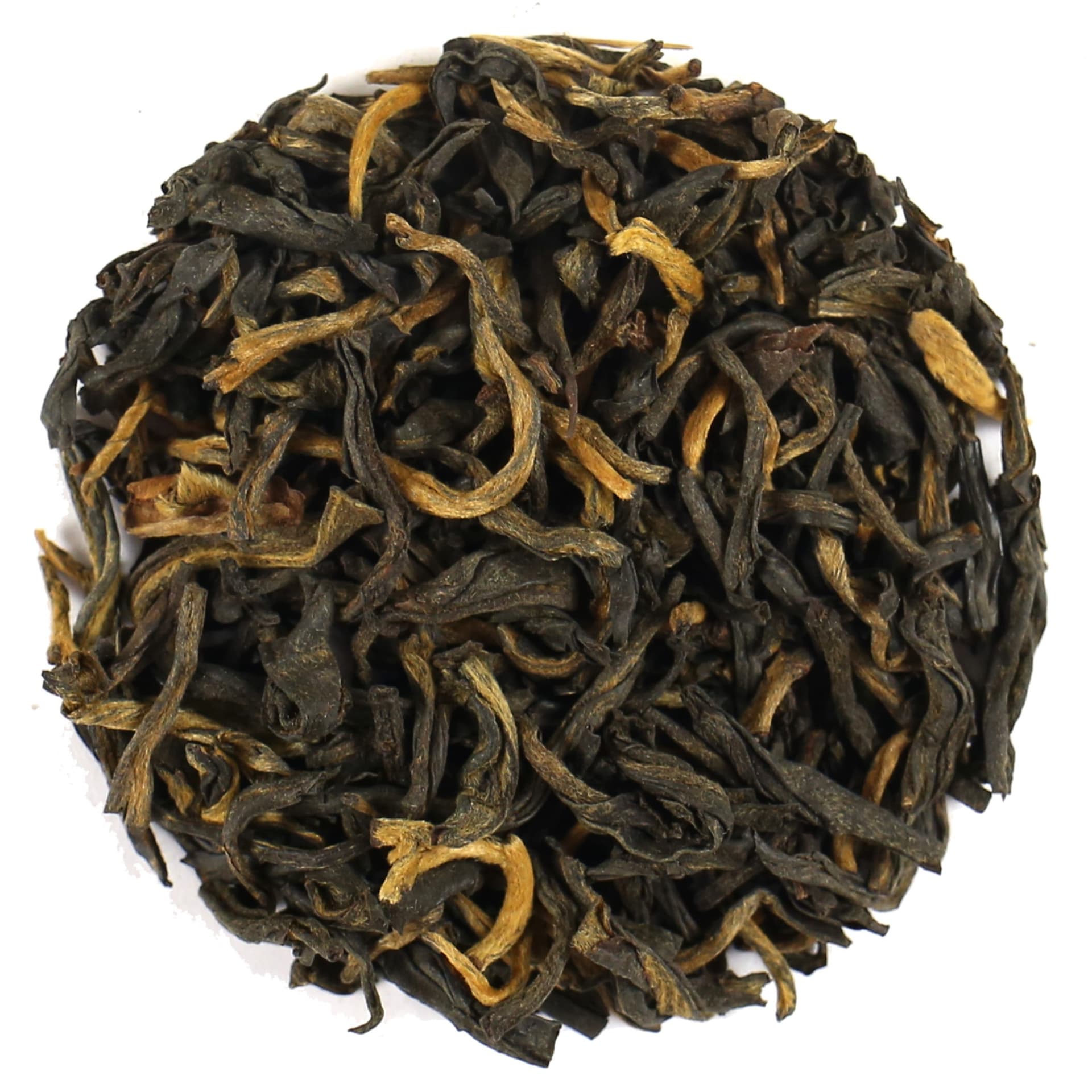
Golden tips thread through the dry leaf, and the cup matches them: malt and a whisper of smoke up front, then lemon, date, and a milky softness underneath, all carried on a thick, full body. The aroma stays light even though the liquor itself has real strength, sharp and fresh rather than heavy, and that combination is why it does double duty as an everyday breakfast tea across China.
The leaf comes from Yunnan, in China's far southwest, a province long associated with tea production and known for some of the oldest tea trees anywhere in the world. Its connection to tea is usually dated to around 2,100 years ago, though some historians push it further back, and those ancient trees may well predate organised tea-drinking in the region altogether. Records describe the province's people growing tea and offering it as tribute to emperors as far back as the Shang and Zhou dynasties, but large-scale export out of Yunnan is much more recent, only picking up in the 18th century, which counts as fairly young by tea history's standards. The gardens that supply teas like this one sit at elevations between 1,200 and 2,000 metres, in a climate suited almost exactly to tea: mean annual temperatures of 12°C to 23°C, annual heat accumulation of 4,500°C to 7,000°C, and 1,000 to 1,900mm of rain a year.
In the cup it pours a coppery liquor, dark in tone. Brew it with freshly boiled water and give it three to five minutes to open up fully; it takes milk or a slice of lemon well, though it also stands on its own without either. Some research has looked at whether rinsing with black tea like this helps against plaque and the bacteria that cause cavities, thanks to its polyphenols, a finding worth knowing rather than a reason to skip the dentist.