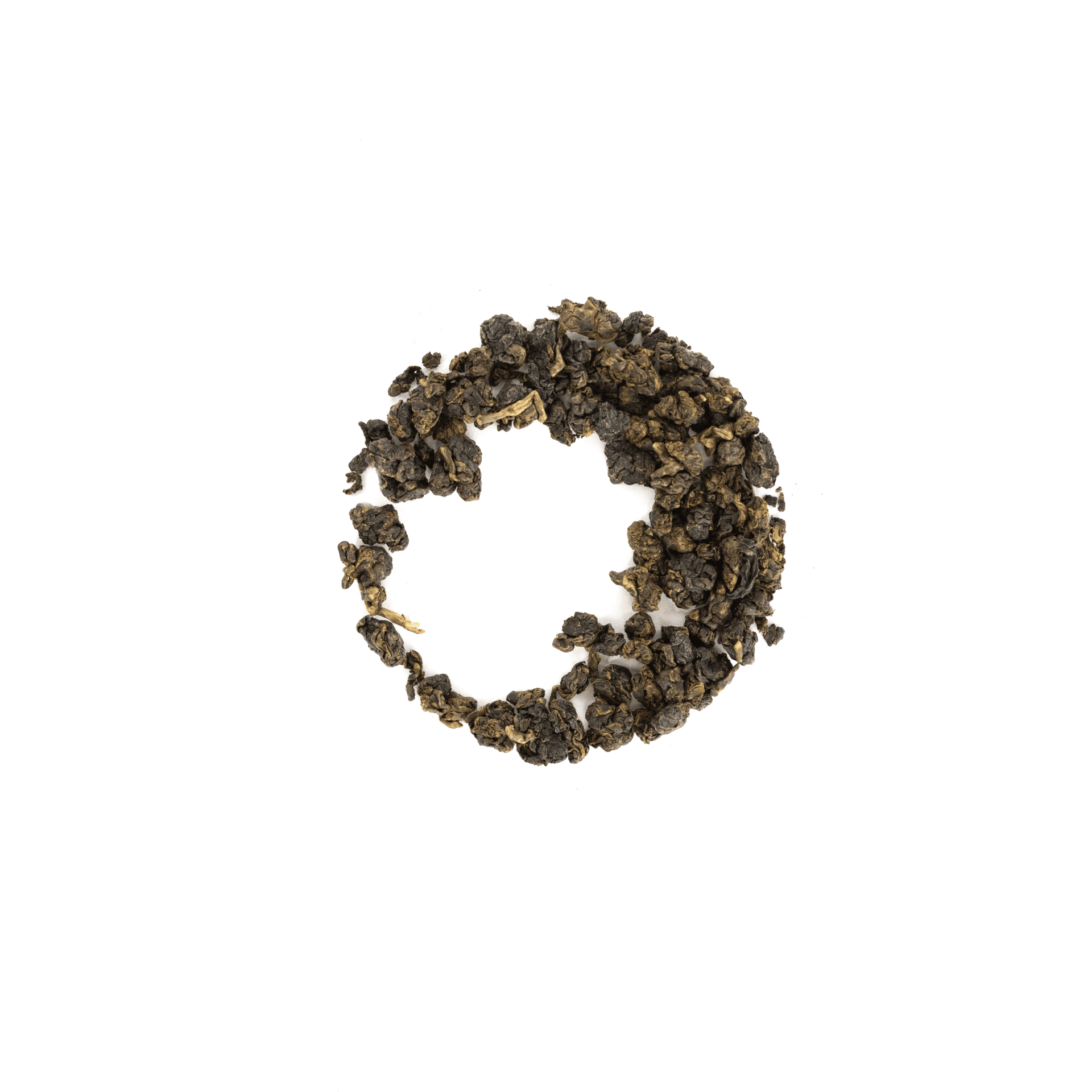
The name comes from the Shalimar Gardens, built long ago as a vision of paradise on earth, all symmetry, water, and abundance. This blend borrows that sense of grandeur for its name rather than any direct link to the place itself. Underneath the story sits a more straightforward tea: a semi-fermented oolong grown in China, the birthplace of the category, its leaves rolled tight in the traditional way before being dressed with passion fruit, red aronia berries, mango cubes, and rose petals.
The dried leaf carries a strong rose scent well before water touches it, and that floral note carries through into the cup alongside the fruit. Passion fruit and mango sit up front, with the berries adding a tart, slightly sharper edge underneath. Because the leaf is only partly oxidised rather than fully fermented, the tea sits somewhere between the brightness of a green tea and the depth of a black one. The first sip tends to be light and floral; as the cup cools, the fruit intensifies and the tea settles into a smooth, lingering finish rather than anything sharp or astringent.
To brew it, use water at around 95°C and steep for about four minutes per 200ml. Strain the leaves out once it has steeped rather than leaving them to sit in the pot, and take it without milk, since that is the only way to catch the interplay of rose against passion fruit and berry. The leaves are sturdy enough to hold up through several more infusions after the first, with each round shifting the balance between floral and fruity notes rather than simply repeating the last cup. A serving carries roughly 30mg of caffeine, enough to notice but modest next to a standard cup of black tea, which makes it a reasonable choice for later in the day.