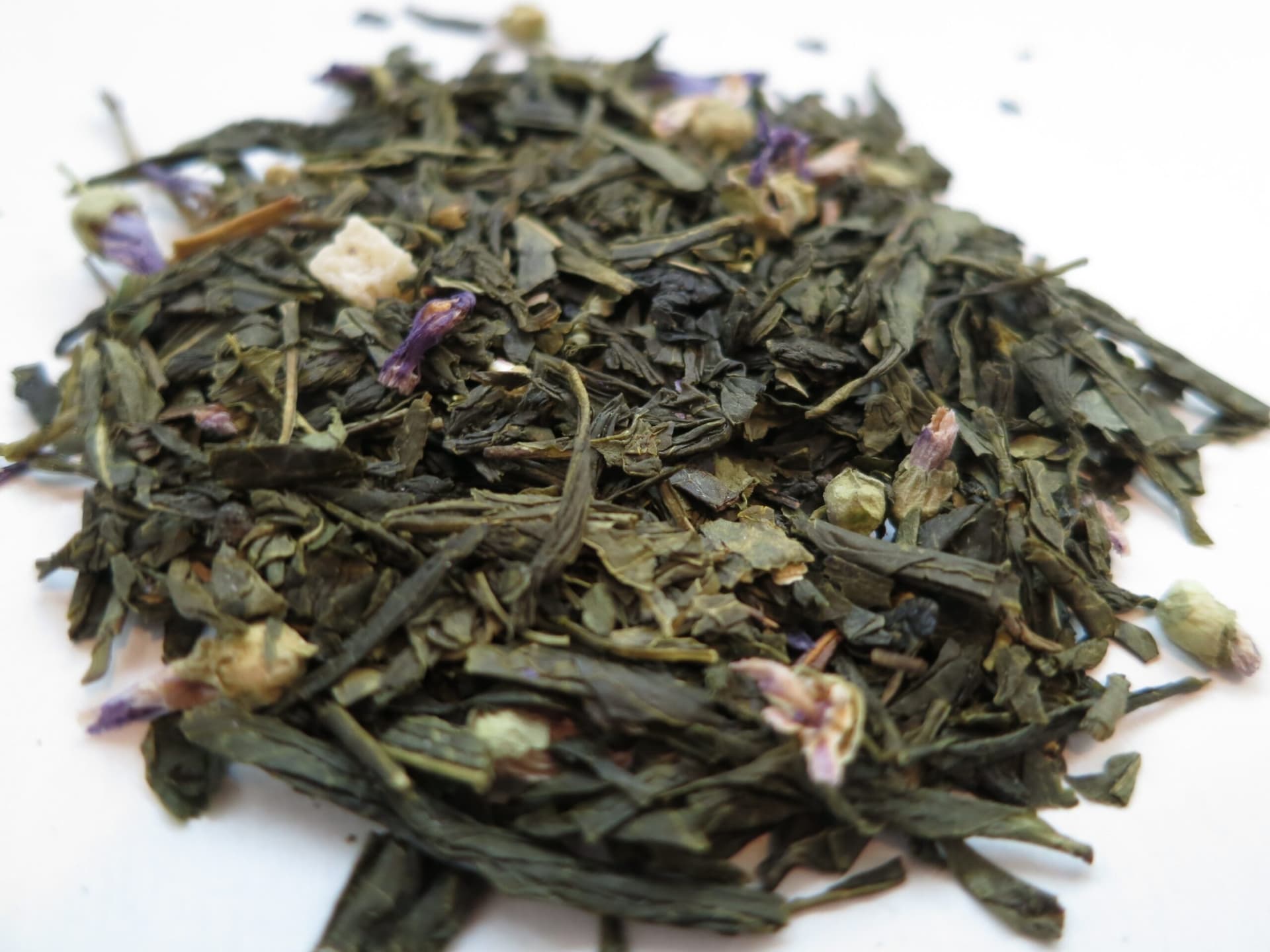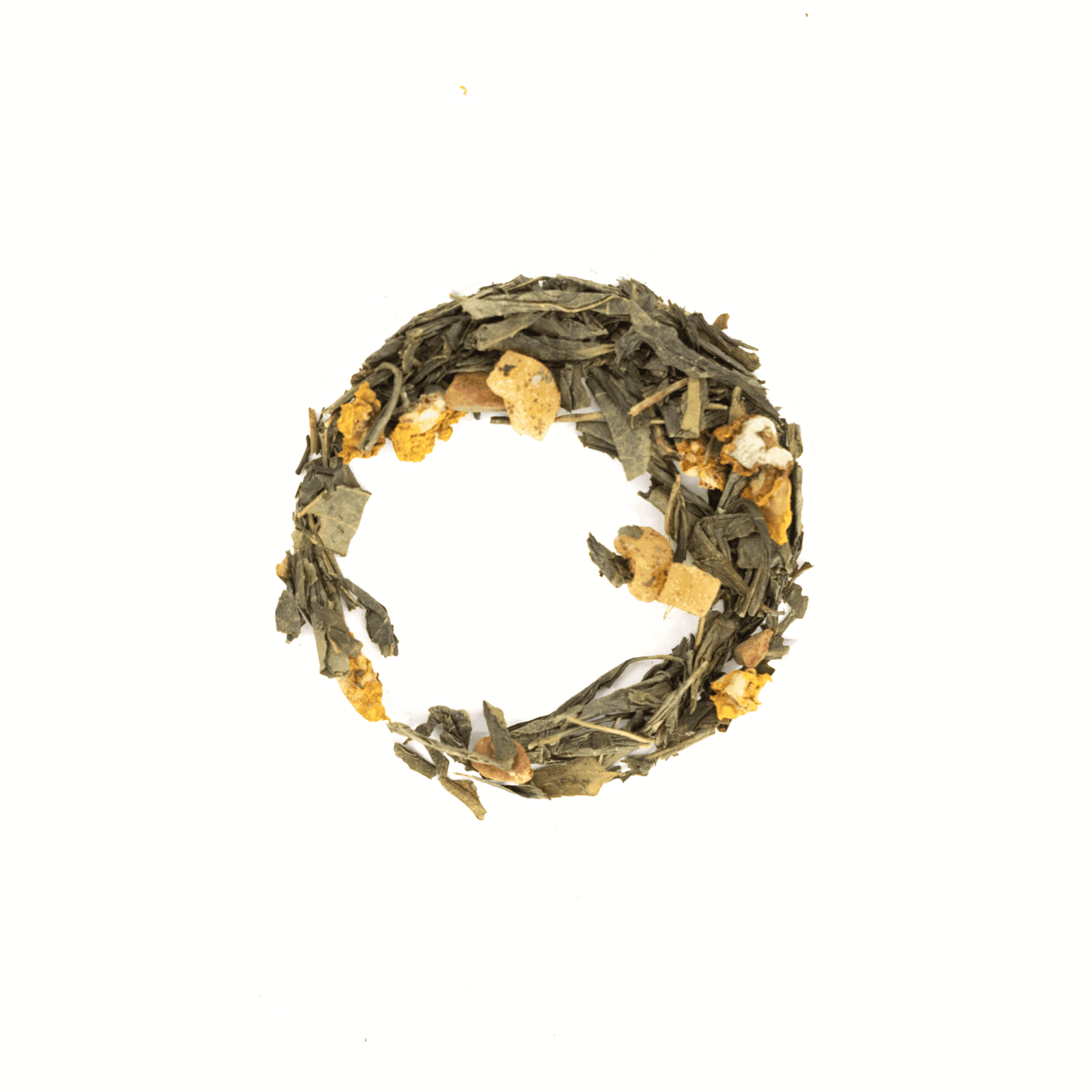
Mango and guava lead here, with tropical fruit sweetness underneath and a hint of date lingering into the finish. Green tea leaves supply the other half of the character: grass, herbs, and a touch of spice sit under the fruit rather than getting drowned out by it. The blend is built from green tea leaves along with papaya pieces and natural flavouring, so the fruit reads as genuine tropical sweetness rather than a syrupy add-on. It sits comfortably among flavoured green teas for people who find the plain leaf a little too austere on its own but still want the grassy backbone underneath the fruit.
In the cup it pours a light, green liquor rather than a deep one, which suits the flavour: delicate but still noticeably flavoursome, with a fresh, sweet aftertaste that lingers rather than cutting off cleanly. The mango and guava show up first, tropical fruit and a faint date-like sweetness carry through the middle, and the grass, herbs and spice notes hold the back end together. No milk or other accompaniments are called for here; it is meant to be taken plain so the grass and fruit notes stay distinct from each other rather than getting muddled.
Like other green teas, this one is often linked to cardiovascular health, largely on account of its EGCG content — though that is worth treating as a traditional association rather than a settled fact, and it is reason enough to drink the tea without needing to be the actual reason. Most people reaching for it are after the taste rather than any particular health outcome, and the blend is built to deliver on that first.
Brew it gently: water between 75 and 80 degrees Celsius, not a full boil, for two to three minutes. Green tea leaves burn and over-brew easily, so a shorter, cooler steep than you might default to keeps the leaf from scorching and lets the fruit notes stay in front rather than buried. Treat the timing as a guide rather than a rule; taste partway through and stop the steep once the balance between fruit and grass feels right to you.