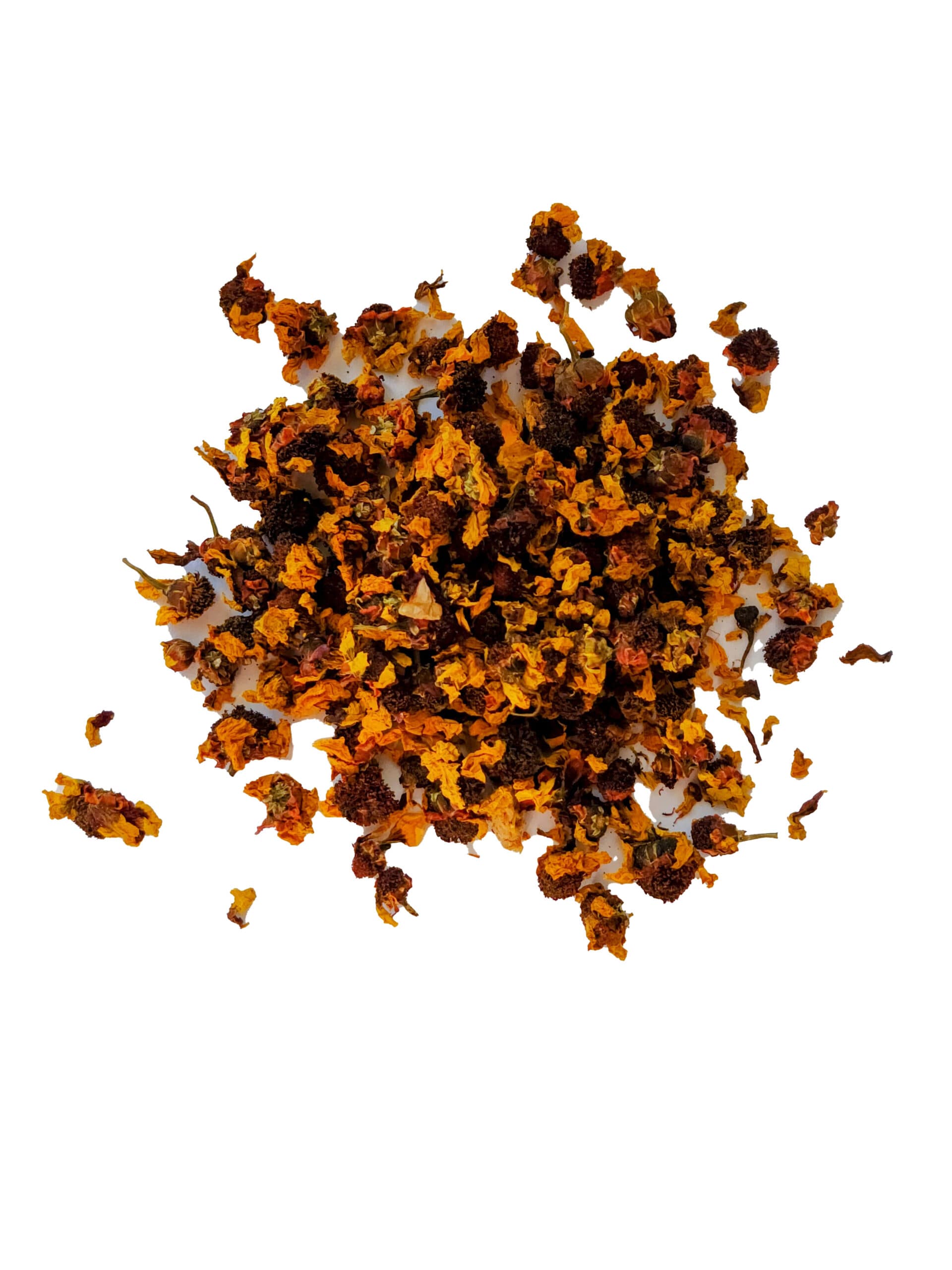
Chrysanthemum flowers have been turned into tea in China for well over a thousand years, first cultivated back in the Song Dynasty and later embraced by scholars, poets and emperors during the Ming Dynasty as tea culture flourished. The custom spread from there into Japan and Korea, and the dried blossoms — mainly grown today in Anhui, Zhejiang and Fujian — are still handpicked at their most fragrant, then washed and dried slowly to hold onto their oils and colour before brewing.
What you get in the cup is floral in a soft, garden-blossom way, with honey running underneath and a herbal, almost medicinal edge that keeps it from tipping into sweetness alone. There's a faint coffee-like depth to the aroma, and hints of hay. Texture-wise it's smooth going down, with a drying finish rather than a lingering syrupy one — clean and a little cooling, without any bitterness left behind. It's an easy tea to reach for at any hour, since brewing it releases a golden colour along with the scent, and it holds up whether taken hot or left to cool.
Because it's made purely from chrysanthemum flowers rather than the Camellia sinensis plant, it carries no caffeine, which is part of why it's traditionally treated as a relaxing, anytime infusion in Chinese herbal practice. Historically it also carried associations with longevity and vitality in old Chinese herbal writing, alongside its use as an everyday floral drink.
To brew it, use water around 90°C rather than a full boil, since boiling water can scorch the petals and dull the flavour. Give it about six minutes to steep so the flowers fully open and release their aroma and colour, then strain if you've used a pot or infuser. Rock sugar or honey suits it if you want more sweetness, and it's often drunk on its own or blended with other herbs.