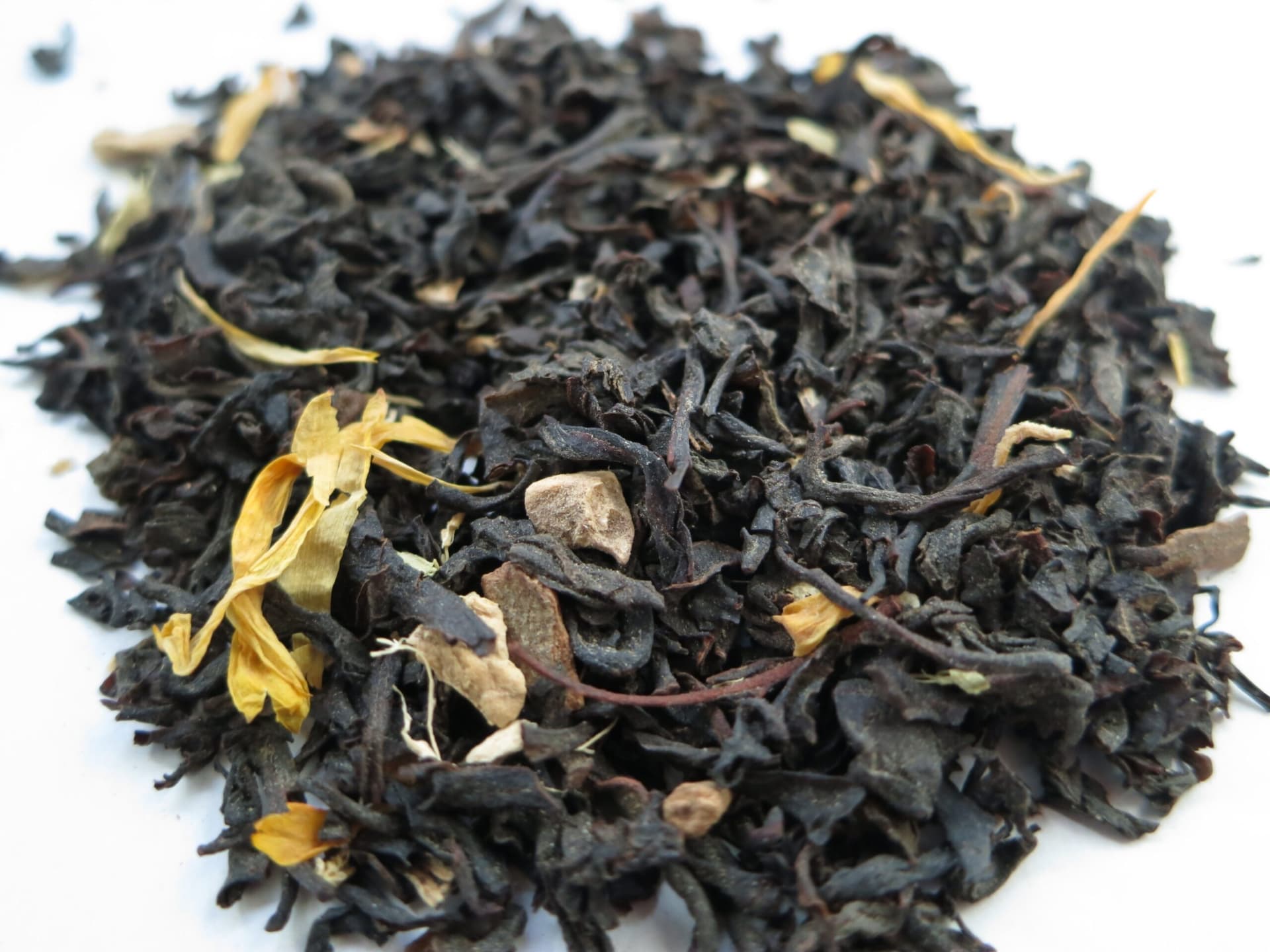
Cochin takes its name from the Indian city now called Kochi, one of the places where chai took shape centuries ago, and this blend leans into that history: Assam and Kerala black tea (BOP) mixed with South Indian spices — ginger, cinnamon, cloves and nutmeg. The cup that results is sweet and spicy, with malty undertones and a full-bodied finish, and it pours a coppery, light-toned liquor. An 8-oz cup carries roughly 45mg of caffeine.
The idea of a spiced infusion predates chai itself. Long before tea reached India in any commercial sense, there was Kadha, an Ayurvedic drink used for holistic healing. Chai as it is known today has a more complicated, colonial history: a Scotsman named Robert Bruce is credited with discovering Assam tea, which the British Empire later pushed onto Indian growers and drinkers to serve its own economic interests. Local communities made it their own, adding spices to suit local tastes, and the recipe has splintered ever since. Rajasthan's version is made with camel milk, Kolkata's with buffalo milk, and Jammu and Kashmir has a version tinted pink by salt. Cochin Masala Chai keeps its identity tied to Kerala, home to the city that gave it its name.
Brew it with freshly boiled water and let it steep for three to five minutes. It stands up fine on its own, though milk or sugar are not out of place if that is your habit.
Ginger has long been used in traditional medicine to support digestion and immunity, and is sometimes reached for by people managing mild arthritis. Cloves contain eugenol, a compound traditionally associated with bone health. The black tea itself carries a long association with mental alertness and, in some traditional use, with blood sugar management.