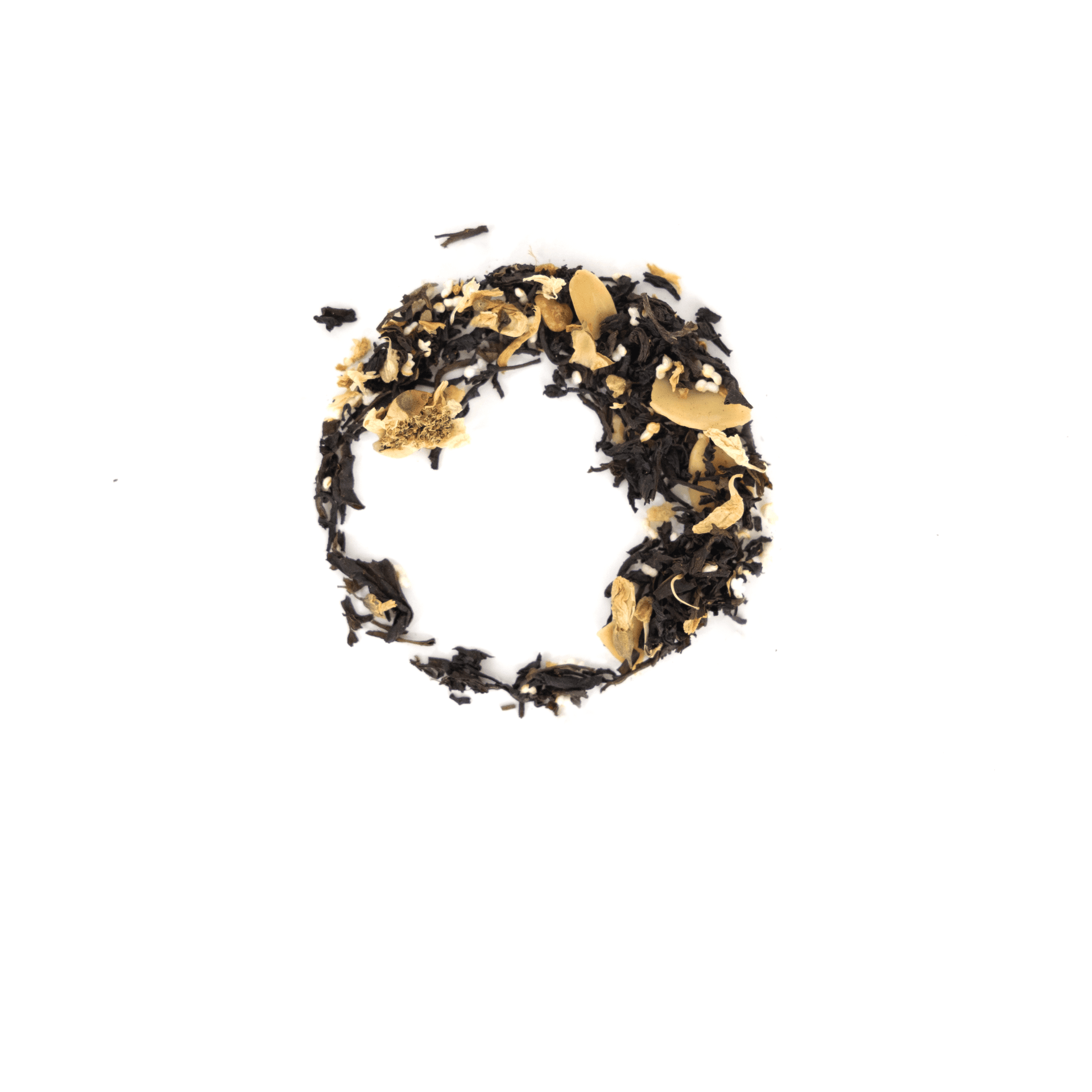
The leaves twist tight and golden-tipped, said to resemble tiny monkey paws — that's where the name comes from. It's a black tea from China's Fujian province, and the cup backs up the look: full-bodied, with fruity notes running toward berries and stone fruit, plus date, honey, and a chocolate depth that shades into dark chocolate and nut on the finish.
The tea traces back to the early Qing Dynasty, when Fujian's tea farming and processing methods were being refined and the province was already known for the skill its growers brought to harvesting and manufacture. Golden Monkey King was originally reserved for the imperial court and the upper class, prized both for its flavor and for how demanding it was to make. Pickers take the buds in early spring, when they're most tender, then process them carefully to hold on to the delicate flavor and golden color — a method passed down through generations of farmers. It's far more widely available now, but it's kept its reputation as one of the more refined black teas, and its popularity has grown further alongside renewed interest in artisanal, traditionally made teas.
To brew it, use water heated to around 90°C rather than a full boil, so the leaves don't scorch, and steep for about 5 minutes — shorter for a milder cup, longer for something stronger and more tannic. About 2 grams per 240ml is a reasonable starting ratio. The leaves hold up to multiple steeps, each one drawing out slightly different notes, so it's worth treating a pot as more than a single pour. It pairs well with light pastries, fresh berries or stone fruit, dark chocolate, aged cheddar, and roasted nuts like almonds or macadamias — foods that echo the tea's own fruit-and-honey character rather than fight it. As with other black teas, it carries a moderate amount of caffeine, and it's worth keeping in an airtight container away from light, heat, and strong-smelling foods, since the leaves pick up odors easily and lose their character if left exposed to air or humidity.