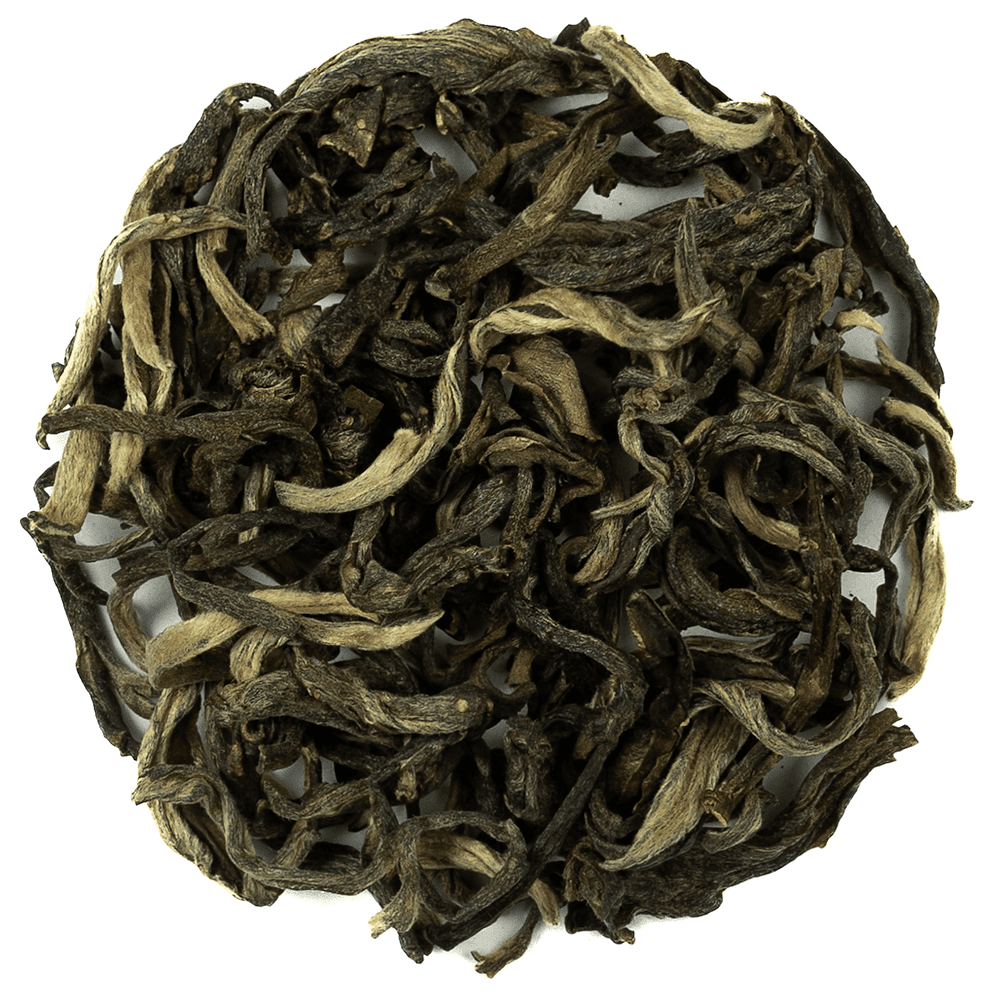
A grassy, savoury cup with a thick, coffee-like body — that's the character behind this Japanese Fukujyu green tea. It comes from Shizuoka Prefecture, on Japan's Pacific coast in the shadow of Mount Fuji, a region well suited to growing tea. The name comes from "Fuku" (good fortune) and "Jyu" (longevity), and the tea traces back to the Edo period, when it became a household staple and a fixture of Japanese tea ceremonies, prized for its role in hospitality. What sets sencha-style production apart is steaming the leaves immediately after harvest, then rolling them into thin strips. Steaming halts oxidation fast, which locks in the green colour and gives the tea its concentrated aroma and savoury depth rather than the grassier, lighter character you get from pan-fired styles. The leaves carry a moderate amount of caffeine alongside L-theanine, an amino acid associated with calm alertness — part of why green tea has a reputation for steady, jitter-free energy. In Japanese tradition it has long been drunk as a daily staple, valued for both its taste and its place in everyday ritual. To brew it, warm the pot and cups first with hot water, then discard it — this helps the leaves open fully and preserves aroma. Use about a teaspoon (5g) of leaves per person, and water cooled to roughly 80°C rather than a full boil, which would scorch the leaf and turn the cup bitter. Steep for one to three minutes; err toward the shorter end if you want a lighter cup, longer for more of that thick, savoury pull. Pour in stages across each cup rather than filling one at a time, so the strength stays even, and drink it hot rather than letting it sit.