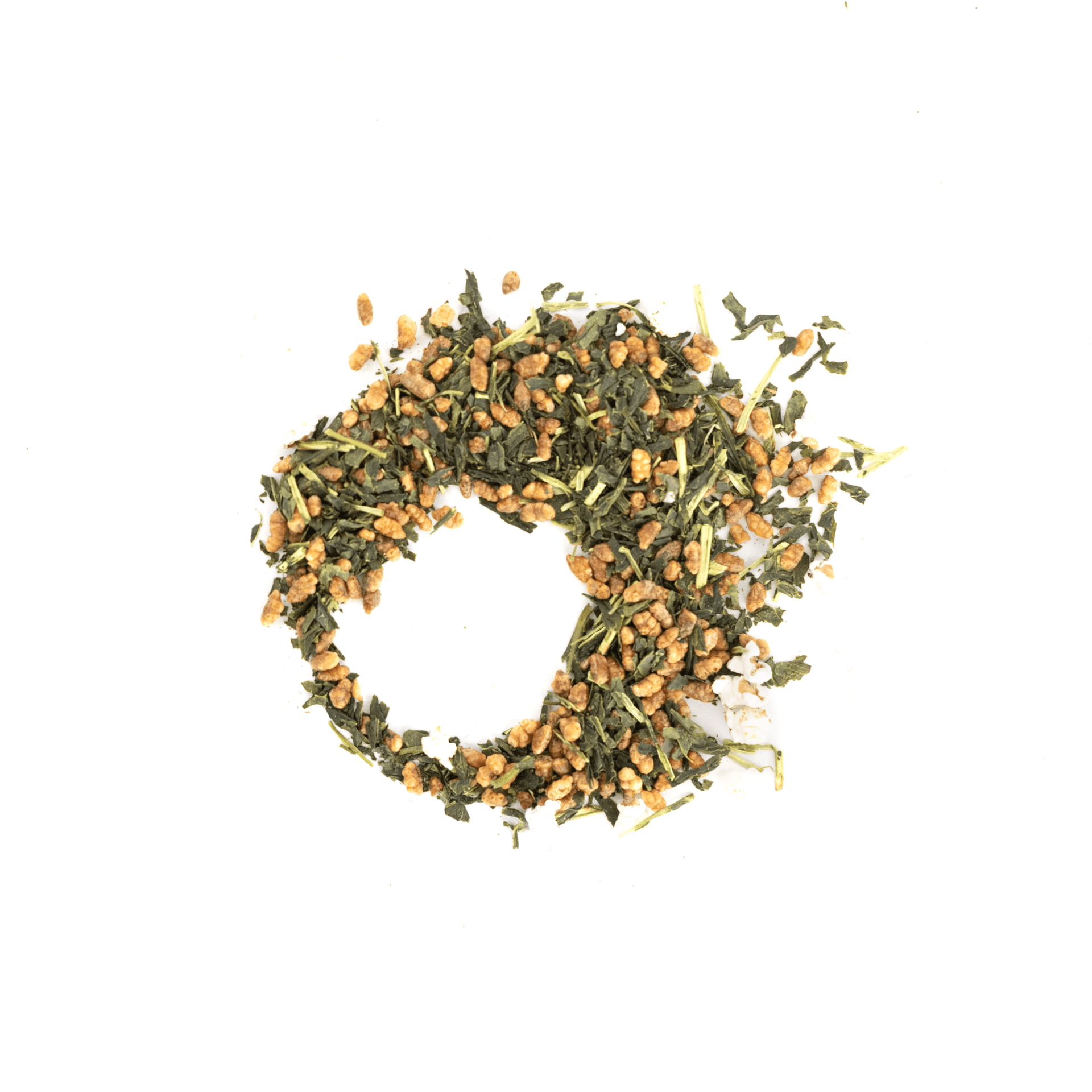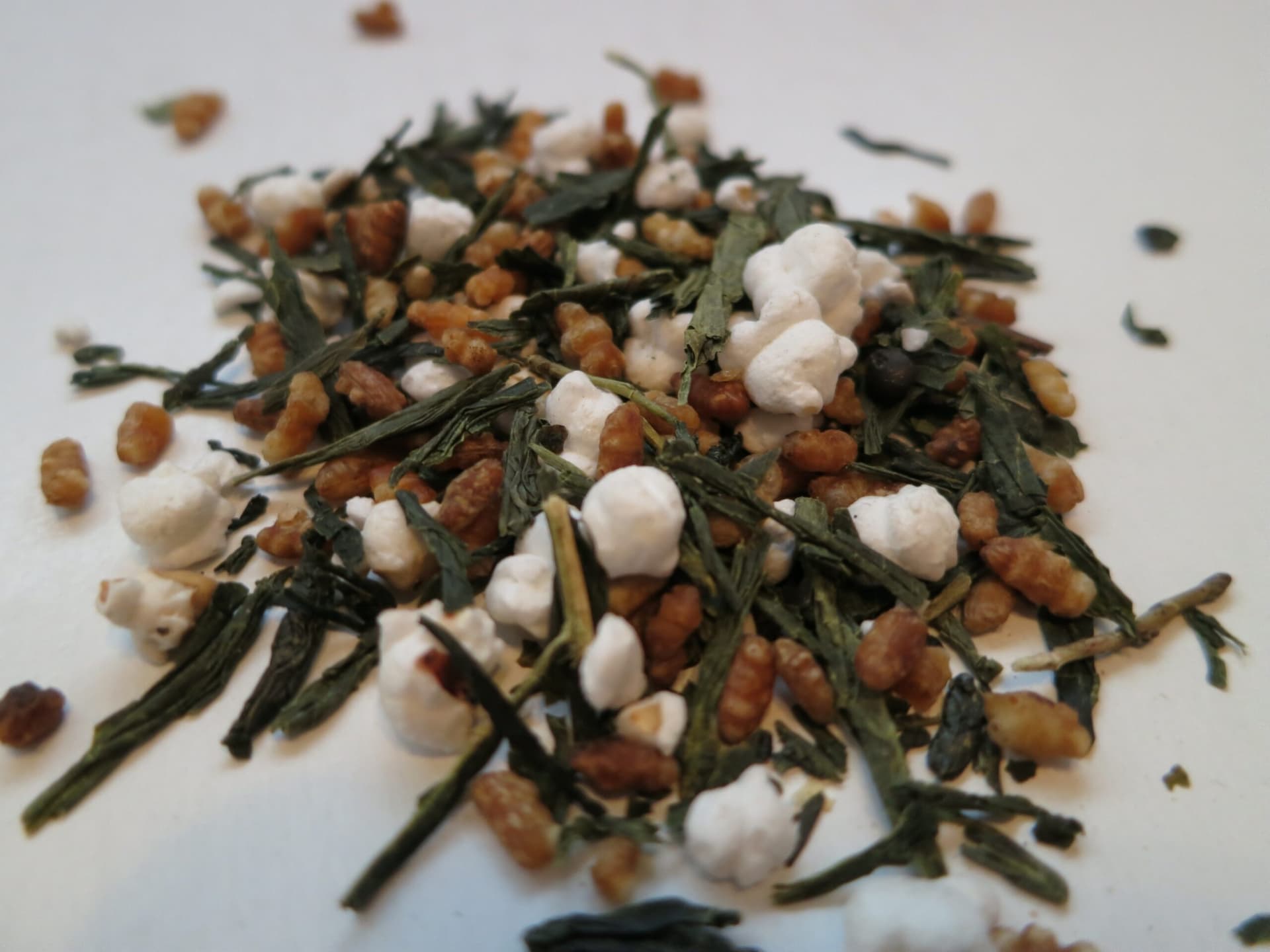
Popcorn tea, people call it, and once you smell the dry leaf you'll understand why: this is Japanese sencha blended with toasted brown rice, and the rice brings a genuinely nutty, buttery, almost popcorn-like aroma that plays against the sencha's grassy edge. The tasting cup carries notes of toasted rice, roasted grain, and a rounder butter-and-nut character underneath the tea's usual astringency, so it drinks softer and less vegetal than a straight sencha.
The blend has old roots in Japan. Genmai cha dates to the 15th century, when tea was scarce and mixing in toasted brown rice was a practical way to stretch a limited supply while adding flavor. Genmai means brown rice, cha means tea, and the pairing caught on well beyond the households that first needed it, becoming a everyday drink across social classes. Early versions used lower-grade tea leaves cut with the rice; over time sencha became the standard base, which is what raised the quality of the blend into what's sold today.
Making it starts the way any good Japanese green tea does: leaves picked at the right point in the season and steamed right after harvest to hold their color and flavor. The rice is toasted separately until it turns a deep gold and smells rich and nutty, which is what gives the finished tea its "popcorn" nickname. Sencha and toasted rice are then blended in careful proportion, aiming for a balance between the rice's buttery sweetness and the tea's characteristic bite.
Caffeine sits in the moderate range typical of green tea, roughly the 25-45mg you'd expect from an 8oz cup, so it's an easy any-time-of-day pour rather than a jolt. Brew it with water around 85°C and let it steep for about two and a half minutes for a cup that stays balanced rather than bitter — the rice softens the edges of the sencha, so slightly gentler-than-usual green tea brewing suits it well. Strain out both leaf and rice before drinking, since the toasted grains will keep infusing if left in the cup.