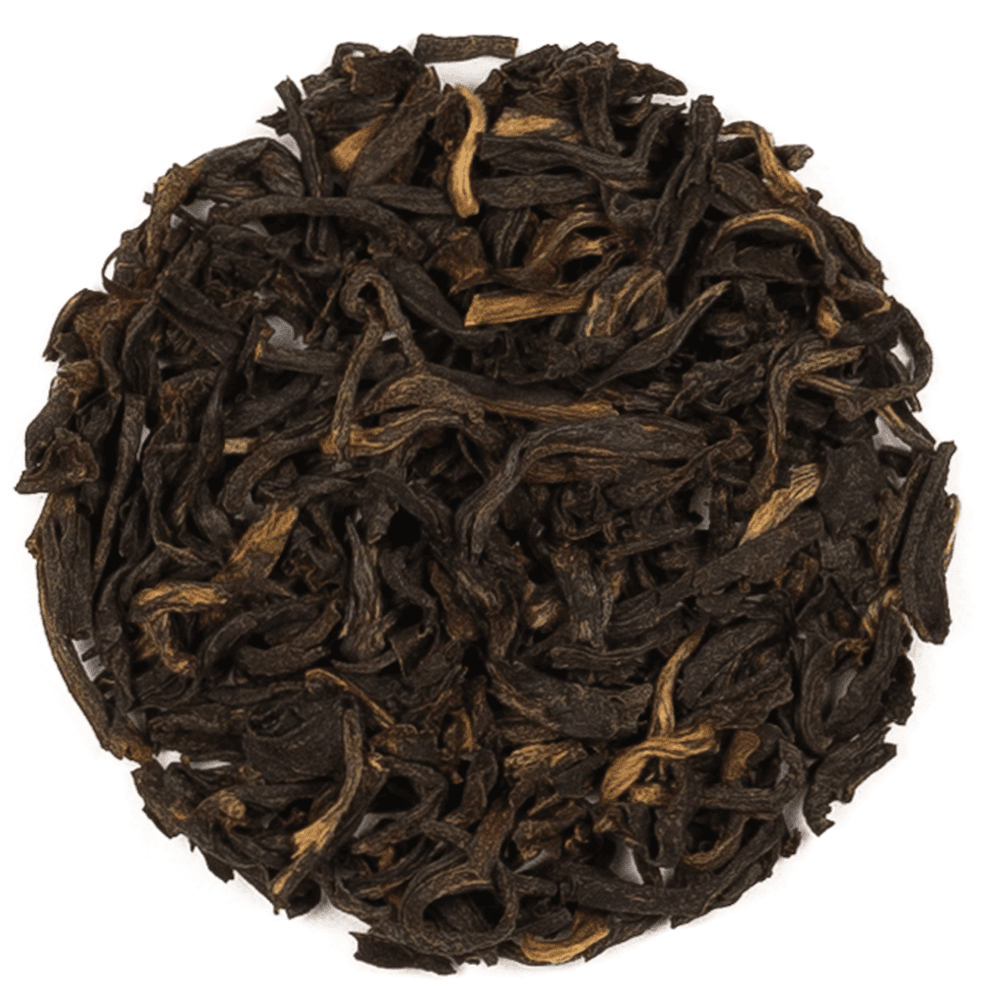
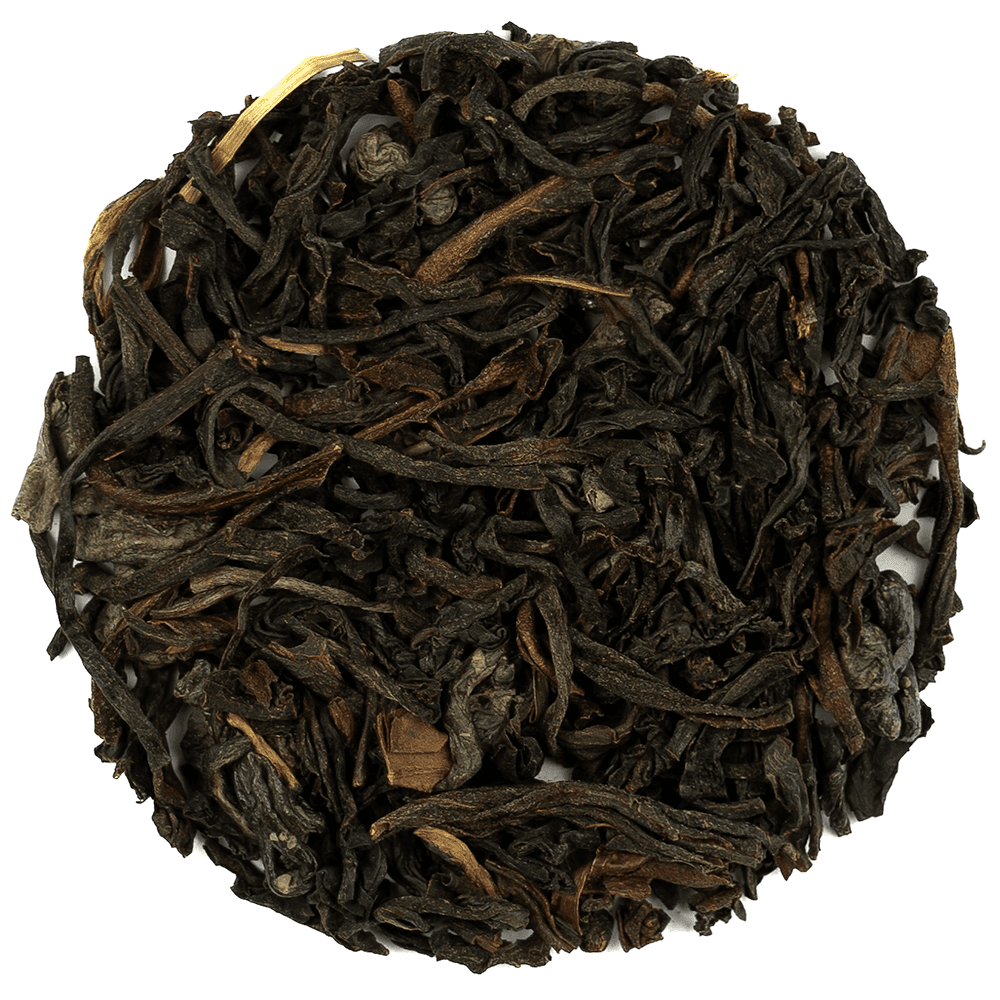
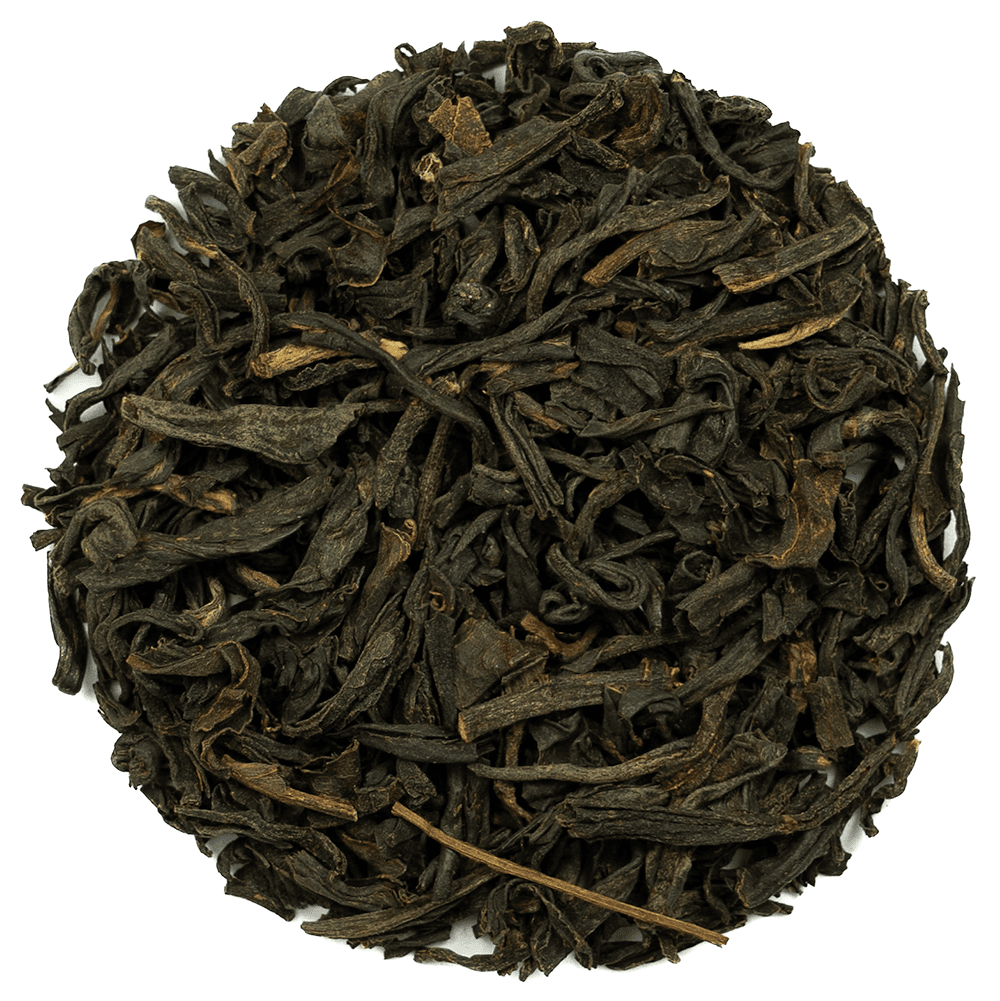
In the cup it pours a light, coppery liquor with a well-rounded character: nutty up front, easing into earthy and woody notes, with a smoky edge and a coffee-like depth underneath. It reads as a quieter tea than many Chinese blacks, built more on balance than on any single dominant note. The dry leaf is small and tightly rolled, black flecked with brown throughout.
This is the B grade of Keemun Hao Ya, grown in Qimen County, Anhui Province, at slightly lower elevations than the more celebrated Hao Ya A grade it sits just behind. Low temperatures, high humidity, and frequent fog settle over the hillsides there through much of the growing season, conditions widely credited with giving Qimen teas their depth and character. Comparatively little Hao Ya B leaves China, which is part of why it turns up less often outside specialist tea circles than many other Chinese black teas, even as its close relative Hao Ya A gets more attention abroad. Within its own region it is considered second only to that A grade.
Tea & Coffee, the Kent-based company that lists it, packs the tea fresh to order at their own factory rather than holding it pre-packed on a shelf.
Steep it in freshly boiled water for three to five minutes. It stands up fine on its own, taken black, and the balance in the leaf means it also takes milk, sugar, honey, or a slice of lemon without losing its shape, so it is worth trying it a couple of ways to see what suits it best. Black tea also has a long history of use beyond the cup: some traditions hold that rinsing the mouth with it supports oral health, though that is best understood as a folk use rather than anything to rely on medically.