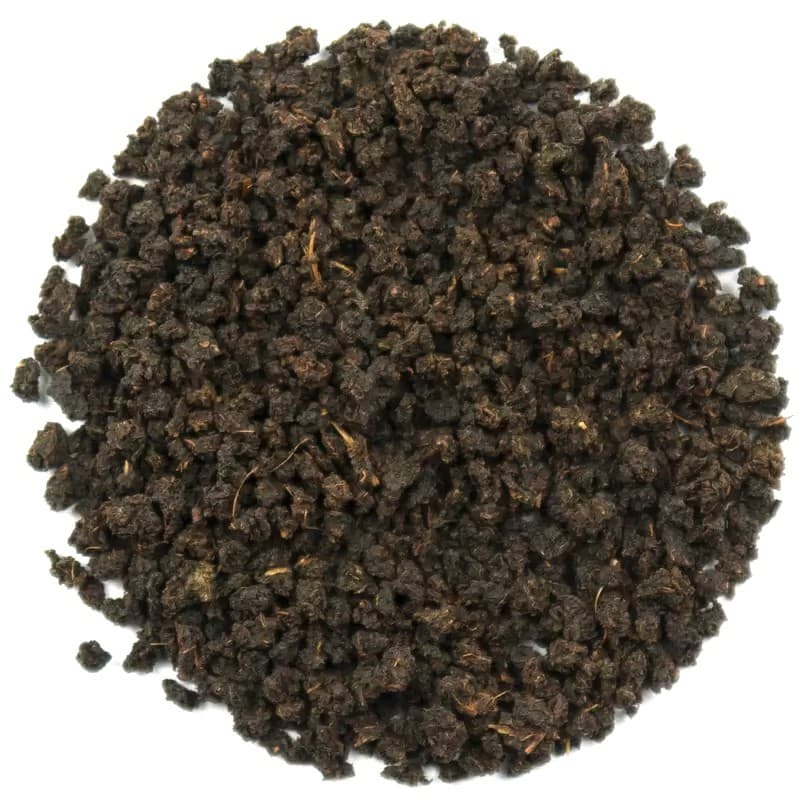
Keemun Tea Peony traces back to 1875, when a civil servant named Yu Gan-chen, having lost his post, travelled from his native Anhui province to Fujian to learn how black tea was made. He brought the technique home and adapted it there, and the result became one of the most recognized black teas to come out of China. The "Peony" in the name was added later, by English merchants taken with the tea's floral scent and the dark, petal-like sheen of the dried leaves. By the late 1800s and into the early 1900s, it had become a fixture of English high society, poured at afternoon tea alongside the country's other imports.
The character that made it popular is still there in the cup: sweet and fruity, with a floral lift, notes of lemon and date, and a finish that rounds out into honey. A trace of smokiness runs underneath, a mark of the traditional processing the leaves go through. Being a black tea, its caffeine content runs higher than most other tea types — typically somewhere in the 40 to 90mg range per cup, depending on how the leaf was processed.
To brew it, heat water to about 95°C and let the leaves steep for three to four minutes. Some drinkers add a slice of lemon or a touch of honey or sugar, though the tea holds up well on its own.