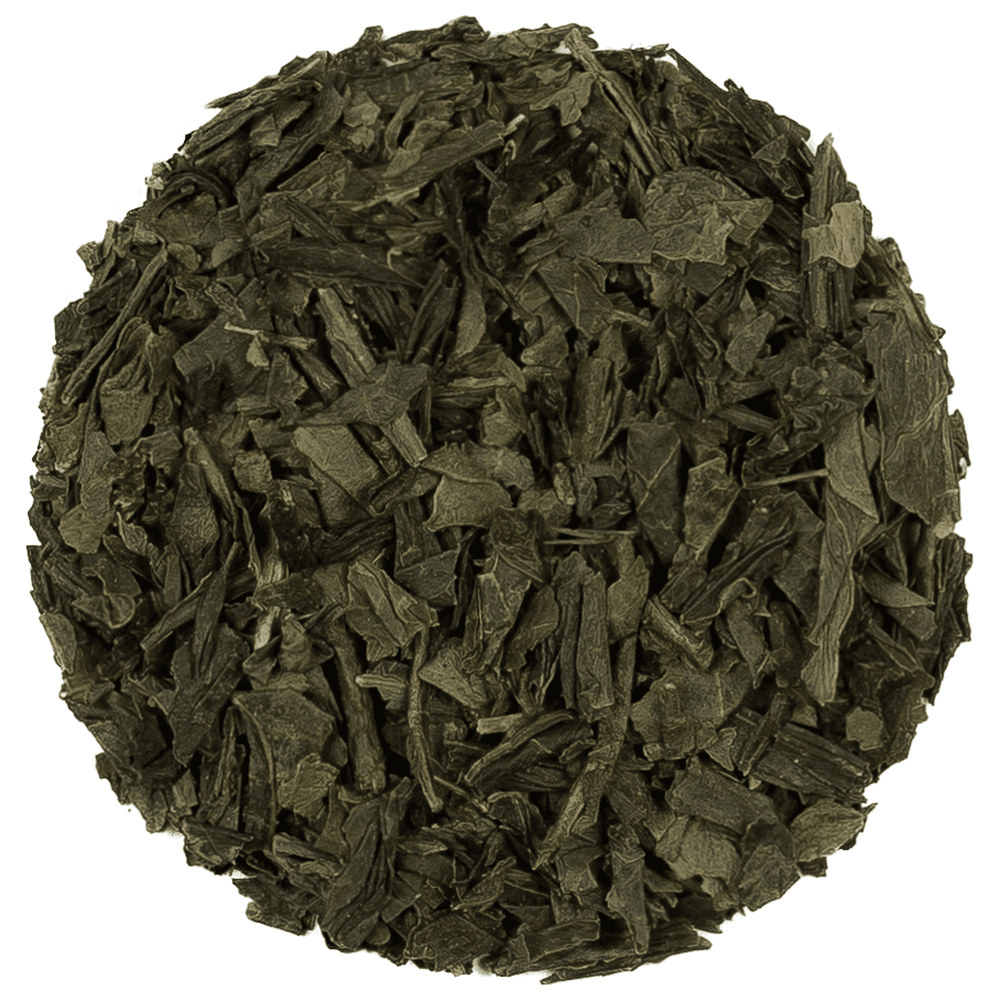
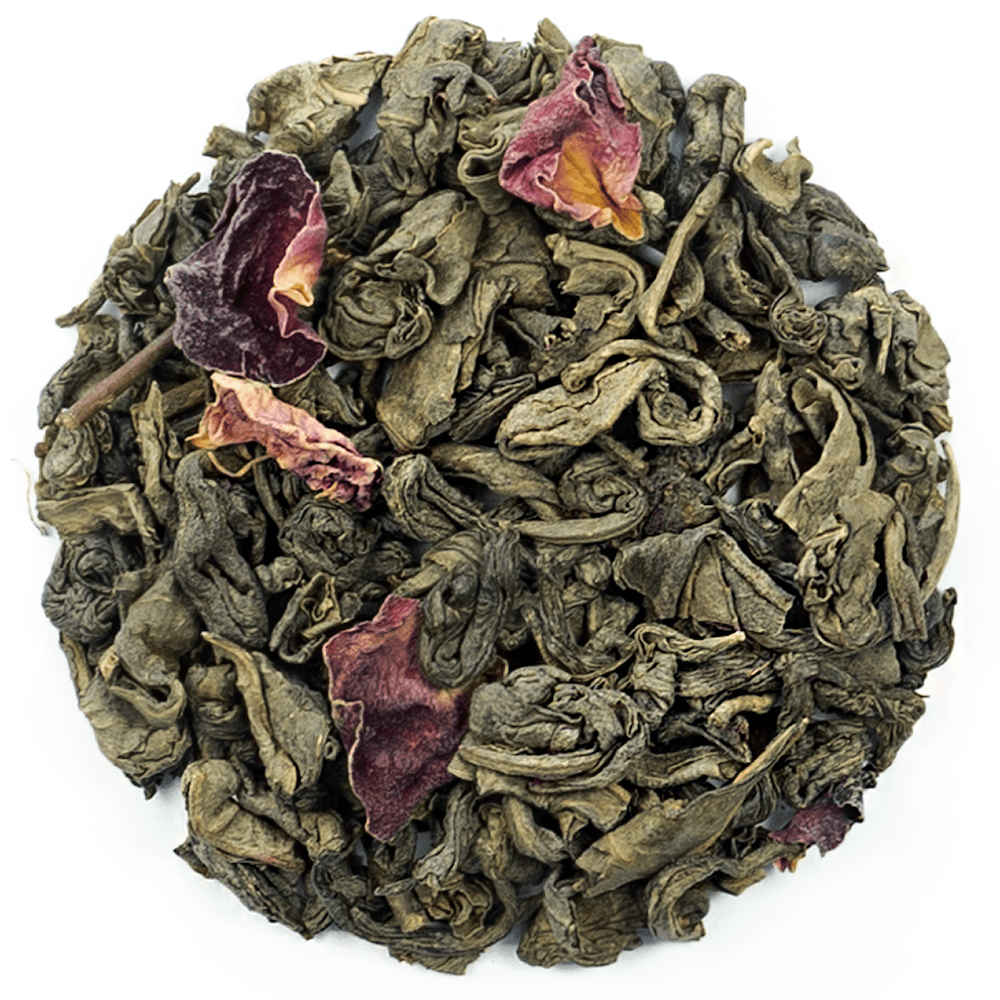
Melon seeds gave this tea its nickname, and the shape earns it: the flat, oval leaves really do look the part. It's picked from the second leaf on the branch, a Chinese green from Lu'an City in Anhui Province, and its history runs deep — the tea appears in Lu Yu's Tang Dynasty "Tea Classic," and later in the Ming Dynasty it was drunk as a remedy for sunstroke before becoming a tribute tea sent to the Qing imperial court.
In the cup, expect something smooth and light with a vegetal backbone that finishes sweet. Teatico's tasting panel picks out lemon, melon, and date alongside honey and a faint coffee note, all riding on that vegetal core — an unusual combination for a green tea, and part of why it's held onto its reputation over the centuries. It carries a moderate amount of caffeine, gentler than black tea but enough to be useful in the morning.
Brewing rewards a bit of restraint. Let boiled water cool to around 70°C before pouring — hotter water tends to scorch delicate leaves like these and pull out bitterness instead of the sweetness they're known for. Steep for about two minutes; longer if the leaf is holding up well, shorter if the liquor turns cloudy or sharp too quickly. Some drinkers add a little lemon or honey, though it stands on its own without anything added. As for wellness claims tied to green tea generally — sharper focus, lower blood pressure, and so on — treat those as traditional lore rather than settled fact. What's certain is the sunstroke remedy is history now; what remains is a tea worth drinking for the cup itself.