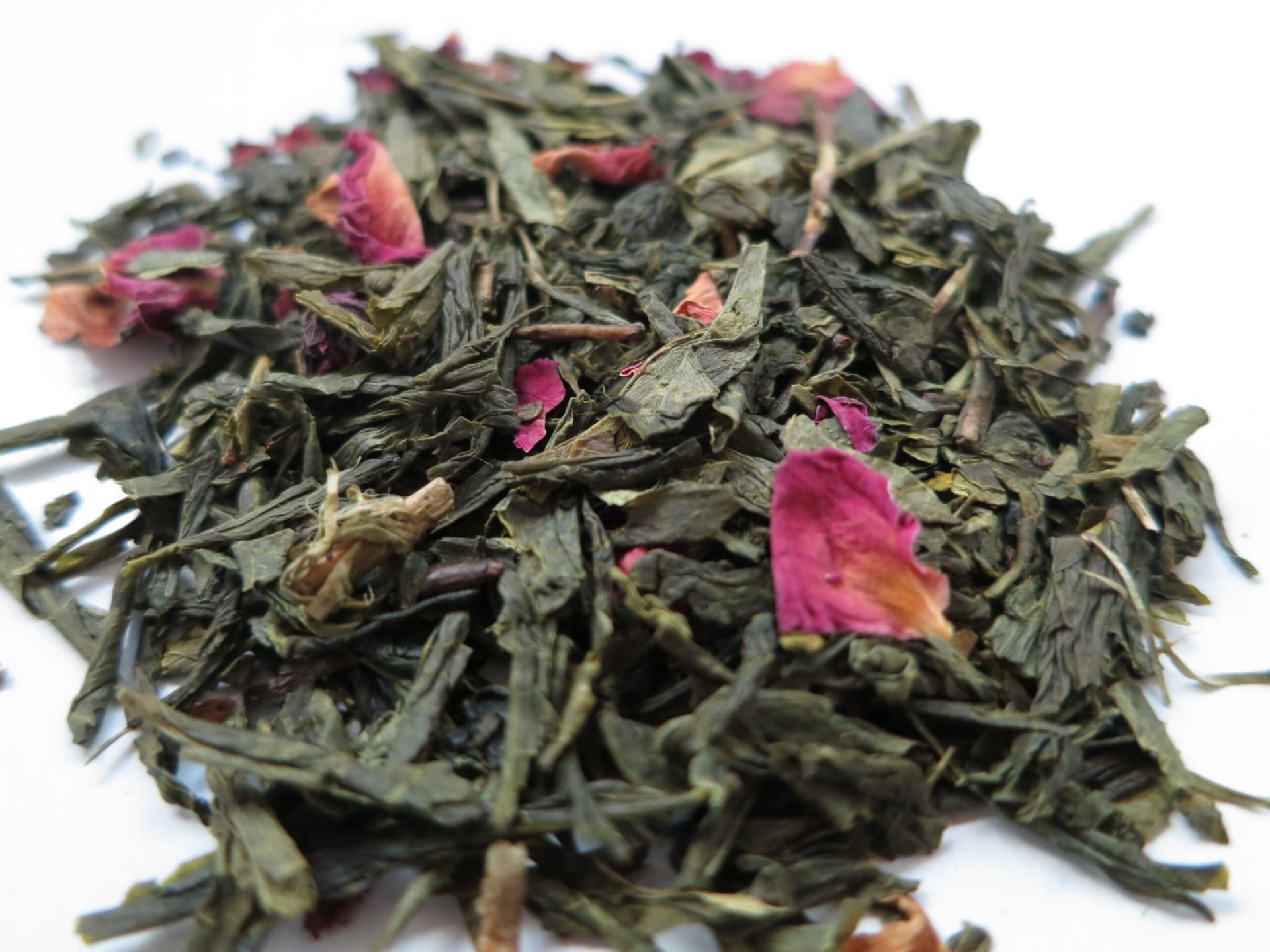
Poured over ice, this one settles into a yellowy-green liquor, pale and light in tone, with a taste that's fresh and crisp, mango sweetness leading, then a citrus edge from bergamot and lulo. The base is Chinese green tea, styled as Sencha, blended with rose petals, cornflowers and sunflower blossoms, with the mango, lulo and bergamot added as natural flavourings rather than a heavy fragrance layer.
Sencha's history is less settled than most drinkers assume. Roughly 78% of the tea drunk in Japan is Sencha, yet the style most likely originated in China. The Japanese version of events has its own hero: an eighteenth-century farmer named Soen Nagatani, said to have worked out the processing method at his home in Uji, near Kyoto, around 1738. Rather than try selling his new tea to Kyoto's conservative drinkers, he carried it to Edo, now Tokyo, where a shop owner tried it and named it tenka ichi, 'first under the heavens.' Nagatani is still remembered with a shrine near his birthplace and a grave on the highest point of the Ujitawara hills, where tea merchants gather each year to pay their respects.
Iced tea's own origin story is shorter. It's usually credited to Richard Blechynden, an American tea plantation owner and vendor, who began pouring his hot tea over ice at the 1904 World's Fair in St Louis to get around the summer heat. That improvised fix is roughly how the whole category, this blend included, got its start.
To brew it, use about two teaspoons of leaf per person and water around 80°C, just enough to cover the leaves. Steep for one to two minutes, strain, then top up with cold water and ice, adding lemon or honey if you like. Green tea's antioxidants have long been credited with general health benefits, though that's tradition rather than a settled fact. Tea & Coffee packs this one fresh to order.