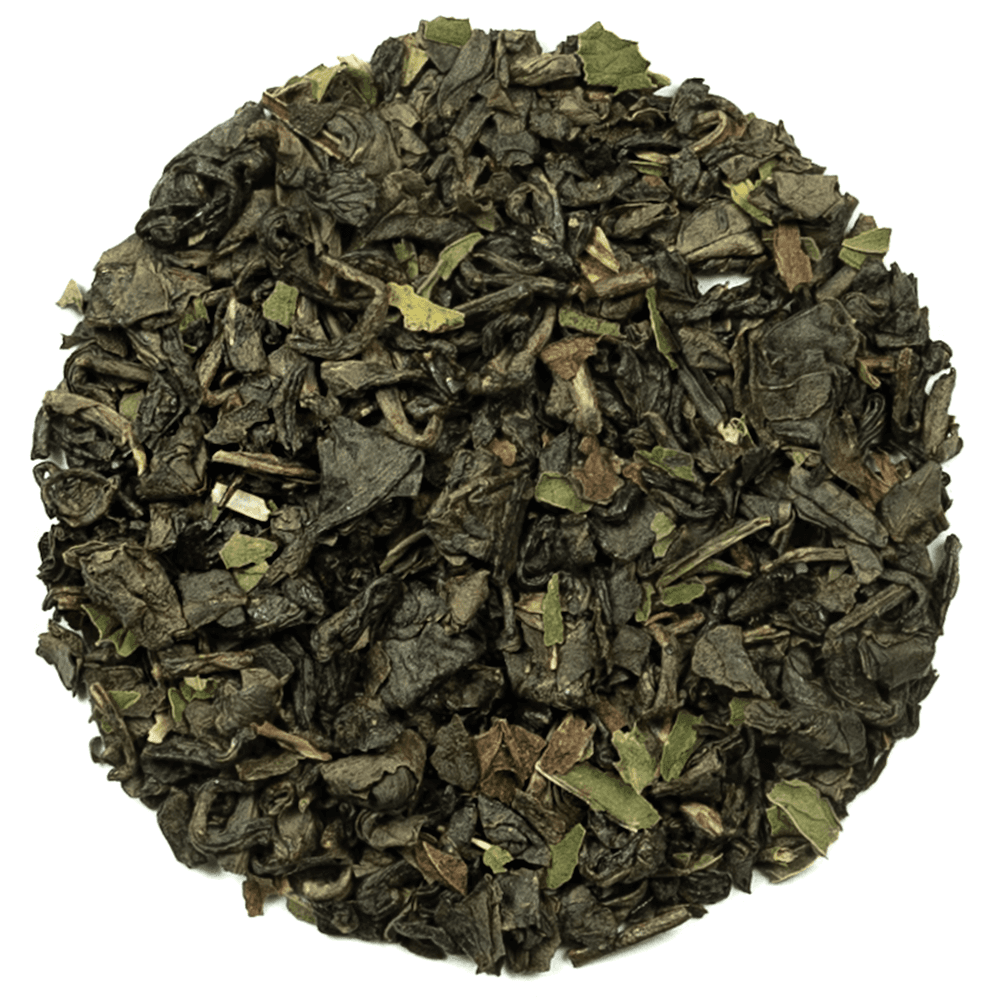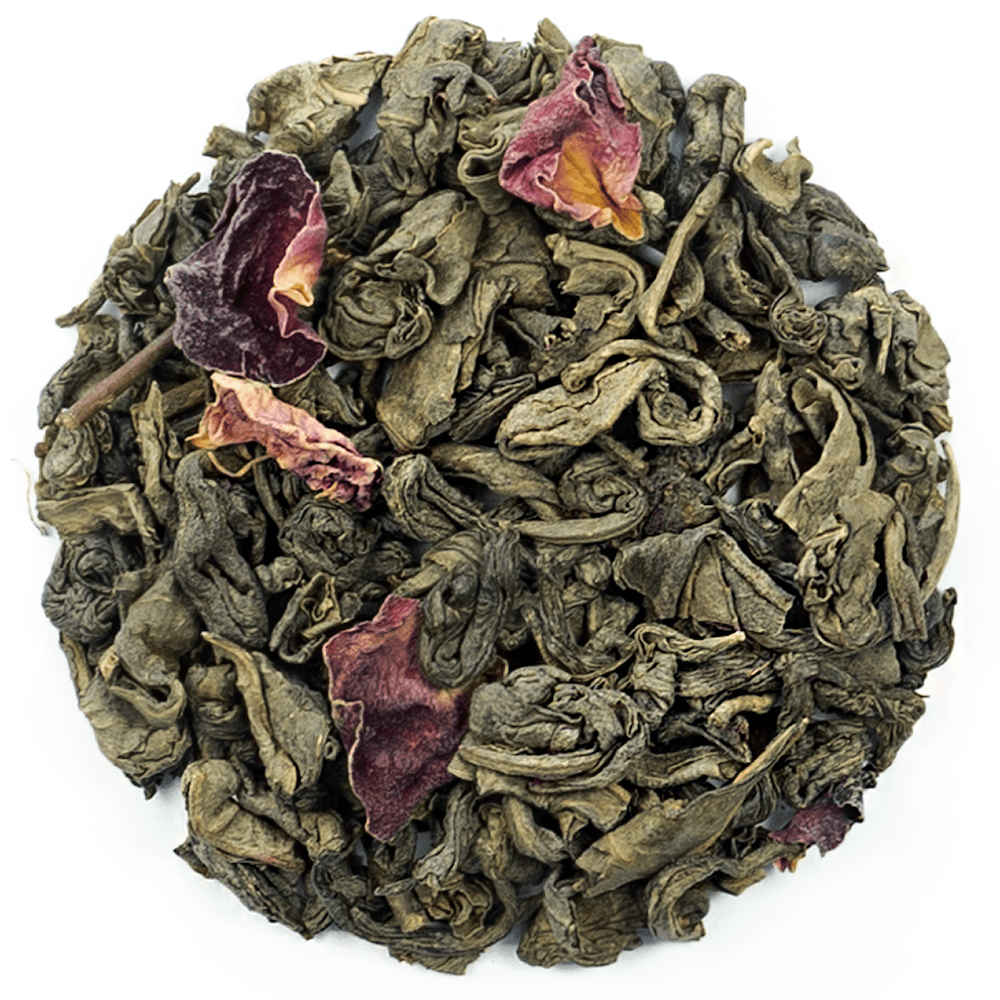
Mint tea in Morocco is less a beverage than a ritual, and Moroccan Mint Tea (also known as Maghrebi, Sahrawi, or Touareg tea) carries that history in every cup. It pairs Chinese green tea rolled into small gunpowder pellets with peppermint, a combination said to trace back to the late 17th or early 18th century, when Queen Anne sent tea to Sultan Moulay Ismail in exchange for the release of captured Britons. From there it took root as a fixture of hospitality: offering a guest three glasses is a gesture of welcome, and the phrase "Insha Allah" — God willing — captures the patience the preparation demands.
That preparation is its own small performance. The host rinses the teapot with boiling water, adds the tea leaves and sugar, then lets it steep before pouring from height into ornate glasses, aiming for a thin layer of foam on top. If the foam doesn't form, tradition says to start again. The result in the cup is grassy from the green tea with a clear minty lift, rounded out by notes of lemon, date, honey, spearmint, and a faint coffee-like depth.
Green tea on its own carries a modest amount of caffeine, so this blend isn't caffeine-free even though peppermint alone has none — useful to know if you're having it in the morning. To brew it, use water around 90°C and steep for about three minutes; longer risks tipping the cup toward bitterness. It's traditionally drunk with honey or lemon, or plain, and its ingredients have long been valued in folk use for digestion and general wellbeing, though that's tradition rather than proven fact.