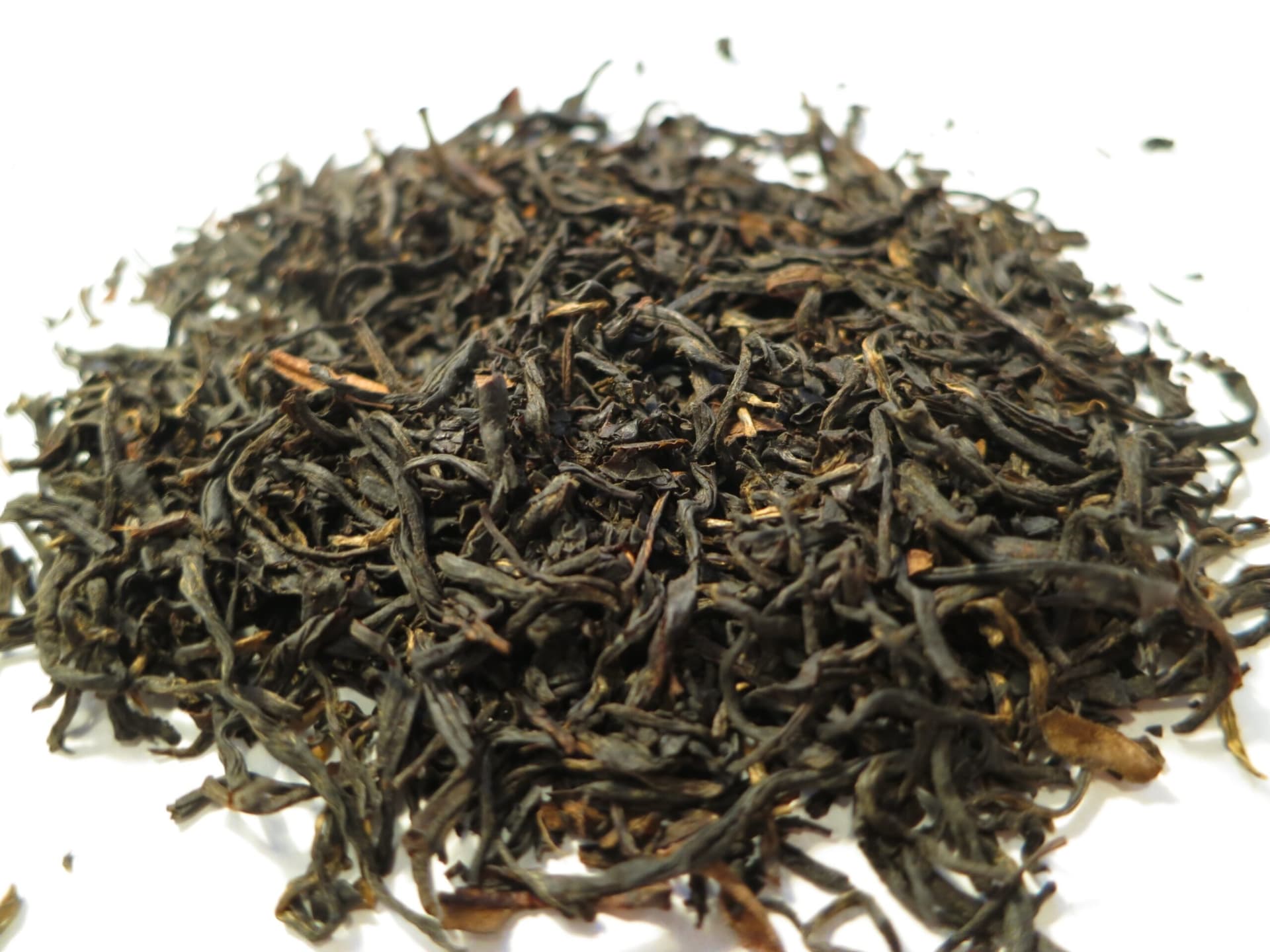
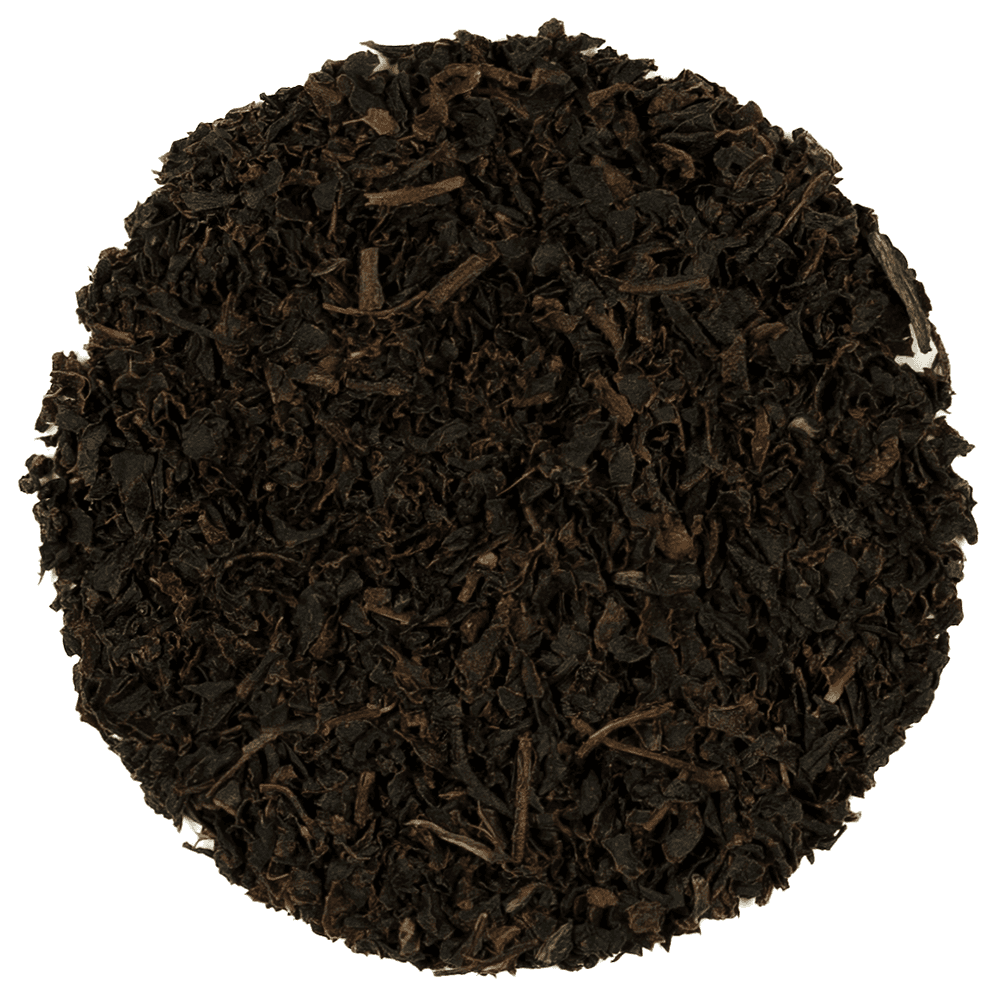
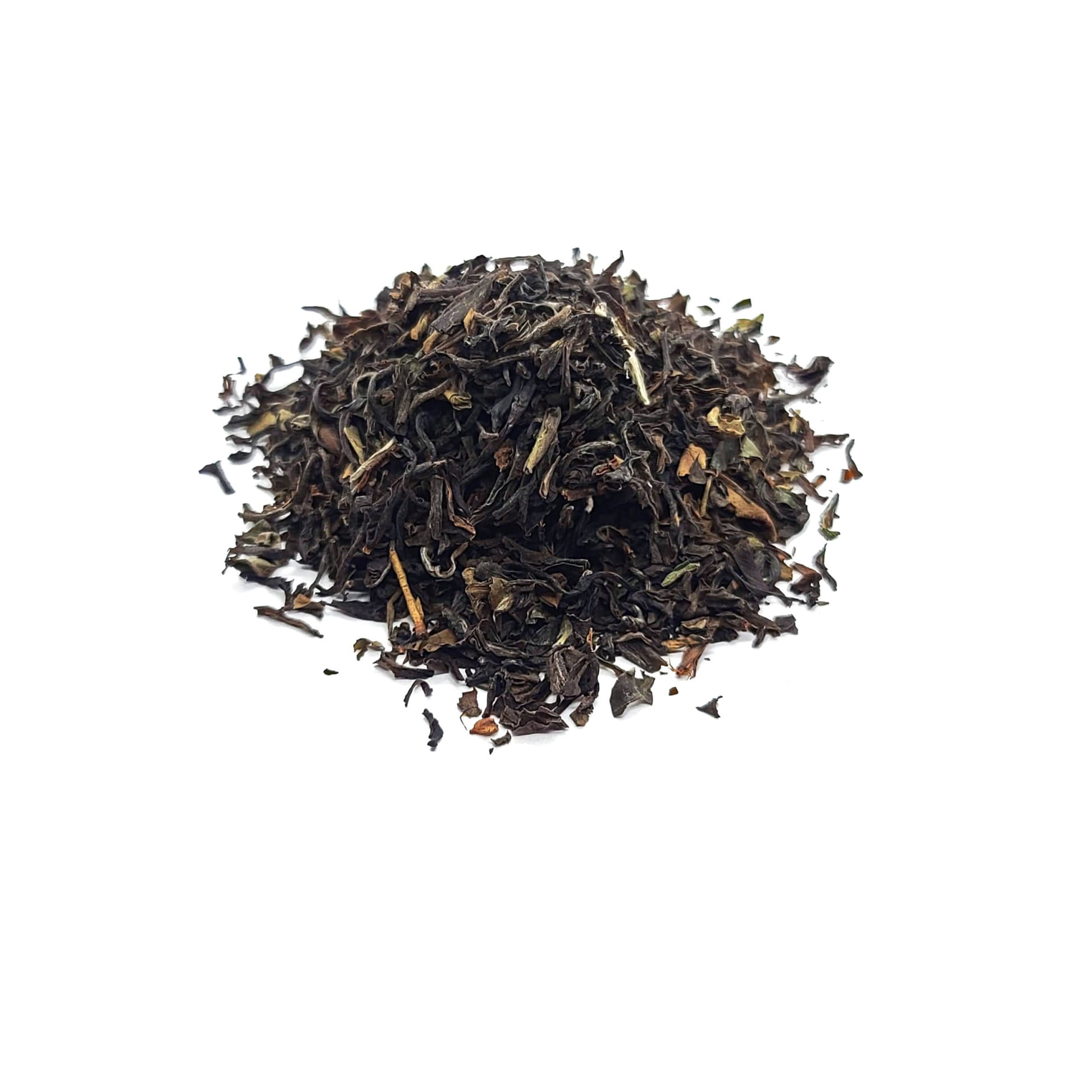
Thiashola, in the Nilgiri Hills of Tamil Nadu, was the first tea garden established in this part of South India, planted in the 1830s by Chinese prisoners of war captured during the Opium Wars. The name Nilgiri comes from Sanskrit for blue hill, a nod to the Kurinji flower that blooms once every seven to twelve years and turns the hillsides blue when it does. Grown across Tamil Nadu and Kerala at altitudes between 1,000 and 2,500 metres, the district produces hundreds of millions of kilos of tea a year, most of it cut for tea bags. The monsoon arrives here in midsummer, bringing both flooding and the rains that feed the gardens. Orthodox grades like this SFTGFOP1 are rarer than the cut leaf used for tea bags, prized for softer, fruitier character, and the best of them, picked in winter, are known locally as frost teas.
This lot comes from Thiashola's organic gardens at roughly 6,500 feet, hand picked as a second flush in January. The leaf is multicoloured and uneven to look at, a mark of the orthodox grade, and it brews into a copper-red cup with a scent of fresh flowers. Expect floral, fruity notes with a touch of lemon, good body and a clean, fresh flavour typical of Nilgiri black teas, which are often blended with leaf from other Indian districts. It takes milk well, or a slice of lemon if you prefer it black, and it holds up as a base for iced tea.
Steep with freshly boiled water for three to five minutes, and keep the leaf in an airtight container once opened, since orthodox grades lose their aroma quickly. Like other black teas, it carries more caffeine than green, oolong or white tea and has long been drunk for alertness. Its antioxidants are also traditionally credited with supporting things like cholesterol levels, blood sugar and kidney health, though the research behind those claims is still ongoing.