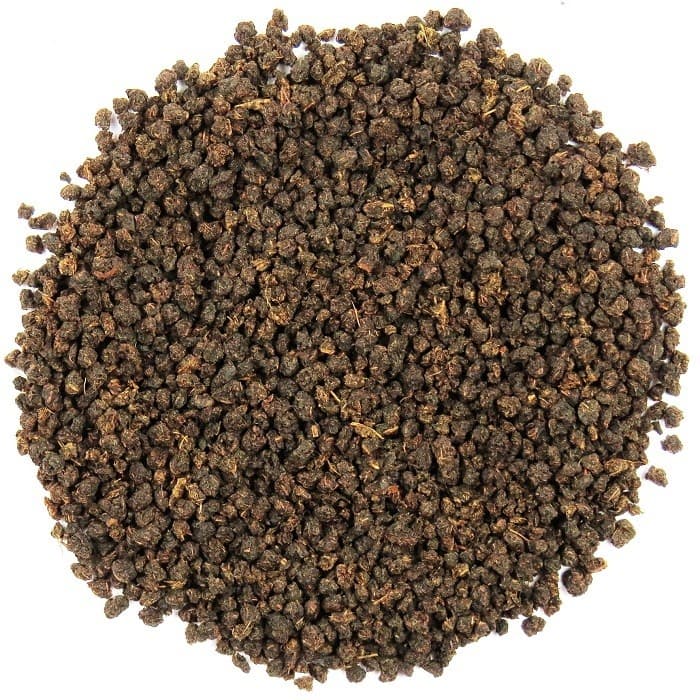
Sikkim sits just north of Darjeeling, tucked into the same stretch of the Himalayan foothills, and this first flush black tea shows the family resemblance. It's a well-made leaf, thick with golden tip, that opens into a bright, coppery-light liquor with a rounded floral character and a sweet finish running through the cup. Sikkim tea is far less well known than its Darjeeling neighbour, even though the two share a growing region and a harvest calendar.
Only two tea gardens exist in the state. This leaf comes from Temi, the older and more prominent of the two, established in 1969. Bermiok, the second garden, opened later, in 2002. Both sit at altitude, between 1,000 and 2,000 metres, where pickers hand-pluck the new spring growth. First flush plucking happens in spring, the same season as Darjeeling's own first flush, which is part of why Sikkim tea tends to share that same light, flowery, faintly sweet profile.
The grade on this leaf is FTGFOP1, Fine Tippy Golden Flowery Orange Pekoe. FTG marks the highest tip content a tea can carry, while FOP means it was plucked from the top bud and the first two leaves of each shoot, so the finished leaf is young and tender, with a generous mix of tip and bud. Temi received full organic certification in 2008; Bermiok followed in 2016, so Sikkim's tea production is now entirely organic. Tea & Coffee packs this tea fresh to order at its factory in Kent.
Brew it with freshly boiled water and let it steep for three to five minutes. It's best served plain, without milk or sugar, so the floral sweetness and light coppery colour come through on their own. A cup made this way carries roughly 45mg of caffeine per 8oz serving.