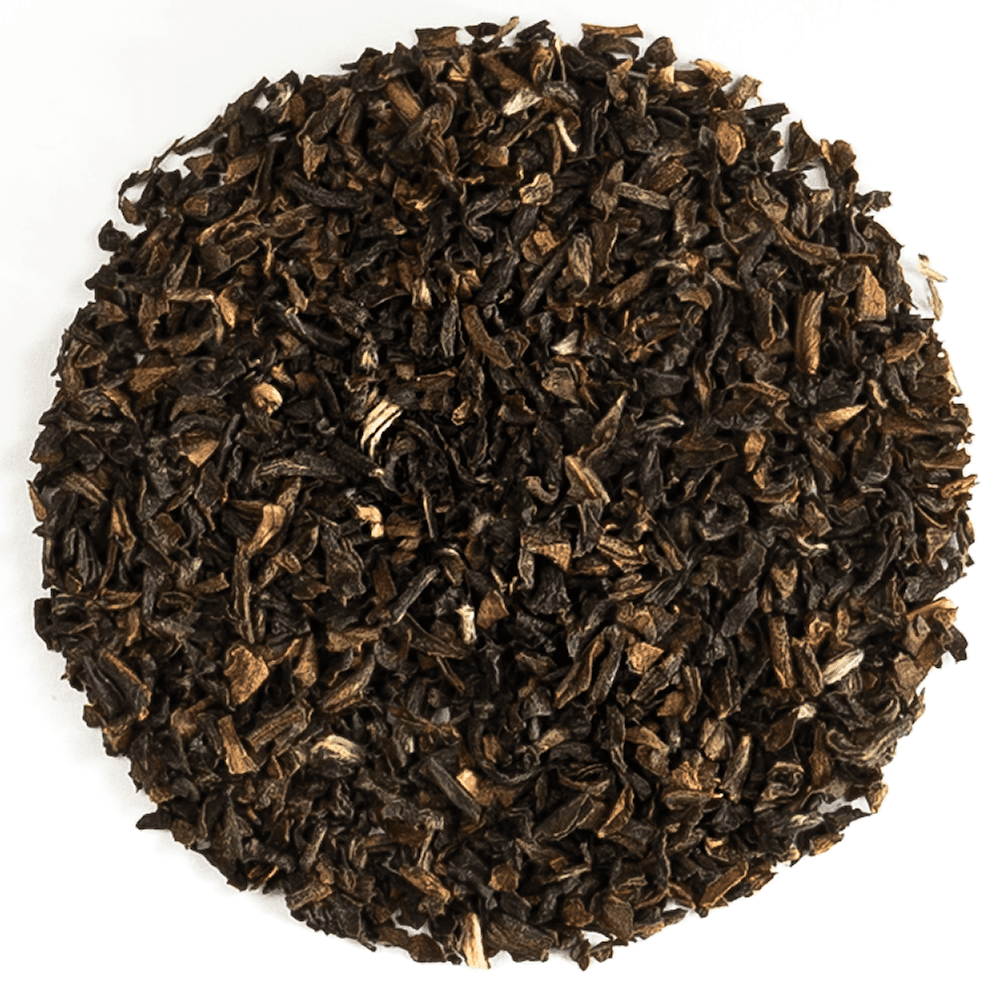
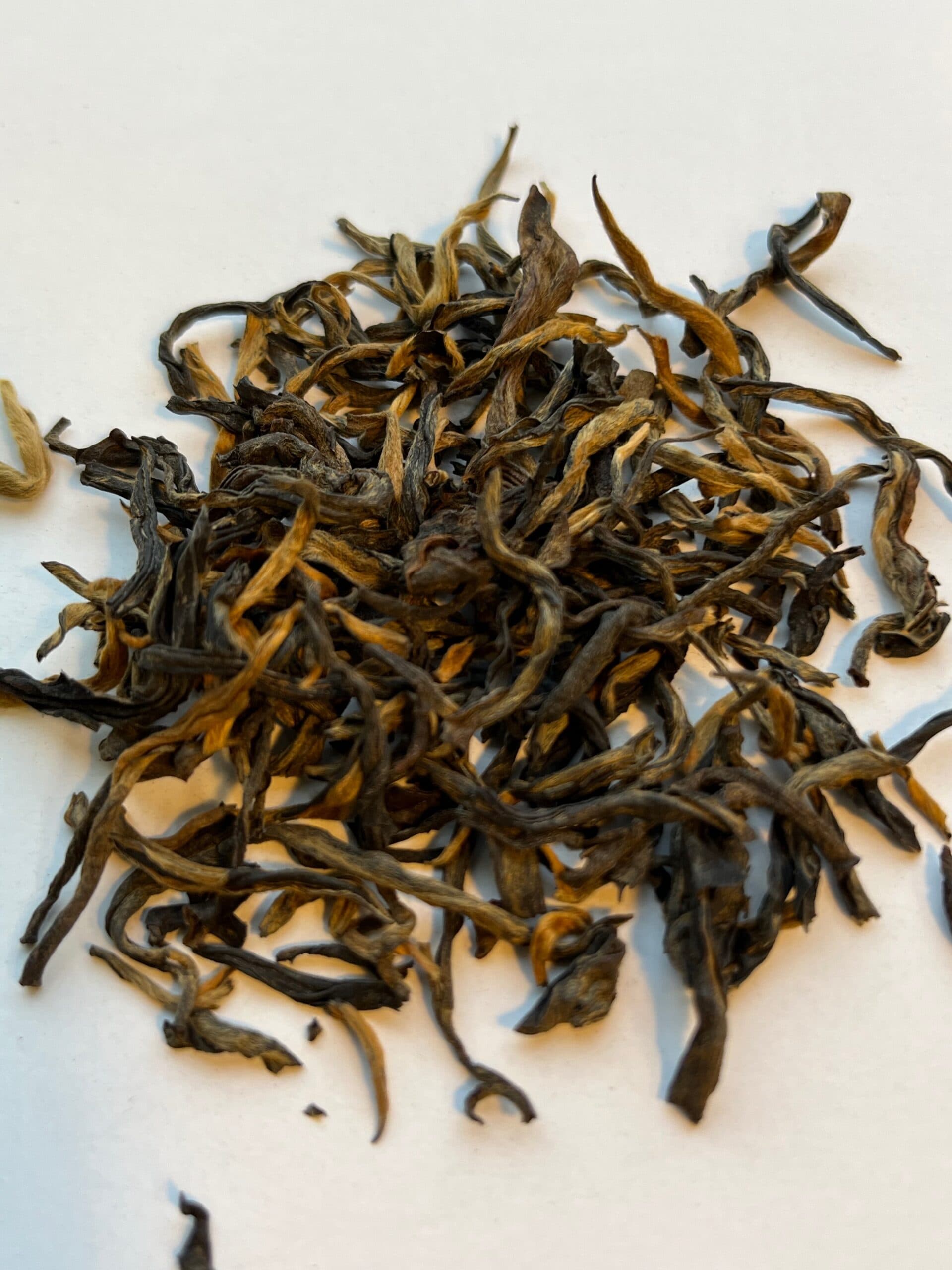
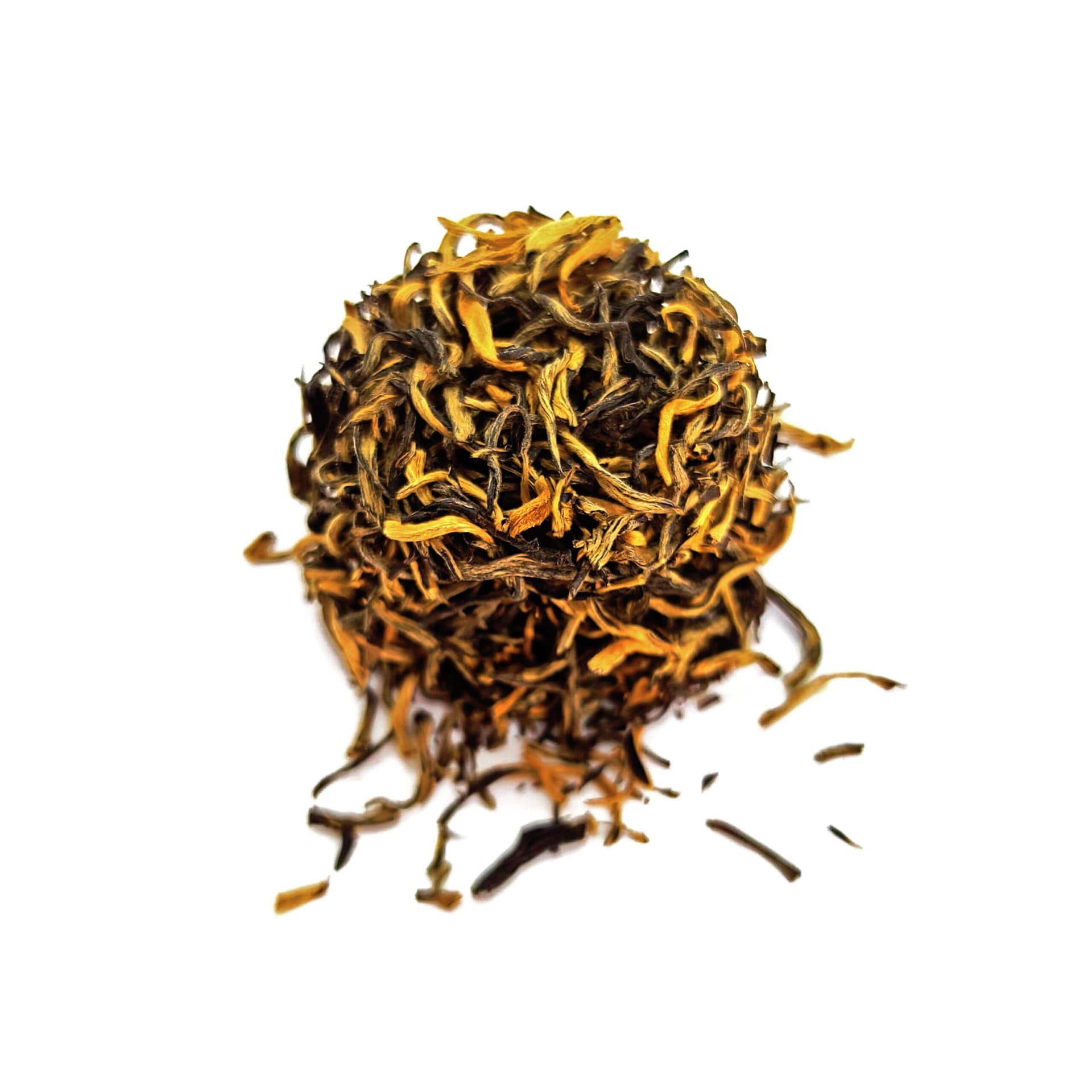
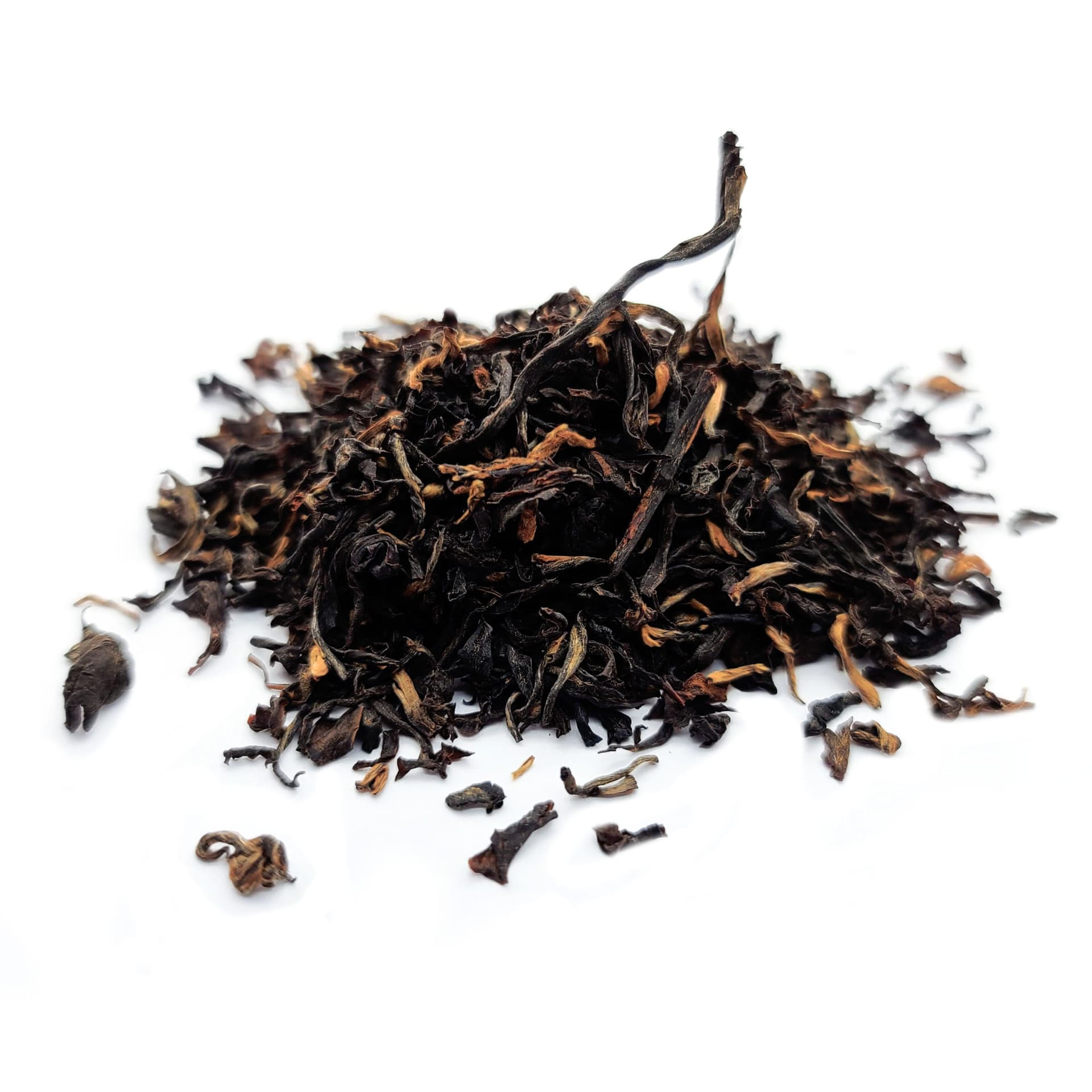
The Malwatta Valley in Sri Lanka's UVA district has grown tea since the 1860s, when James Taylor, a Scotsman who'd arrived in Ceylon the previous decade, turned to tea after coffee blight wiped out the island's coffee crop. St James Estate was one of the plantings that came out of that shift, and the ground it sits on is part of why UVA teas have their own character. This black tea keeps that heritage in a broken leaf grade, prime quality, that opens into a bright, dark red-gold liquor.
The cup carries a hint of spice against a smooth, coffee-like depth, with an aftertaste that lingers rather than fading fast. It reads as balanced rather than sharp — enough body to feel substantial without turning bitter or harsh.
To brew it, use fresh water just off a rolling boil, about 100°C, and one teaspoon of leaf per cup. Pour while the water's still hot enough to make the leaves unfurl properly, then let it steep for five minutes. Steeping longer will pull more strength and tannin out of the leaf, so five minutes is a reasonable middle ground between a light cup and a heavy one; shorten it if you prefer things gentler. Strain before serving. The estate's teas run a moderate caffeine load, roughly 50 to 90 mg a cup, which puts this somewhere between a brisk waker-upper and something you could still drink in the afternoon without regretting it later.