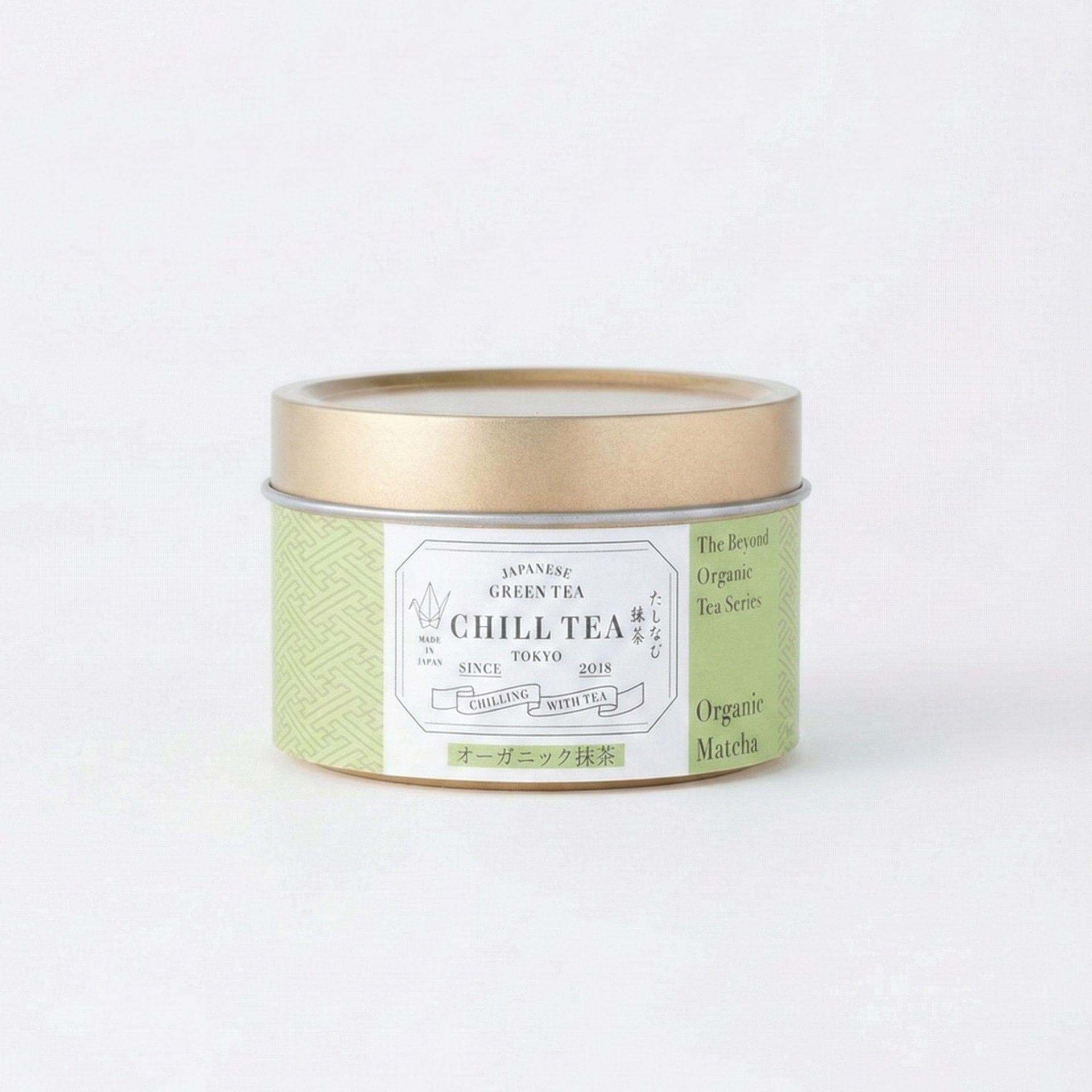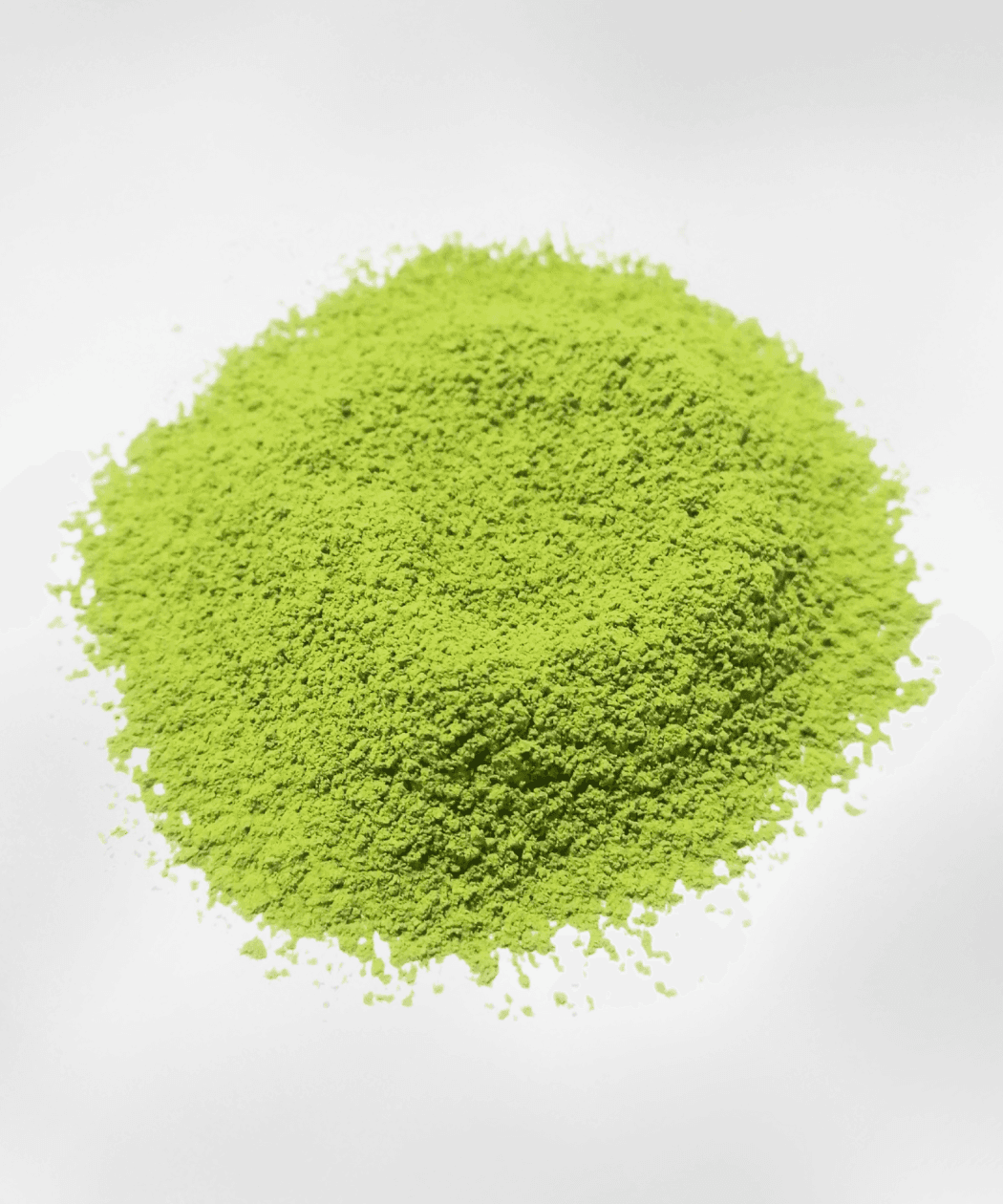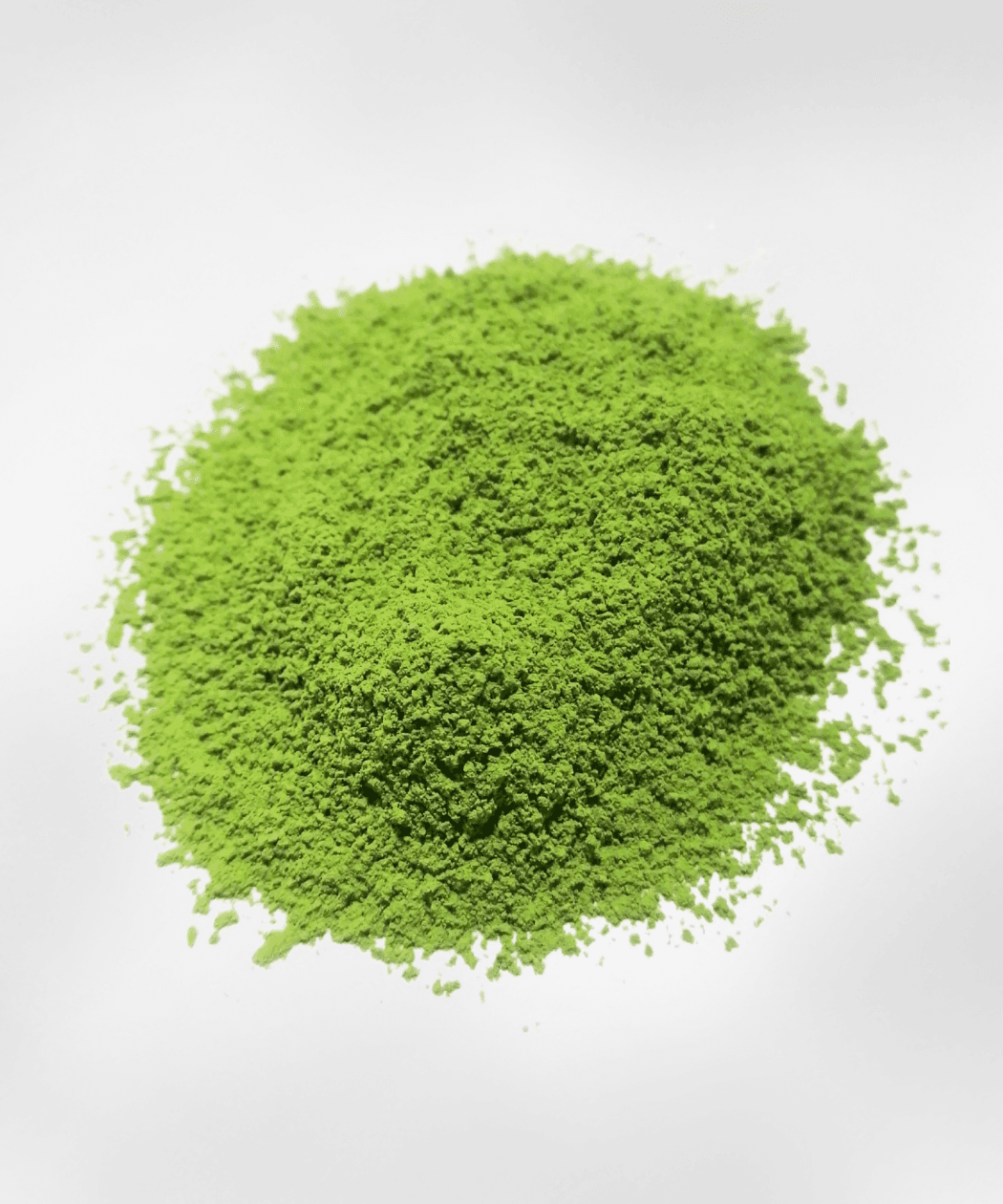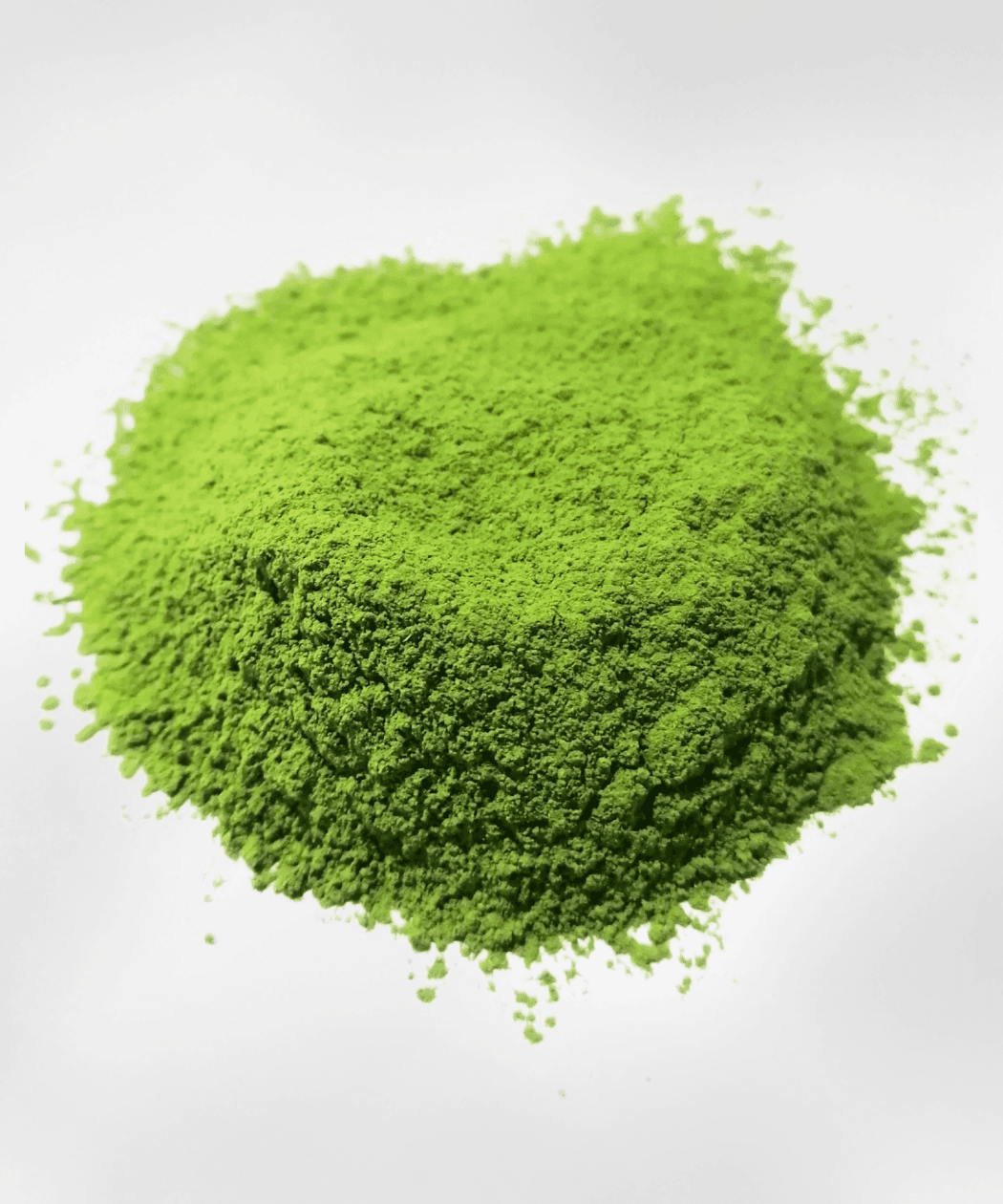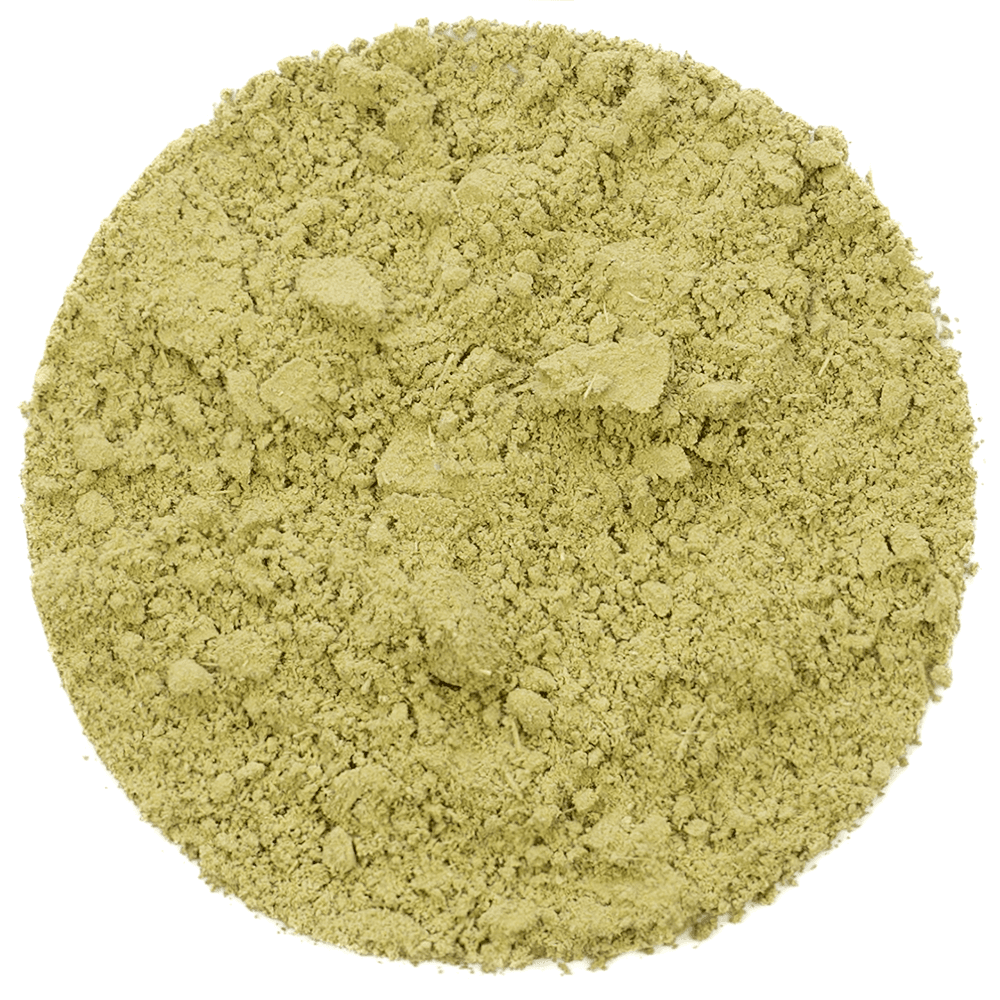
Grind green yerba mate leaves the way Japanese tea makers grind green tea, and you get something that tastes like neither on its own. This blend traces back to the early twentieth century, when Japanese immigrants arriving in Brazil brought their matcha tradition into a country already steeped in mate culture. The two habits merged into a single powder: organic green mate leaves from Brazil's Paraná region, finely milled to a matcha-fine grind.
The cup leans toasted and nutty, with roasted-grain notes and a thread of smoke running underneath. Below that sits the grassy, earthy backbone you'd expect from a green tea base, plus a mild sweetness. Whisked properly it builds a creamy froth and a velvety texture, with a light astringency at the finish that keeps it from feeling heavy.
Caffeine runs around 80mg a serving, roughly double what most teas carry, and it comes packaged with natural theobromine and theophylline. Those compounds are said to spread the lift out rather than deliver a single sharp spike, part of why mate drinkers describe the energy as steadier than coffee's. Yerba mate has long been used to support digestion and metabolism, and matcha and mate alike are valued in some traditions for calm, focused alertness rather than jittery stimulation. The polyphenols in both leaves are the kind associated with antioxidant activity, though none of this should stand in for medical advice.
To prepare it the traditional way, spoon about a teaspoon of the powder into a bowl, add a small splash of water around 80°C, and whisk it into a smooth paste before topping up with more hot water and whisking again until it froths. From there it can go straight into the cup, take a splash of milk for a latte, or get blended into a smoothie or iced drink.