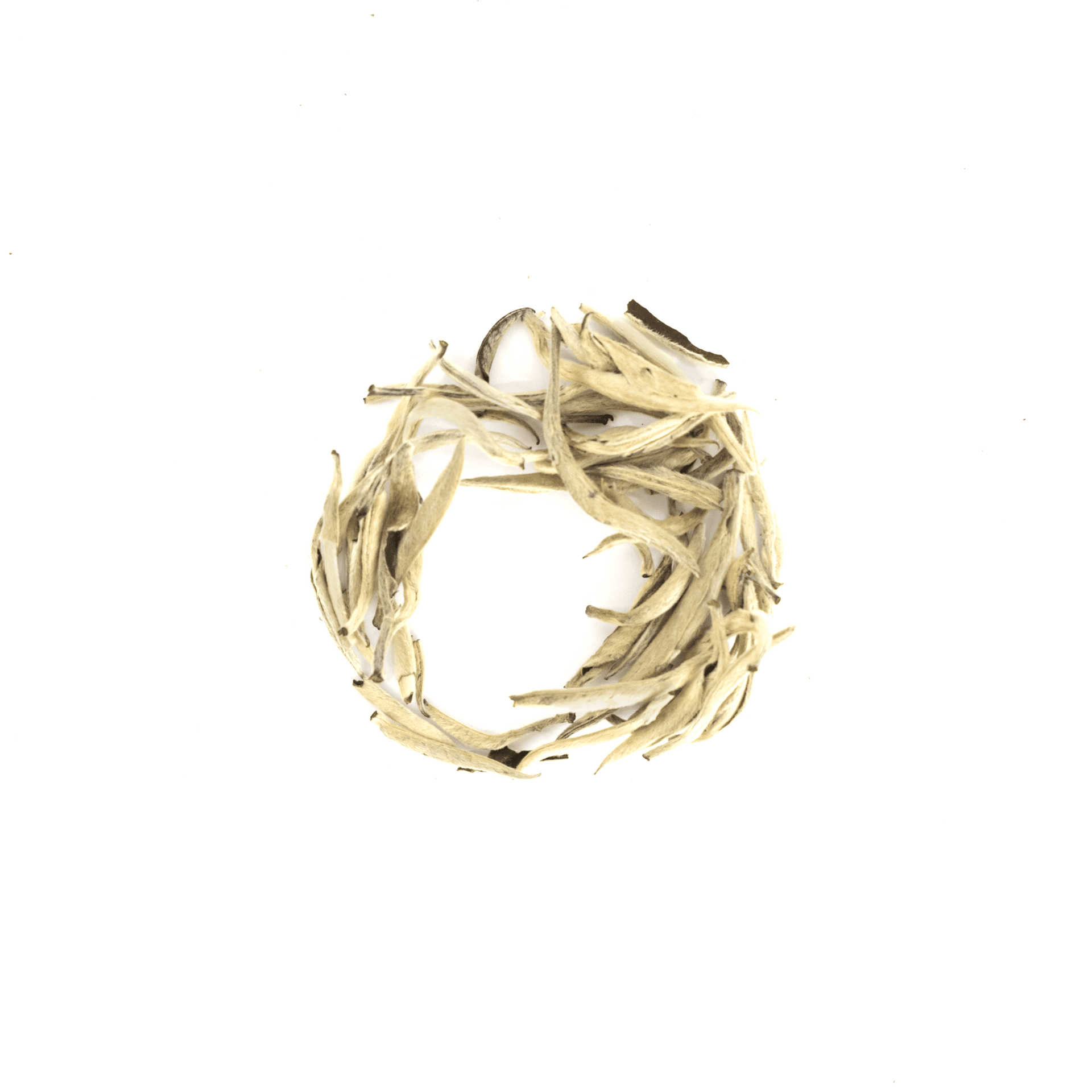
Silver needle sits at the top of the white tea family for good reason: the buds are picked by hand each spring, only the youngest and most tender ones, and nothing else touches the leaf before it reaches your cup. The name comes straight from what you see in the dry leaf — long, straight buds tipped in silver-white down, close enough to actual needles that early producers named it on sight.
The tea traces back to China's Fujian province, where it was grown as tribute tea for the imperial court during the Tang dynasty, though the needle-like shape people now associate with it didn't fully develop until the Song dynasty. Production later spread from the Zhenghe area, under Fujian's Quanzhou prefecture, out to the rest of the country, but the origin story stays rooted in that province.
What sets silver needle apart from other whites is how little happens to it. After picking, the buds are spread out and left to wither in natural sunlight for two to three days, which draws down moisture and lets sweetness build without pushing the leaf toward oxidation. A slow, gentle drying — air and light heat — locks in the flavor before sorting removes any stray leaf or blemished bud, so only the cleanest picks make it to packaging.
In the cup, expect a pale gold liquor with a scent that leans floral, backed by honey and a faint mineral edge. The taste is soft rather than sharp — sweet up front, smooth through the middle, with a light drying finish on the tongue rather than any real bitterness. Steep 5g in 150ml of water at 80°C for about two and a half minutes; push the temperature much higher and the delicate character turns bitter fast. The buds hold up well to multiple infusions, with each round drawing out a slightly different layer of the flavor, so it's worth adding a little extra steeping time on the second and third pass rather than treating it as a one-shot tea.