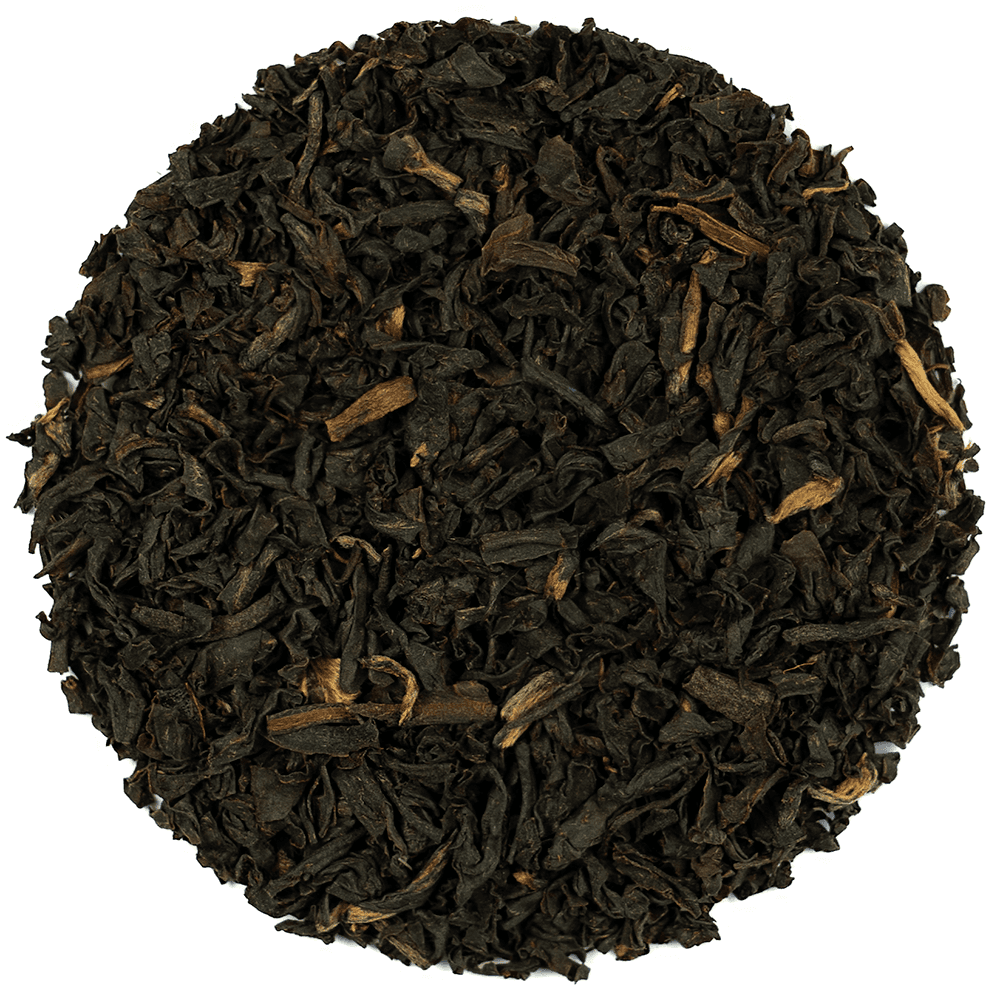
Ching Wo takes its name from the Chinese for "pure harmony," and that phrase gives a fair sense of what's in the cup: a fully oxidised black tea from Fuzhou, in China's Fujian Province, with roots going back to black tea production methods introduced there in the late Ming Dynasty. The leaves are dark, dry and slightly twisted from full oxidation, which is also what gives the liquor its deep amber colour.
In the cup, expect a clay-like, thick character rather than anything bright or floral — closer to a winey, full-bodied black tea than a brisk breakfast blend. Fujian's black teas have long carried this kind of weight, and Ching Wo sits comfortably in that tradition, though it has adapted over generations rather than staying frozen in one style.
To brew it, use a ceramic or clay pot rinsed with hot water beforehand, so the vessel doesn't rob the water of heat. One teaspoon of leaf per 250ml cup, boiling water, and a steep of around four minutes gets a strong, full-bodied result — pull it a little earlier for a milder cup, longer if you want more grip. Strain it out fully rather than leaving leaves in the pot, since further steeping past that point tends to push the tea toward bitterness.
Ching Wo carries a moderate caffeine load for a black tea, and has traditionally been valued in Chinese tea culture as part of daily life rather than as an occasional treat — reflecting its long history as a working, everyday brew rather than a rarity.