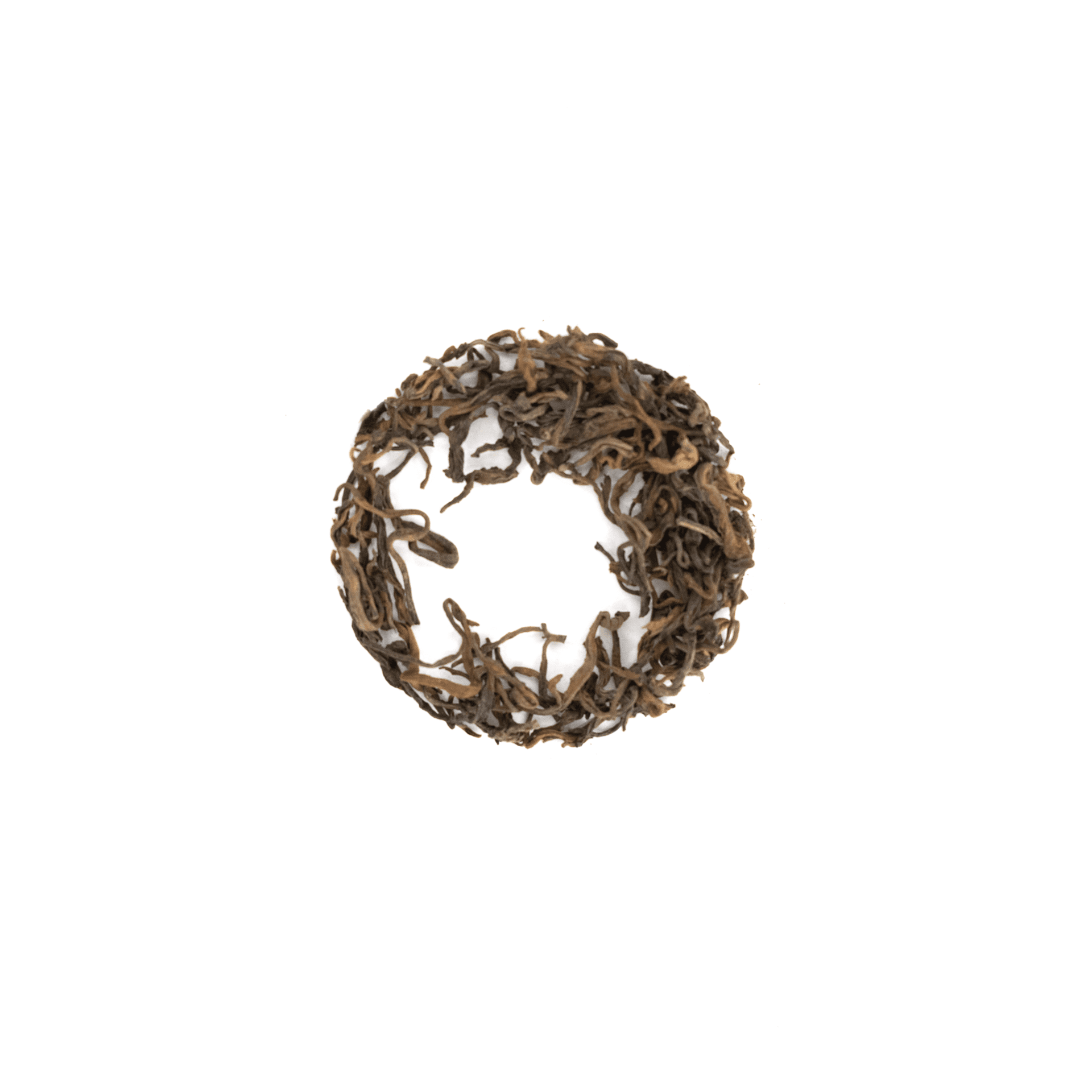
Grain-sweet and smooth enough to drink all afternoon. The secret is the tiny golden specks dotting the inside of the brick — jin hua, a beneficial fungus that grows during fermentation and turns the tea honeyed and warm from the inside out. Golden Flowers '17 is an Anhua fu zhuan hei cha (安化茯砖黑茶), a style of Chinese dark tea most people outside China have never encountered. Tasting Notes Think warm toast and honey with a clean, malty sweetness underneath. The liquor pours amber-gold, and the lid smells like warm bread. First steeps land soft and round, coating the mouth with toasted grain and dried fig. Later rounds shift toward a quiet woody depth as the sweetness holds steady, making each steep feel a little different from the last. Those golden specks are jin hua — the fungus that turns a dark tea honeyed and warm from the inside out. Origin Anhua sits in Hunan's hill country, where warm rain and mineral-rich soil give local hei cha its earthy depth. The Zou family and their farmer cooperative grow Yuntai Daye leaf at 800 meters without synthetic inputs, which keeps the cup clean and sweet. This lot dates to April 2017, and the leaf aged loose for seven years before pressing into brick form in 2024. Craft Fu zhuan is a style of hei cha where producers place the pressed brick in a warm, humid room and wait for a specific fungus (Eurotium cristatum) to bloom through the leaf. Those golden specks are the jin hua, and they break down the tea's rougher compounds into something mellow and sweet. More golden flowers mean a sweeter, more honeyed cup, and this brick is thick with them. Aging Hei cha ages well, and fu zhuan bricks are built for it. Over time, the jin hua keep working through the leaf, smoothing rough edges and deepening the sweetness. This brick carries seven years behind it already, and it will keep shifting toward more dried-fruit character, a rounder body, and a longer finish with each passing year. Four or five sessions from a single bag, more than enough to know if hei cha fits your routine. If you enjoy smooth, warm teas with grain and sweetness, this is a comfortable place to start. Brewing Brew 5 grams in 100 ml of 100°C water for 30 seconds — five grams is about a tablespoon. Rinse the leaf with a quick pour of boiling water first, then discard it to open the compressed brick and clean the surface. A 25-gram bag gives you about five sessions, and fu zhuan handles high heat, so pour confidently and steep short. FAQ What is fu zhuan hei cha? Fu zhuan is a type of hei cha, a family of Chinese dark teas that go through microbial fermentation after drying and pressing. What sets fu zhuan apart is the jin hua step. Producers place the pressed brick in controlled heat and humidity until golden flowers fungus (Eurotium cristatum) blooms through the leaf, sweetening and smoothing the final cup. How does Golden Flowers compare to Titan Log? Golden Flowers '17 is lighter, with sweet grain and honey from the jin hua fungus. Titan Log '12 is denser and earthier, shaped by log-format pressing and longer aging. Golden Flowers is the gentler starting point. Is the golden fungus in my tea safe to drink? The golden specks are Eurotium cristatum, a fungus deliberately cultivated during fu zhuan production. Chinese researchers have studied it for decades, and it is recognized as beneficial — the same way koji is safe in miso or soy sauce. The jin hua are what make this tea smooth and honeyed rather than rough. Is hei cha the same as pu-erh? No. Both are fermented Chinese teas, but they come from different regions with different processes. Pu-erh comes from Yunnan, while hei cha comes from Hunan, Sichuan, or Guangxi. Fu zhuan's golden flowers step is something pu-erh does not use at all.