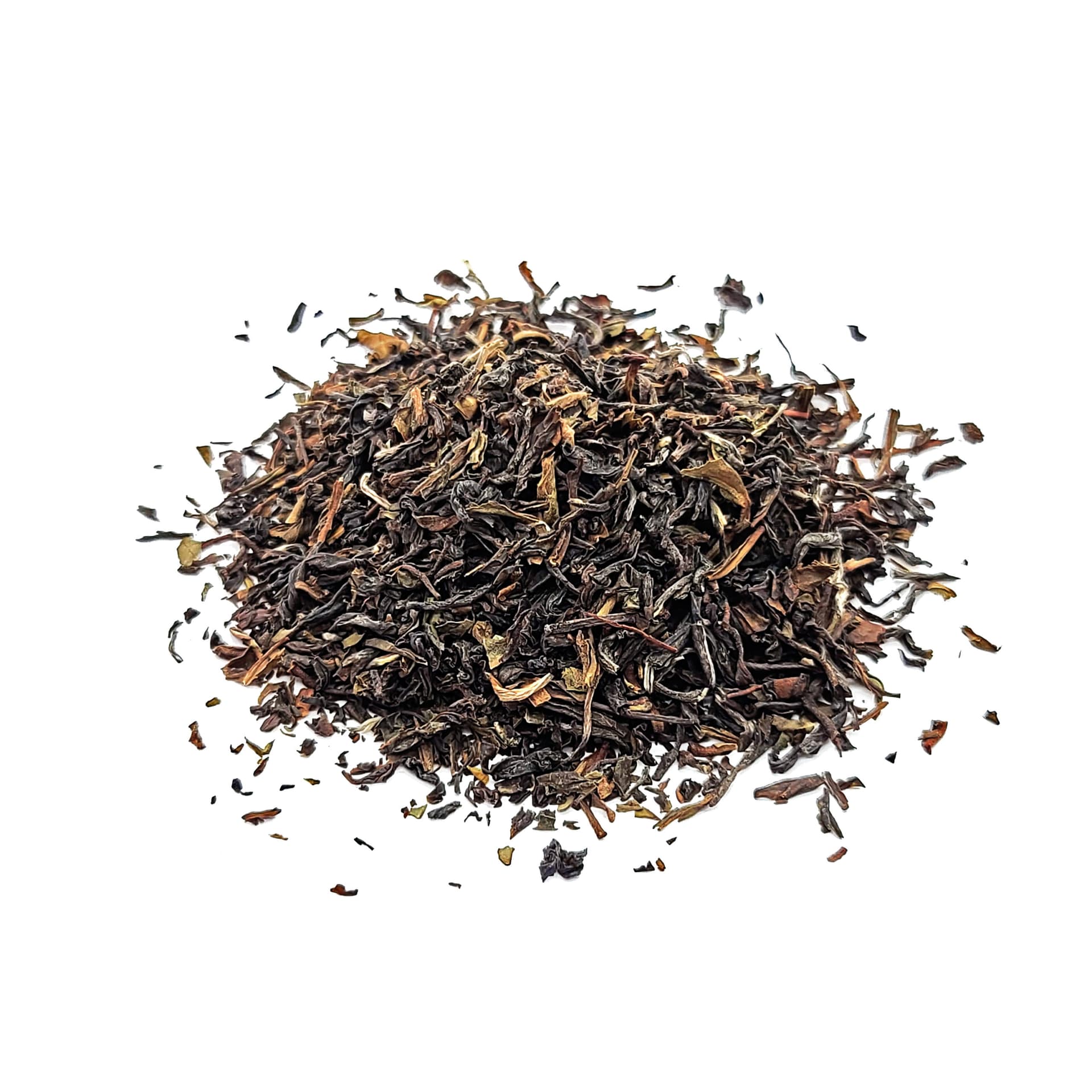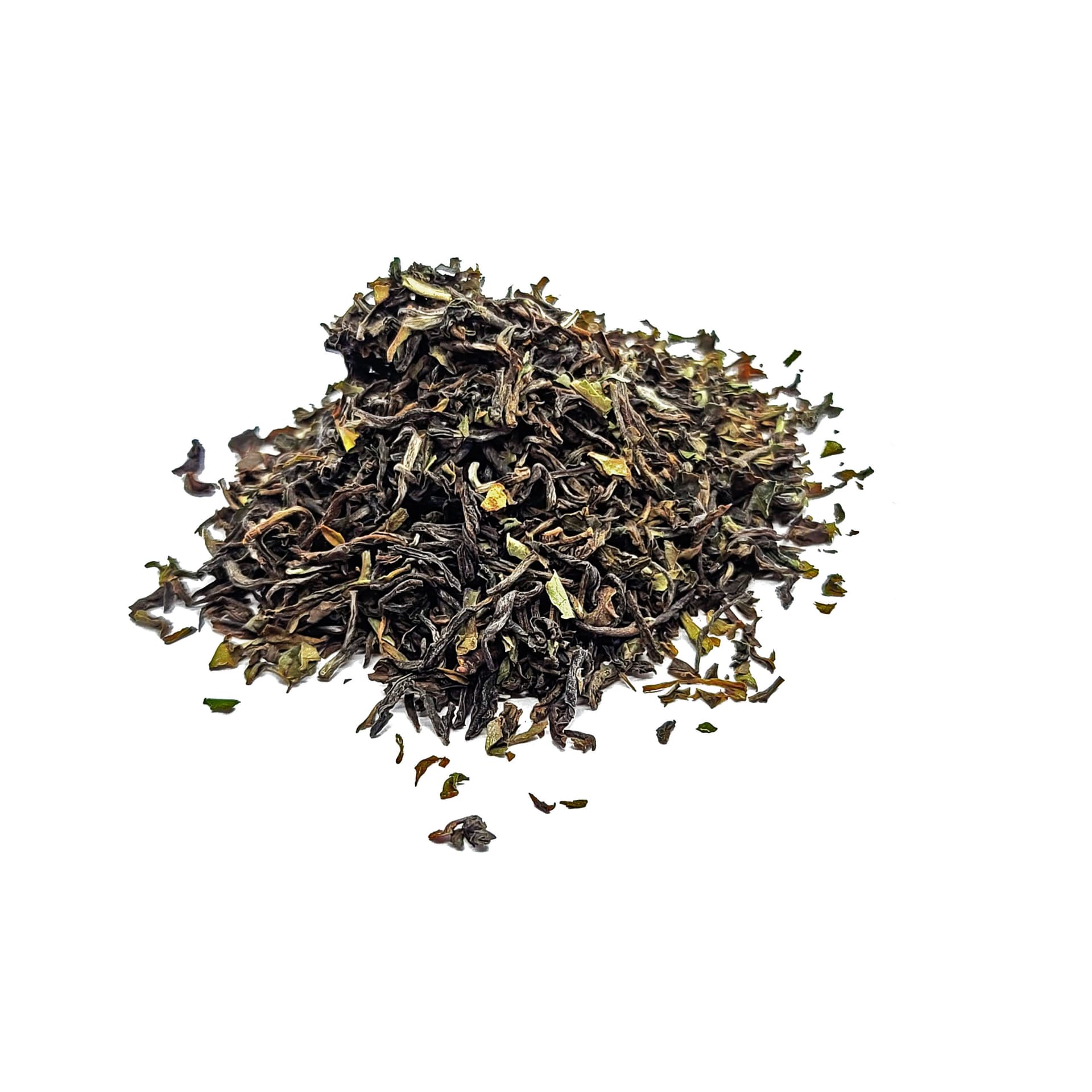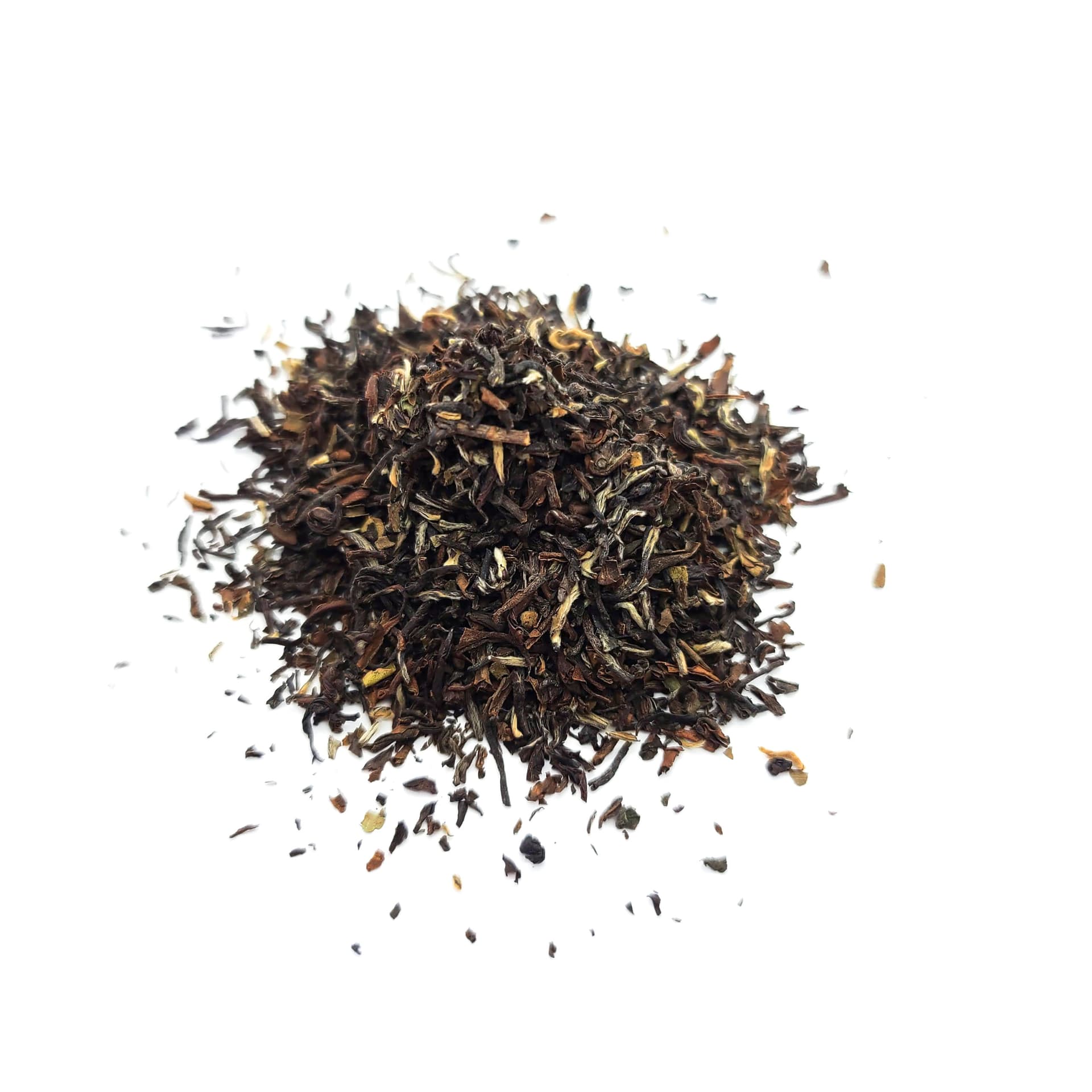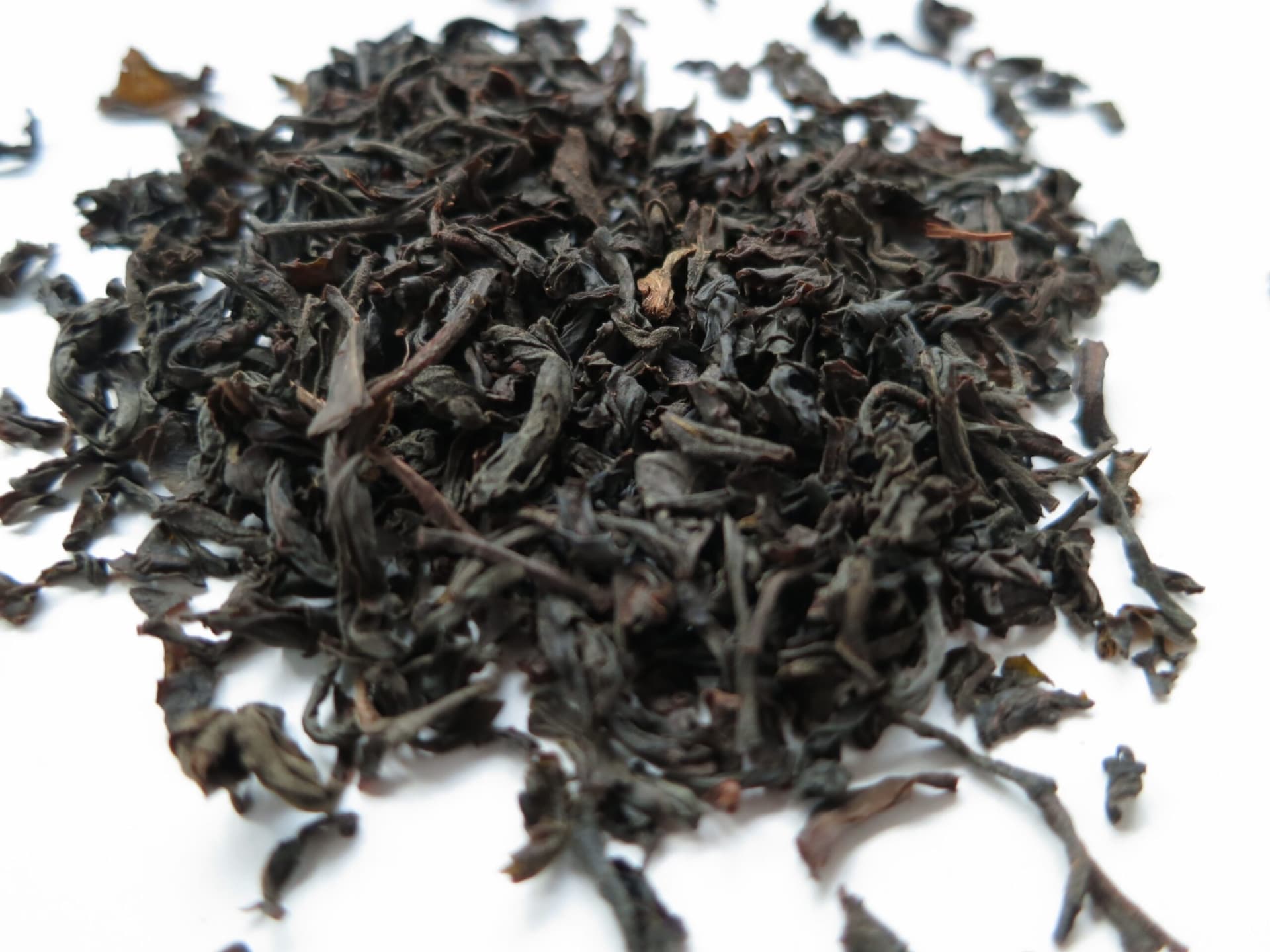
Darjeeling first flush earns its reputation the moment it hits the cup: pale, coppery liquor with a floral lift and a thicker, more textured body than the wiry leaves might suggest. It comes from young leaves and buds plucked in early spring in the Darjeeling region of India, and that early picking is what gives it its character — lighter in color and gentler in flavor than the second flush teas harvested later in summer. Because the first-flush window is short, quantities from any given estate tend to be small, which is part of why these lots are prized among people who follow Darjeeling closely.
Set against second flush, the difference is really one of temperament rather than quality: second flush is fuller-bodied and deeper in flavor and more widely available, while first flush stays delicate and floral. Both carry caffeine, though first flush generally runs lower than second flush. Darjeeling tea in general has long been valued for its antioxidant content, and drinkers have traditionally turned to it for a lift in mental alertness alongside a calming, stress-easing effect — worth taking as tradition rather than guarantee.
To brew it, let boiled water cool for about two minutes before pouring, since Darjeeling's delicate leaves scorch easily at a full boil. Use roughly a teaspoon of leaf per eight ounces of water and steep for two to three minutes depending on the strength you want — around two and a half minutes is a good middle point. Most drinkers take it plain, without milk or sweetener, so the floral notes and thicker mouthfeel come through unmasked.