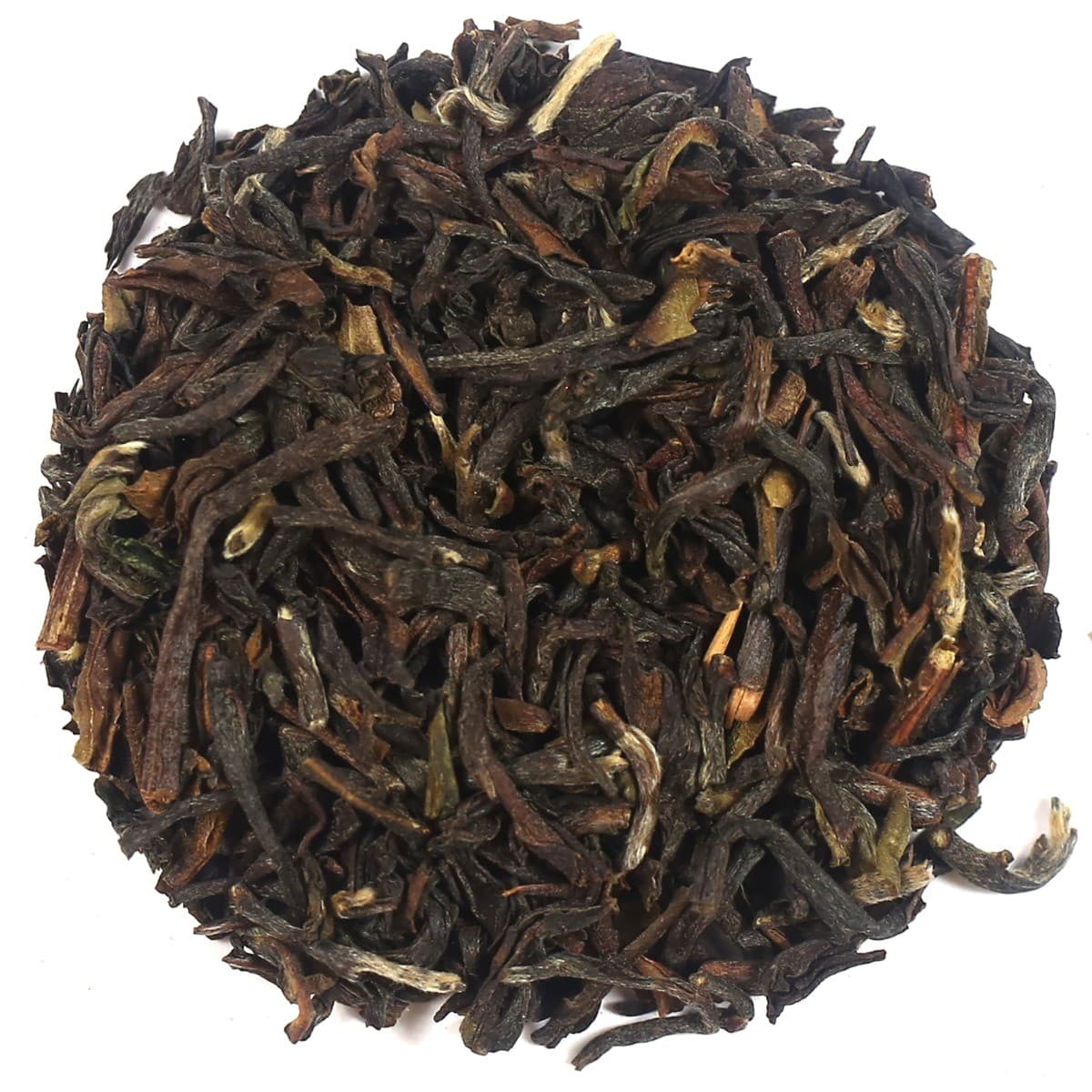
Darjeeling has been called the champagne of tea, and this FTGFOP1 grade earns that comparison. It comes from the Darjeeling district in West Bengal, a region where, oddly, most of the tea bushes growing today are Chinese varieties rather than Indian ones.
That mix has a history behind it. Chinese tea has been made for around 5,000 years, while Indian tea only got started roughly two centuries ago, after the Scottish explorer Robert Bruce found a wild Indian tea variety growing in Assam. Not long after, another Scot, Robert Fortune, brought tea plants to Darjeeling itself. Many of the bushes there are Chinese stock, and some have hybridised with Indian plants into varieties found nowhere else. Pickers work through several flushes across the year: First Flush is the most prized, followed by Second Flush, Monsoon Flush, Autumnal Flush, and occasionally a small Winter Flush.
The tea is grown under organic, bio-cultivation methods, without synthetic fertilisers, herbicides or pesticides, meant to protect both the soil and the people working the gardens. It carries certification from a regulatory body in India, then is checked and certified again on entry to the EU before reaching the UK. The Kent and Sussex Tea and Coffee Company packs it fresh to order.
In the cup it runs light and coppery, with floral, muscatel character and a soft, sweet finish, plus notes of lemon, date, honey and a faint vegetal, coffee-like depth, an approachable way into Darjeeling tea for anyone new to it. Steep in freshly boiled water for two to four minutes. It holds up well on its own, though some drinkers add milk, sugar, honey or lemon. Like other black teas, it contains antioxidants such as theaflavins and thearubigins, and black tea has long been drunk in the belief that it helps the body counter oxidative stress.