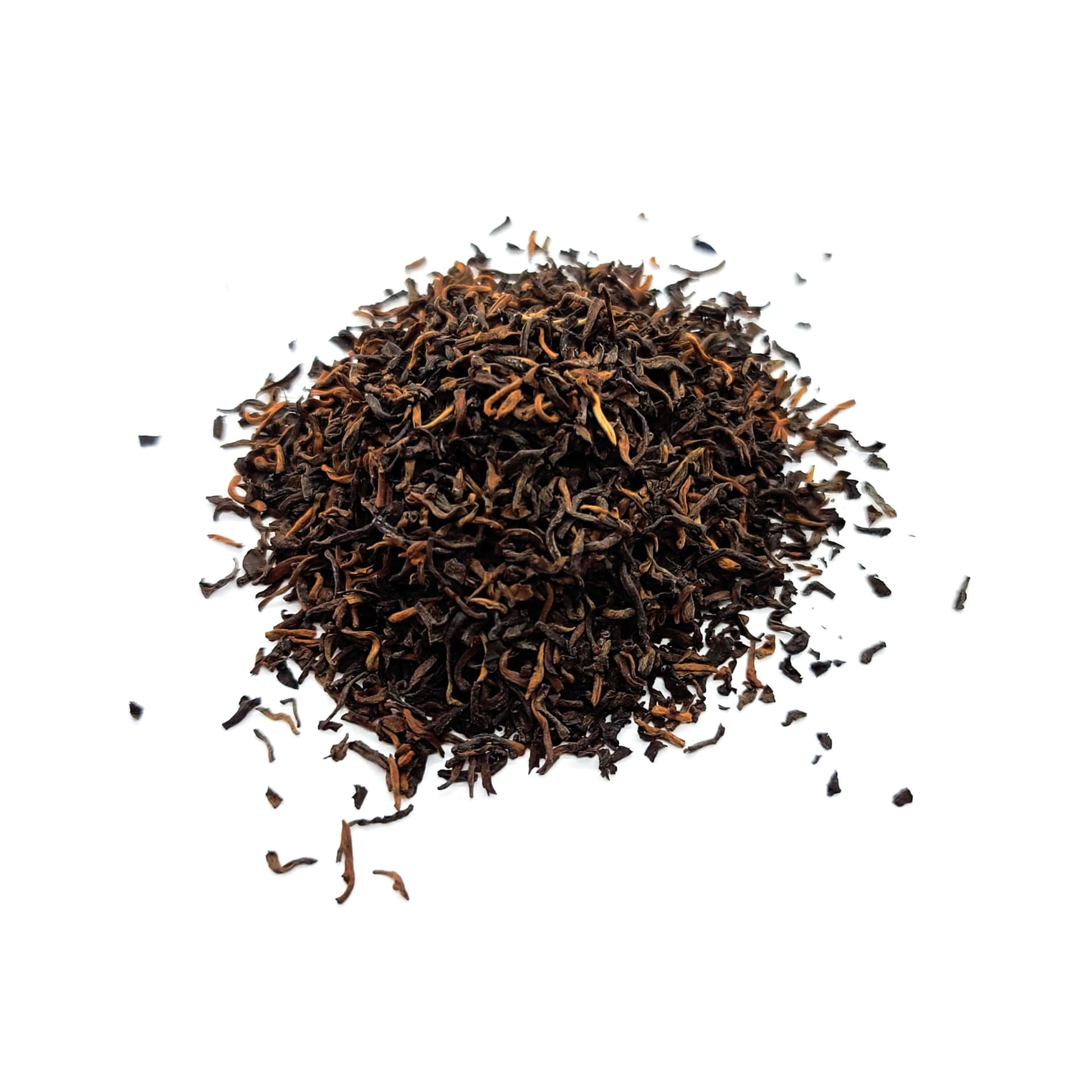
Pu erh has a reputation for rewarding patience, and this three-year-old vintage from Yunnan shows why. The leaves have spent that time under controlled storage, letting natural fermentation soften what would otherwise be a sharper, greener edge. What's left in the cup is earthy and full-bodied without turning bitter: wet wood and dust up front, settling into dried fruit, honey and a coffee-like depth as it cools. Long-time pu erh drinkers and newcomers tend to find the same thing here — a mellow, rounded character that still has some structure to it.
The tea takes its name from the Pu'er region of Yunnan, where old tea-growing traditions, fertile soil and mountain mist combine to produce leaves suited to this kind of aging. Three years puts it past the raw, unsettled stage but well short of the decades some pu erh is left to age, so it still tastes fresh and vibrant alongside the deeper earthy notes.
Rinse the leaves briefly with hot water before brewing, to wake them up and clear off any dust. For the actual steep, use water around 95°C and give it about three minutes; the leaves can be re-steeped several times, with the steeping time nudged up slightly on each round. Pu erh contains caffeine, generally somewhat less than a cup of coffee, and it has long been drunk after meals for its reputed digestive benefits.