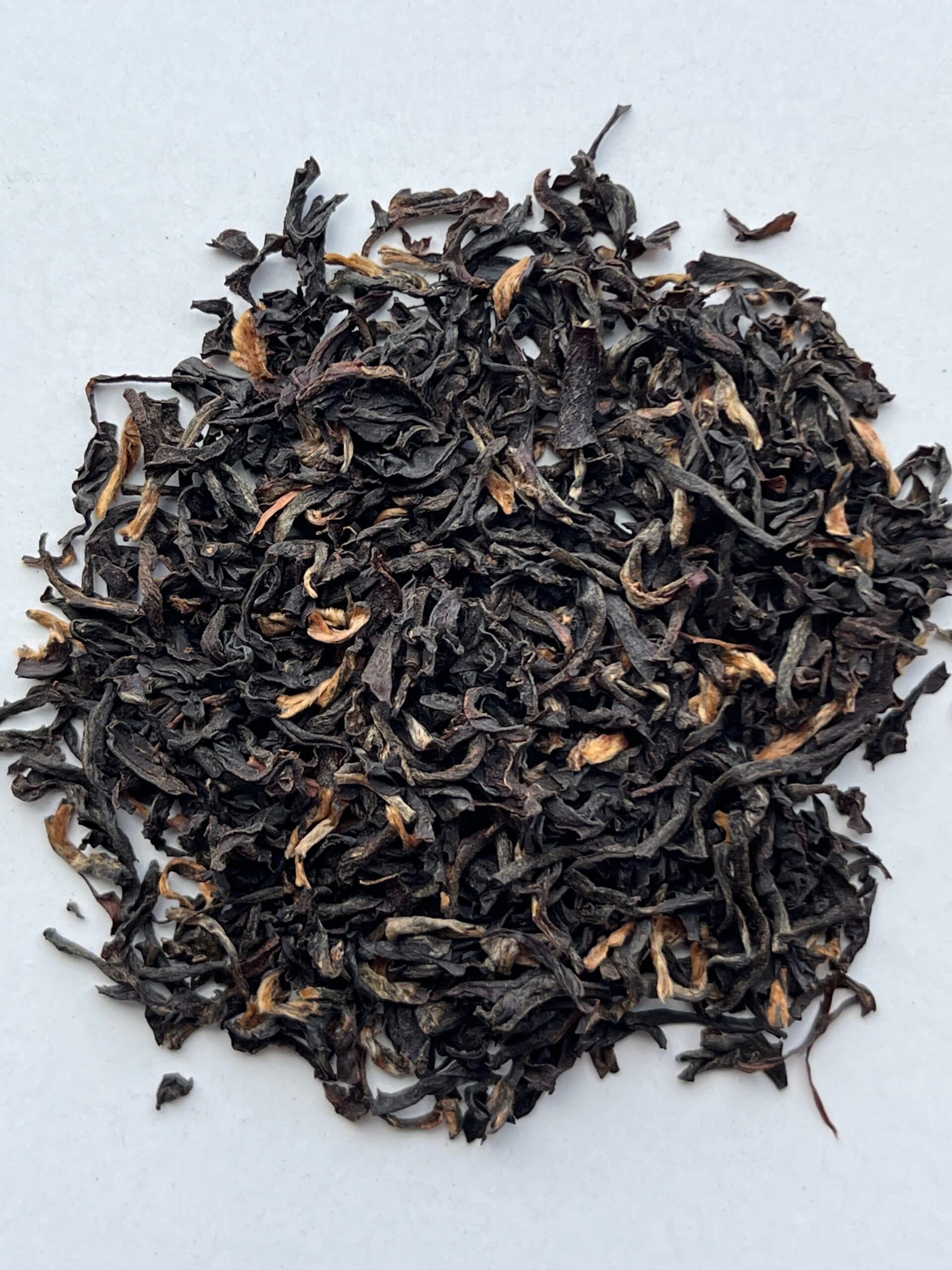
In the tea world, Assam means one thing: strength. This black tea comes from India's northeastern Assam region, where fertile soil, heavy rainfall and a humid climate produce leaves with a distinct, rich malty character. Pickers work the gardens twice a year, in the first and second flush, and the leaves go through withering, rolling, oxidation and drying before they reach a cup.
Assam's story goes back to the 1820s, when British officials came across tea plants already growing wild in the region. What followed changed the course of tea history: Assam grew into one of the world's major tea-producing areas and shaped British tea culture for generations. It's the backbone of most English Breakfast blends today, prized for a profile bold enough to stand up to milk and sugar.
In the cup, expect notes of date and malt alongside something more vegetal and earthy, with a thick, full-bodied texture. The colour runs liquid amber, and honeyed sweetness sits against a light astringency, finishing with an aroma that wakes you up rather than lulls you. Each 8 oz serving carries roughly 60 to 110 mg of caffeine, so it's suited to mornings or a midday reset. Tea drinkers have long turned to Assam and other black teas for a lift in alertness and, traditionally, as an aid to digestion, though these are old habits rather than proven cures.
To brew it, start with fresh spring or filtered water and warm the pot before adding leaf, which helps hold the heat through the steep. Use about a teaspoon of leaf per cup, pour water just off the boil, around 90°C, and steep for close to four minutes for a full malty pour, or pull it earlier for something lighter. Strain out the leaves as you pour, and take it plain, milky, or sweetened, and it holds its own alongside cakes and biscuits. Keep it in an airtight container, away from light and strong odours, in a cool, dry place, and it keeps its character for a good while.