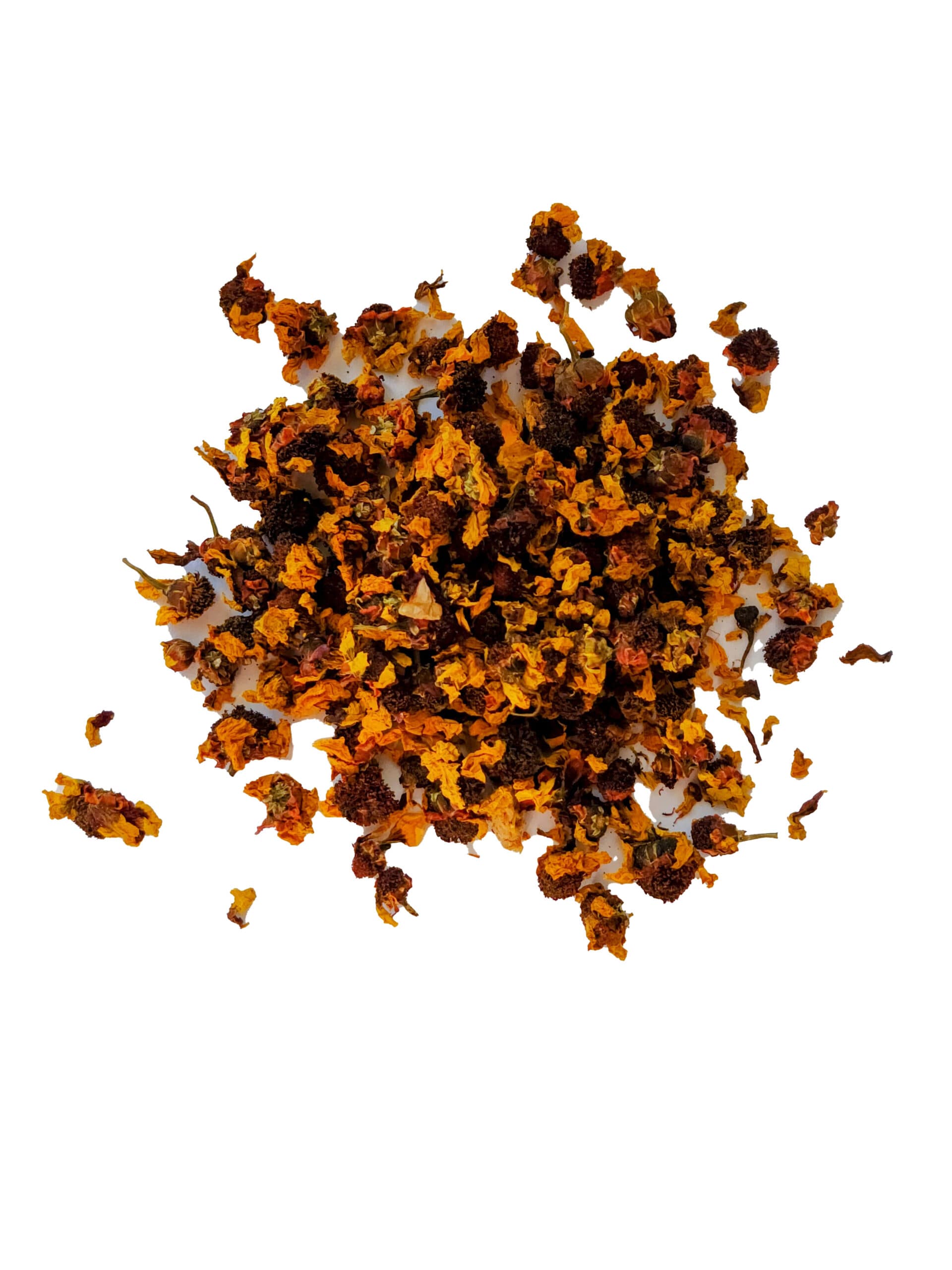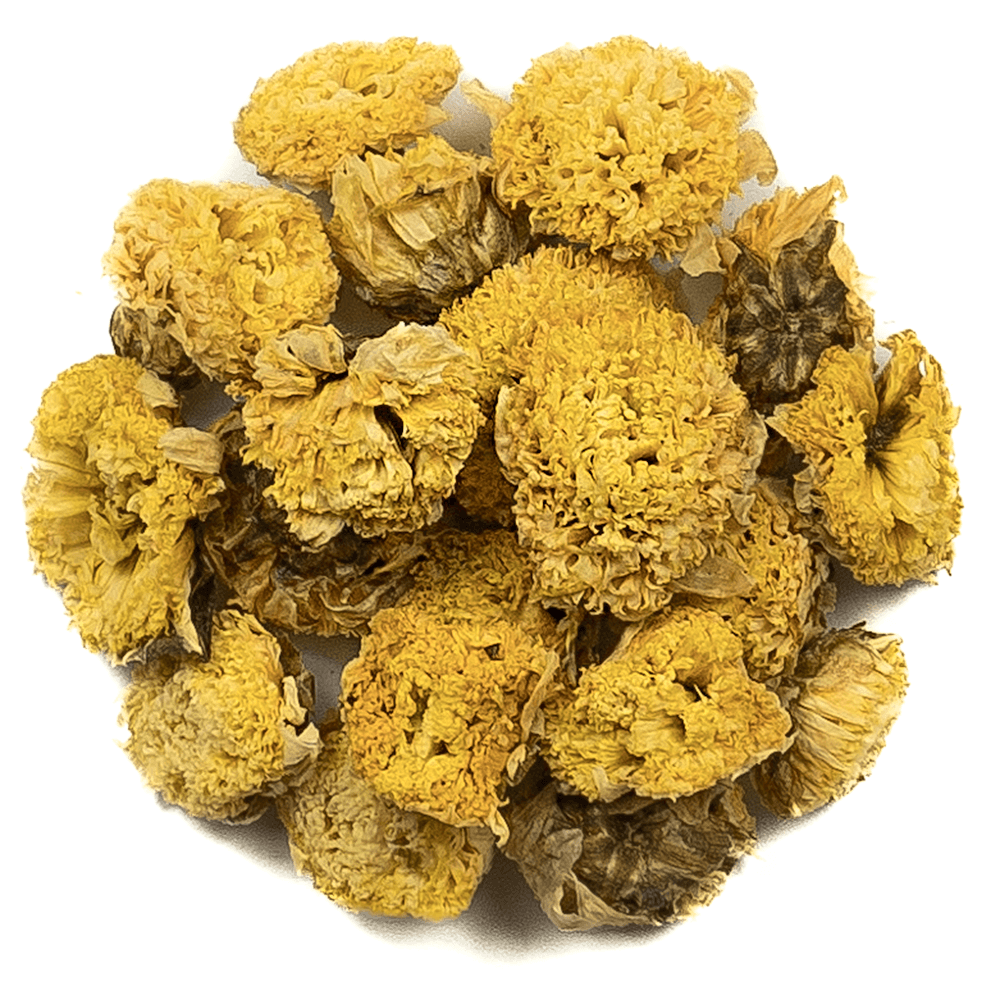
Drop the bundled leaves into a glass pot and something like a magic trick happens: the tightly wound white tea leaves unfurl and a bright red chrysanthemum blooms open inside the cup. That reveal is the whole point of this style, sometimes called Treasure Tea or Blooming Tea, and it's why a clear glass vessel is worth using over a ceramic one. It comes from Fujian province, where the flowers are hand-tied, and a skilled worker can put together as many as 400 in a single day. The chrysanthemum itself has deep roots in Chinese culture: the country grows 17 species, though Chrysanthemum indicum and Chrysanthemum morifolium, grown across Anhui, Gansu, Henan, Jiangxi, Shaanxi and Zhejiang, are the ones most often used. The Double Ninth Festival, also called Chongyang, is built around the flower, tracing back to a story about a young man named Huan Jing who avenged his parents' deaths by using dogwood leaves and chrysanthemum liquor to disorient a demon before killing it with his sword. The festival still honors chrysanthemum wine and chrysanthemum tea today, this flowering tea included. The leaves wrapped around the flower are white tea, the least processed style of Camellia sinensis, picked with a short oxidation that keeps the brew light and fresh. The name has nothing to do with the color of the liquor. It comes from the fine silvery down on the unopened buds. Steep at around 90 degrees and watch the flower open; the tea can be resteeped more than once and is best drunk plain. Expect delicate, refined floral notes with chrysanthemum, a touch of sage, and a dusty edge, in a pale green cup with yellow highlights. White tea's fluoride has long been credited with helping prevent cavities, though brewing leaves only around a third of it in the cup.