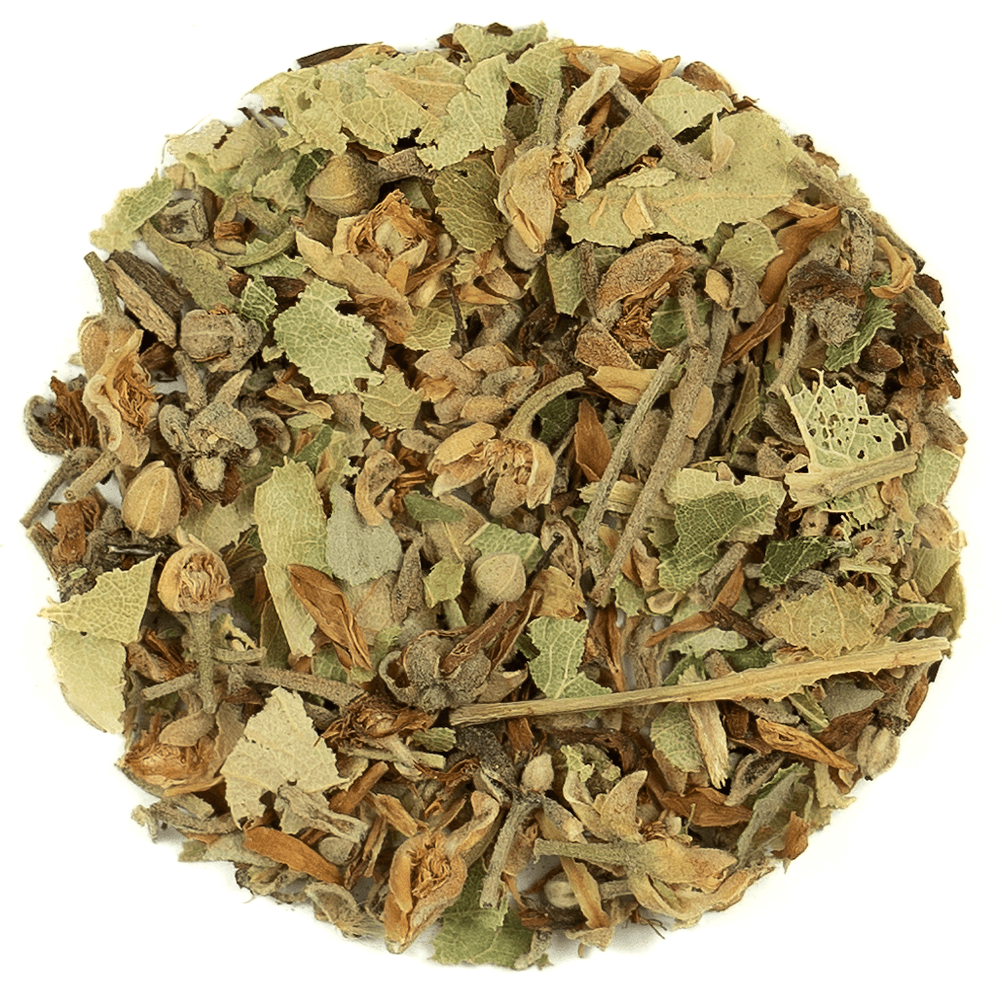
Steep the pale gold liquid from linden flowers and you get something closer to honeyed light florals than a typical herbal cup, with lemon and lime brightness underneath and a soft herbaceous, barky depth further down. Also known as tilia or lime-flower tea (the tree goes by lime, linden, or basswood depending on where you are), it comes from a tree common across Europe and North America, and people there have been drying its flowers, leaves, and inner bark for tea long before modern herbalism took an interest in it.
That history runs deep. Across much of Europe the tea was valued as much for its scent as for how it seemed to ease nervousness and help people sleep, and it has long been drunk as a gentle digestive aid and something to reach for when a cold is going around. None of that is proven medicine, but the folk use is old and consistent enough that it still shapes why people reach for the tea today. One thing that is settled: it contains no caffeine, so it suits any time of day, hot or over ice.
Brewing it is straightforward. Use one to two teaspoons of loose leaf per 240ml cup, pour water just off the boil over it, and let it sit for up to ten minutes. The longer end of that range pulls out more of the herbaceous, almost woody side of the cup, so steep shorter if a lighter, more floral result is what you're after. A spoon of honey or a slice of lemon suits it well, plain or otherwise. Keep the dried flowers in an airtight container away from light and heat and they'll hold their scent and flavor for several months; fresh linden, where it can be found, is best used soon after picking, though it dries the same way as the packaged version if you want to keep it longer.