Crush a few caraway seeds between your fingers and the smell is unmistakable: warm, faintly sweet, with the anise-and-fennel edge caraway is known for in cooking. Steeped in hot water, the same seeds make a herbal infusion with a long history in European and Middle Eastern kitchens, valued as much for how it settles the stomach as for its taste.
Caraway (Carum carvi) is a member of the Apiaceae family, related to fennel and dill. It is native to Europe, North Africa and Western Asia, and its use goes back to ancient Egypt and the Roman Empire, long before the seeds became a staple flavouring in European and Middle Eastern cooking. In folk medicine the tea was brewed after meals to soothe digestive discomfort, bloating and colic — a tradition it keeps today, more custom than cure, but one repeated across enough centuries and countries to be taken seriously as a habit worth keeping.
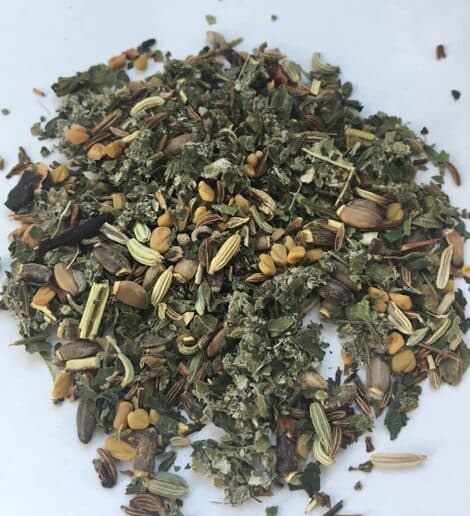
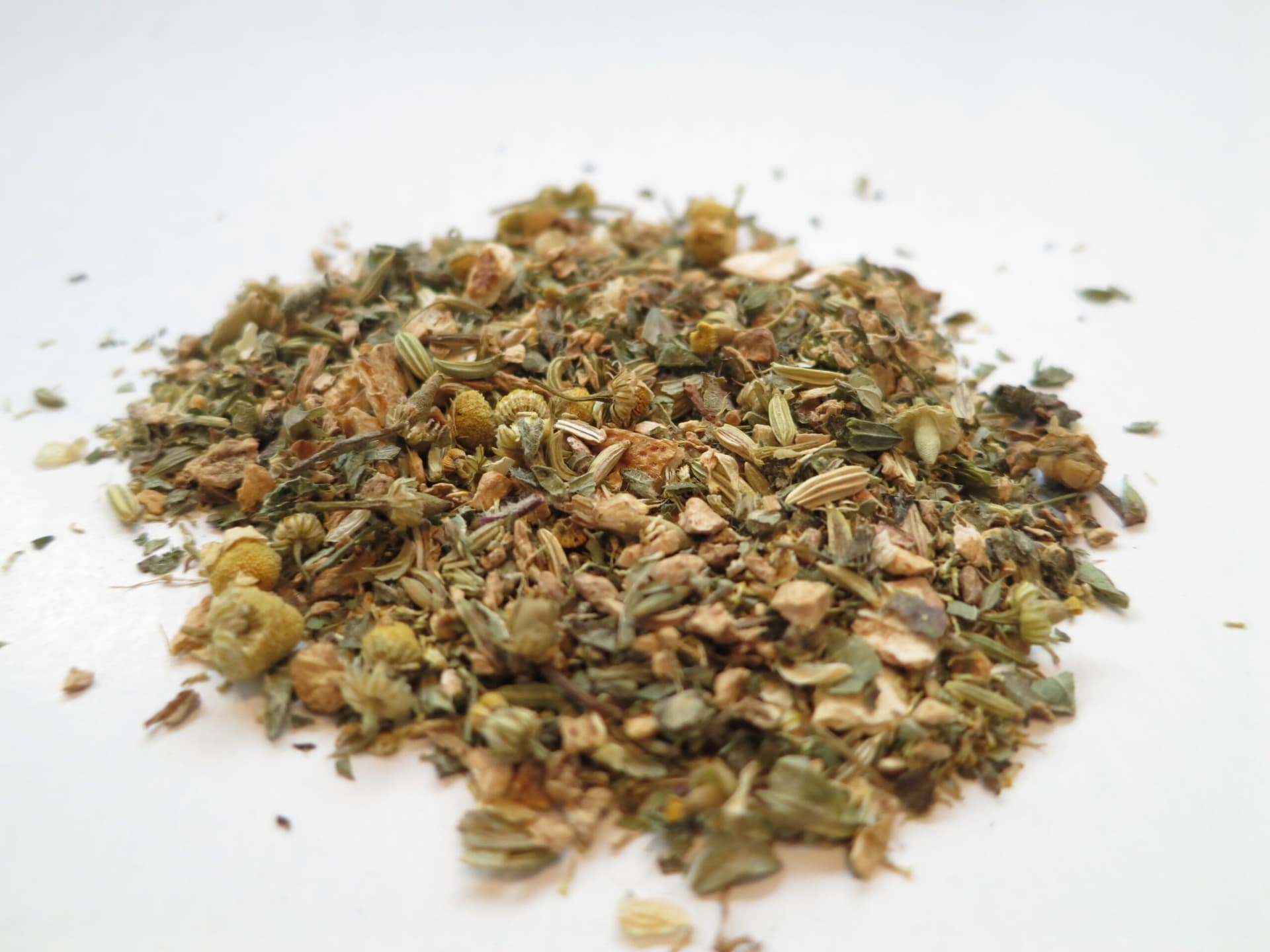
In the cup, the earthy, medicinal character of the seed sits alongside its anise and fennel notes, with lemon and honey turning up as natural companions rather than disguises: a spoon of honey or a slice of lemon rounds off the sharper edges nicely. To brew it, use about a teaspoon of seeds per cup, lightly crushed first to release their oils, and pour over freshly boiled water. Cover the cup while it steeps so the aromatics don't escape, leave it five to ten minutes depending on the strength you want, then strain before drinking. It is naturally caffeine-free, so it suits an after-dinner cup as well as a mid-afternoon one, and it takes well to blending with other digestive herbs such as fennel seed, chamomile or peppermint if you want to build your own version.