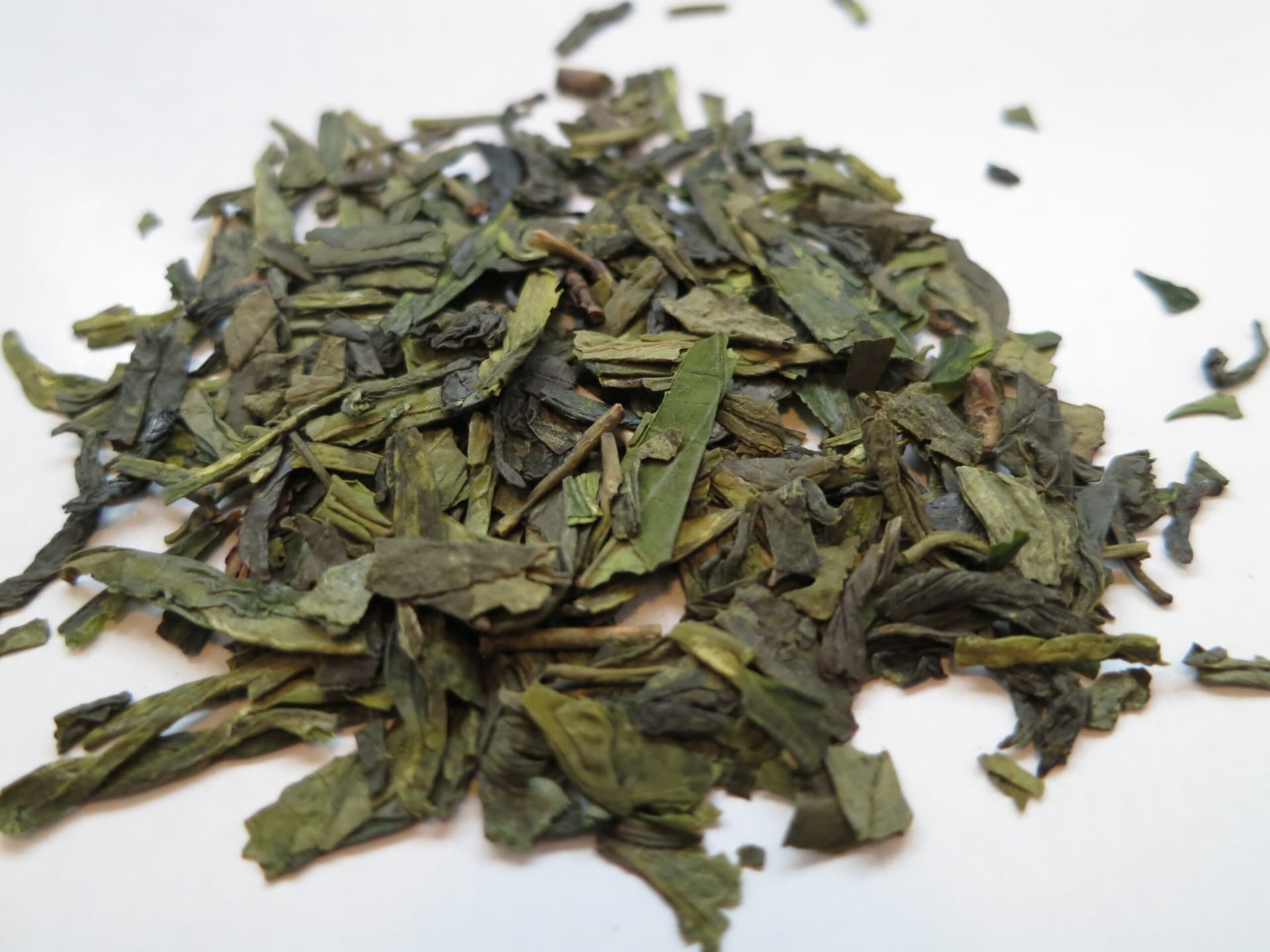
Silvery tips set this one apart from its black-tea cousin from the same province — steeped, they turn out a clear, vivid green liquor rather than the deep red you'd expect from Yunnan's more famous export. The leaf comes from the province's rugged southwest, where misty peaks, steady rain, and rich soil have supported tea trees for a very long time; this is often cited as one of the plant's original homelands, and the region's tea-growing history is said to stretch back more than two thousand years, with ancient tea trees still standing as living links to that past. Local farming communities have grown and served tea for generations, and trade out of Yunnan has continued for decades, moving first to neighboring regions and later further afield.
In the cup, expect a sweet, grassy character with hay and a touch of honey, a soft smokiness on the finish, and enough date-like depth to round out the sweetness. The body stays light, without bitterness or astringency. Brewing is straightforward: two teaspoons of loose leaf per cup, water just off the boil, and a steep of about three minutes. Filtered water is worth using here since the tea's delicate side shows through more clearly with it, and a little honey can round out the cup if you want it sweeter, though it's easy to overdo. Caffeine sits at a moderate level, so it works well for an afternoon cup as much as a morning one. Traditionally, green teas like this have been valued for the antioxidants they carry, though that's worth treating as folk wisdom rather than a guarantee of any particular health outcome.