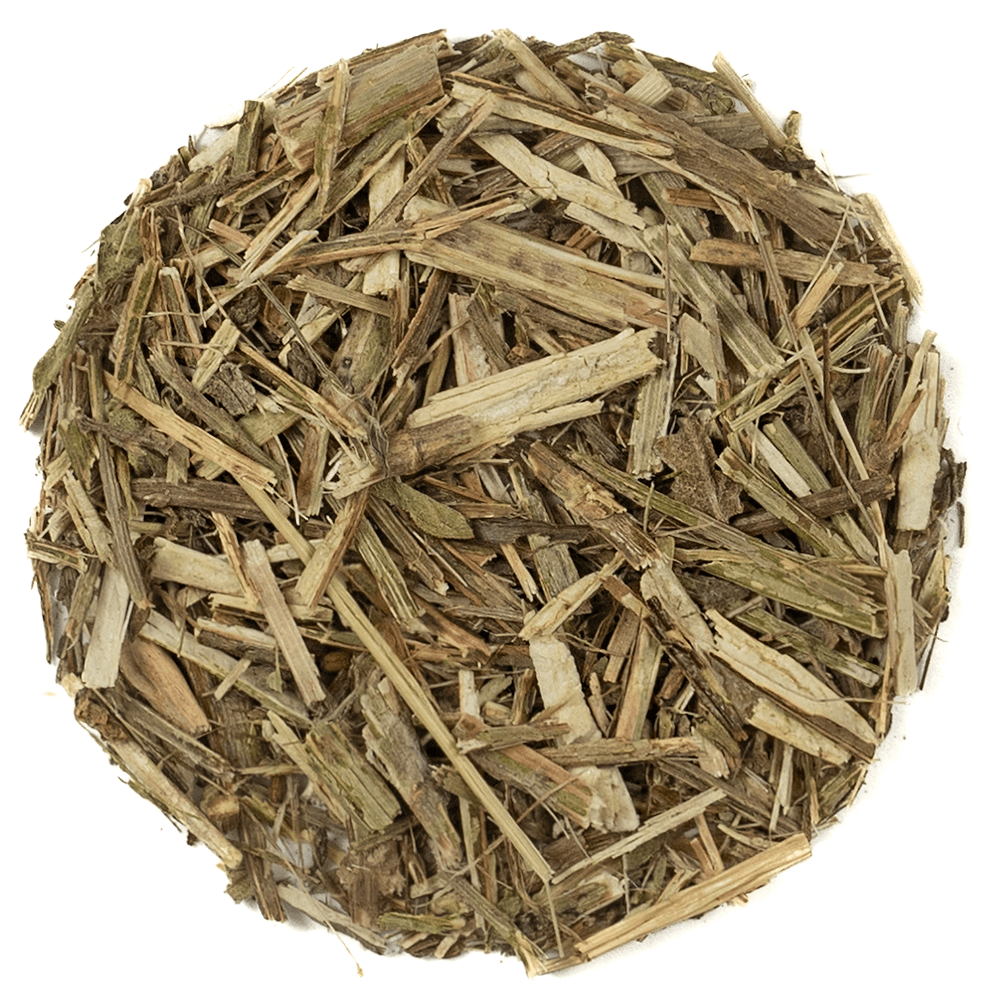
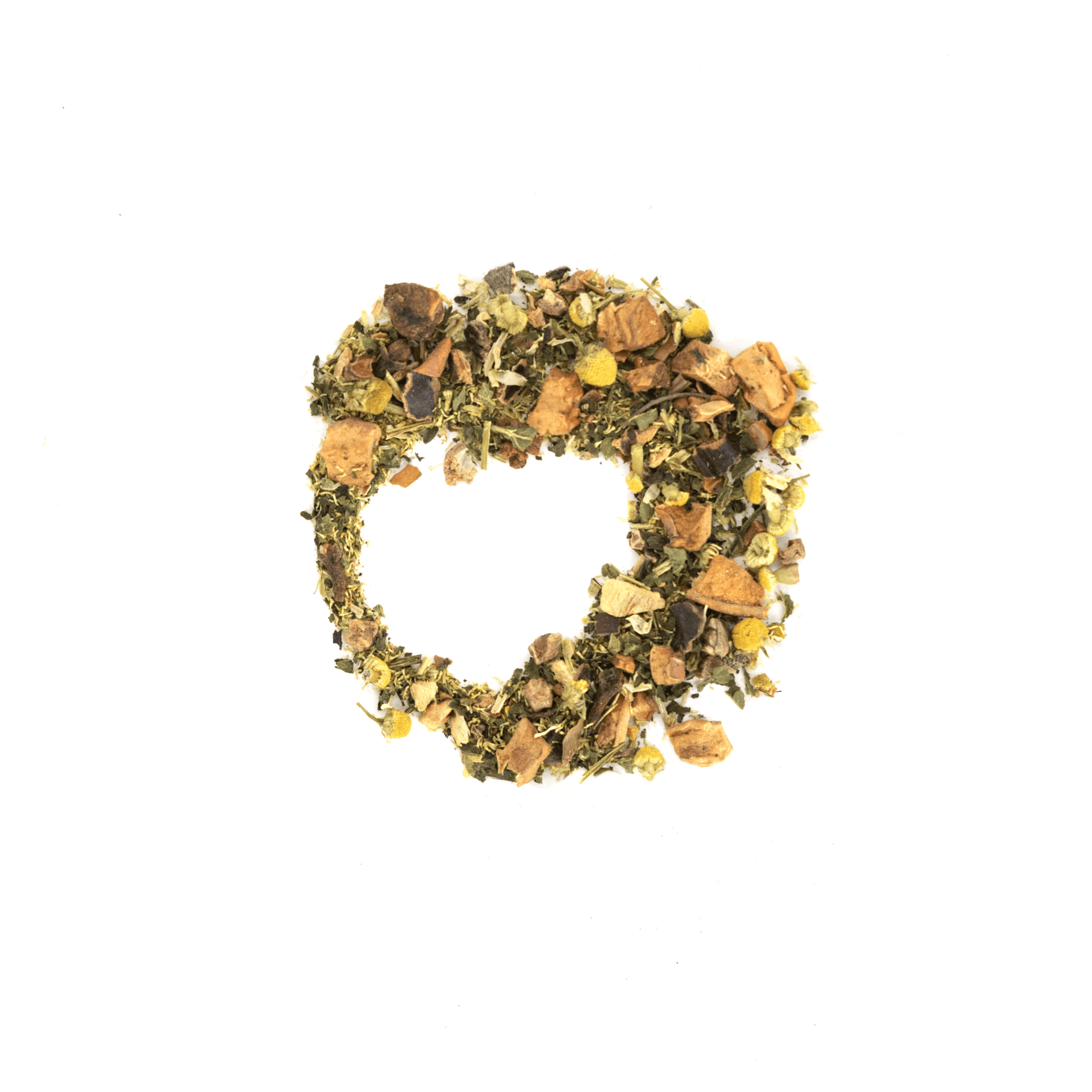
Chamomile's two botanical parents share little more than a name: German Chamomile, a hardy self-seeding annual with a hollow gold cone ringed by white petals, and Roman Chamomile, a low perennial known for its apple-sweet scent. Both belong to the daisy family, and both carry a long history — ancient Egyptians linked the flower to the sun god Ra and used it in cosmetics, hair treatments and ritual. The Greek physician Dioscorides wrote that it could ease liver and nervous-system complaints, and Pliny the Elder credited it with treating headaches and inflammation. Centuries on, the Anglo-Saxons named chamomile one of the Nine Sacred Herbs, alongside nettle, fennel and thyme.
None of that history involves caffeine. Chamomile is a herbal infusion made from dried flowers rather than the tea plant, so there's no stimulant to keep you up — it has long been drunk in the evening for that reason, and traditionally reached for to settle the mind before sleep and ease anxiety, along with a broader folk reputation for skin, digestion and circulation. Treat those as traditional uses rather than guarantees.
In the cup, expect a floral base with lemon and apple brightness, a thread of honey sweetness, and earthy, herbal undertones that give it some body. To brew, pour water just off the boil over the flowers and let them steep for up to ten minutes — chamomile tolerates a long steep better than most. Honey or a slice of lemon suit it, though it stands on its own without either.