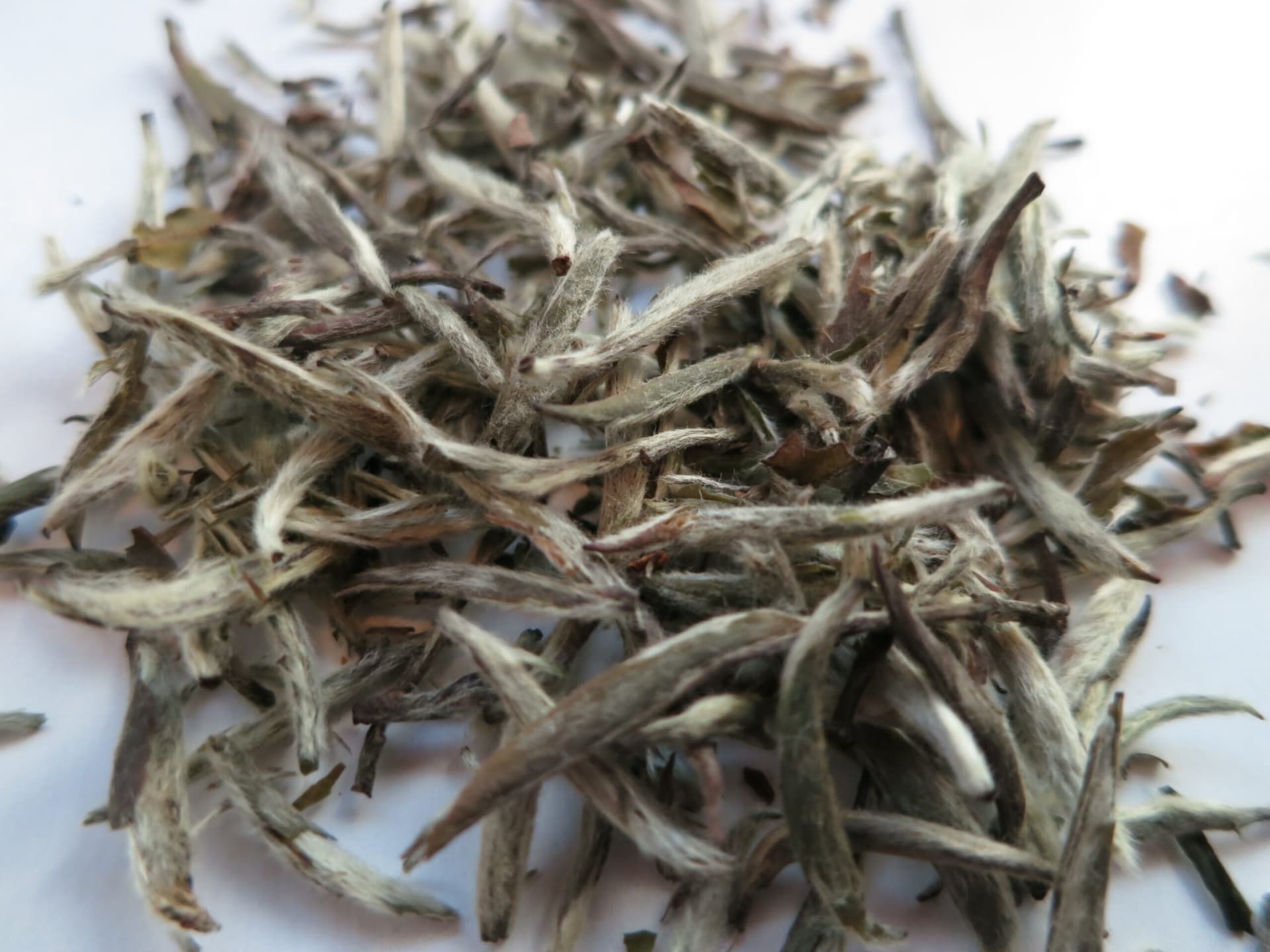
Assam produces plenty of strong, malty black tea, but the white version is a different animal entirely. It's made from the same young buds and leaves, hand-plucked before they open, then withered on bamboo trays for up to a day and dried with almost no further processing — no rolling to speak of, none of the oxidation that gives Assam black tea its punch. What's left in the cup is pale gold, light-bodied, and much quieter than you'd expect from the region: a natural sweetness with floral and honeyed notes, a touch of peach, some nuttiness, and a grassy edge that carries through to the aroma. The tasting notes read almost like a different terroir — lemon and honey up front, malt still there in the background as a reminder of where it grows, and a smoothness that holds up without milk or sugar.
Yields are small. Because the leaves get so little handling, only a fraction of what the region grows each season goes into white rather than black tea, which is part of why it's harder to find and priced accordingly. It's traditionally been drunk as a calmer, gentler alternative to Assam's usual black teas — something to have on its own rather than dressed up, though a slice of lemon or a little honey won't hurt it. Caffeine sits on the lower end for tea generally, thanks to the bud-heavy plucking and light processing, so it suits an afternoon cup as easily as a morning one.
To brew it, use water around 80°C rather than a full boil — boiling water tends to scald the delicate buds and flatten the flavour. Steep for about two to three minutes per 240ml, tasting as you go, since white teas can go from subtle to bitter quickly if oversteeped. Strain fully before drinking, and give it a first sip unadorned before deciding whether it needs anything added at all.