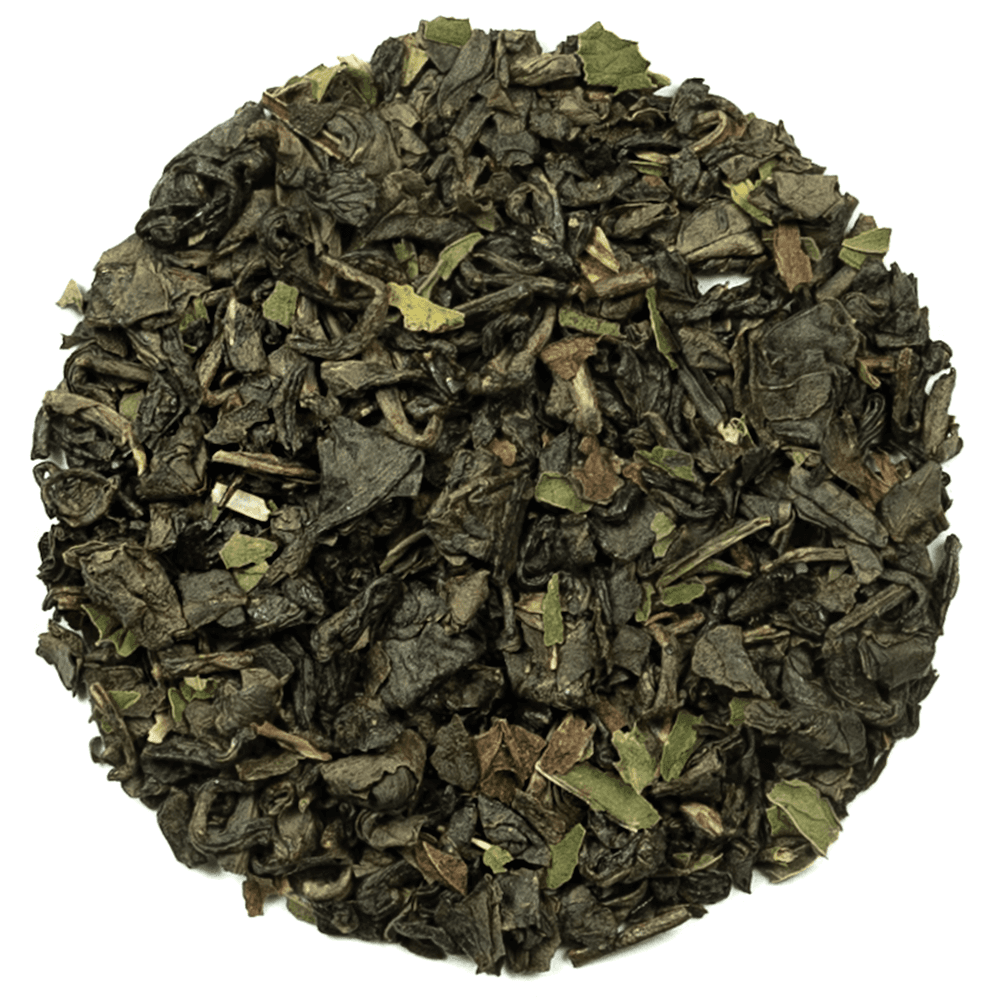
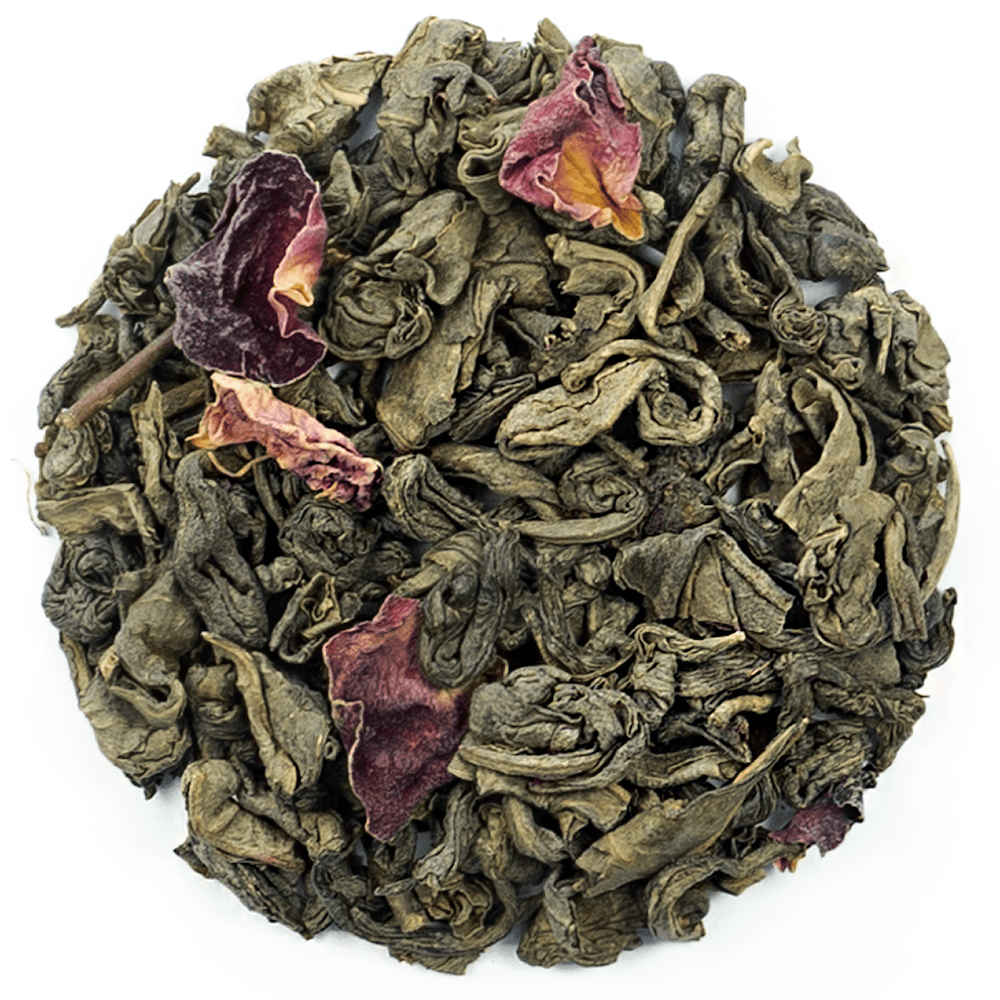
Chun Mee earns its name from the shape of the finished leaf — tightly rolled and curved, said to resemble a "precious eyebrow." It comes from Jiangxi and Zhejiang in China, picked in early spring while the leaves are still young and tender, then pan-fired to halt oxidation before rolling and drying. That pan-firing is what gives the tea its slight smokiness alongside its grassy freshness. The history runs back to the Qing Dynasty, when production centred near the Yangtze River in Jiangxi before spreading to Zhejiang and Anhui. By the 19th century it had become one of the first Chinese green teas exported to Europe and North Africa, and in Morocco it became the base for traditional mint tea, a role it still holds.
In the cup, expect a clear, pale yellow-green liquor with a brisk, lively character. The nose is fresh and grassy, and the sip opens tangy before settling into soft plum and nutty notes, with citrus and a touch of honeyed sweetness lingering into the finish — notes of date and mint round out the profile. It's a tea built for briskness rather than the umami-forward smoothness of a Japanese sencha; its closer cousin is gunpowder green, though Chun Mee stays smoother and less bitter.
Caffeine is moderate — a cup this size runs well under what you'd get from coffee or black tea, so it gives gentle lift without the jitters. Green tea has long been drunk for its antioxidant content, and some drinkers turn to it as a soothing after-meal cup, though that's tradition rather than proven medicine.
To brew it, use about 2 grams of leaf per 250ml of water heated to 75°C — boiling water will just turn it bitter. Steep two to three minutes, adjusting to taste, and the leaves can generally be steeped again once or twice, with steeping time nudged up slightly each round. Rinsing the leaves briefly before the first steep is optional but can clean up the flavour. Store it airtight, away from light, heat and strong odours, and it holds its character well over time.