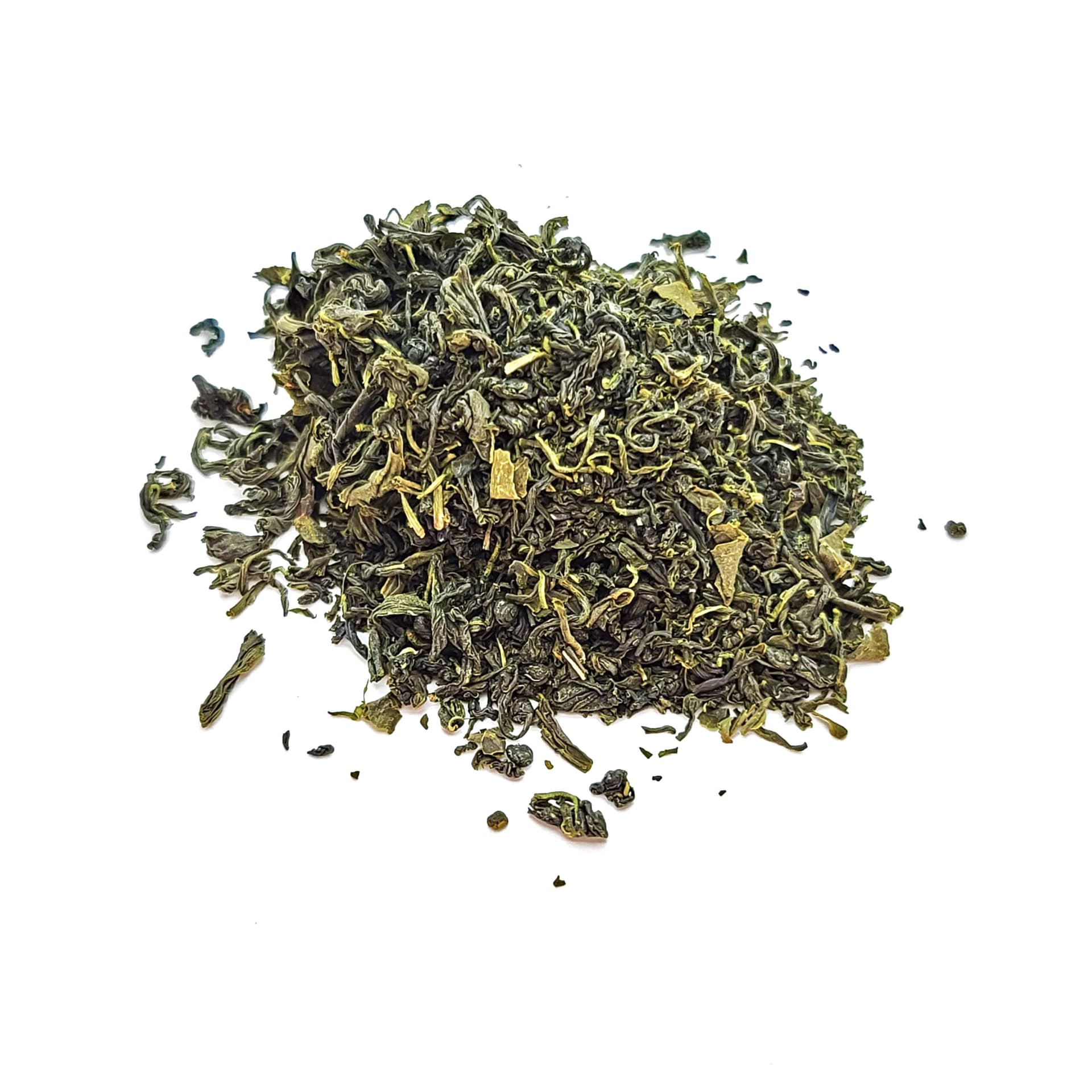
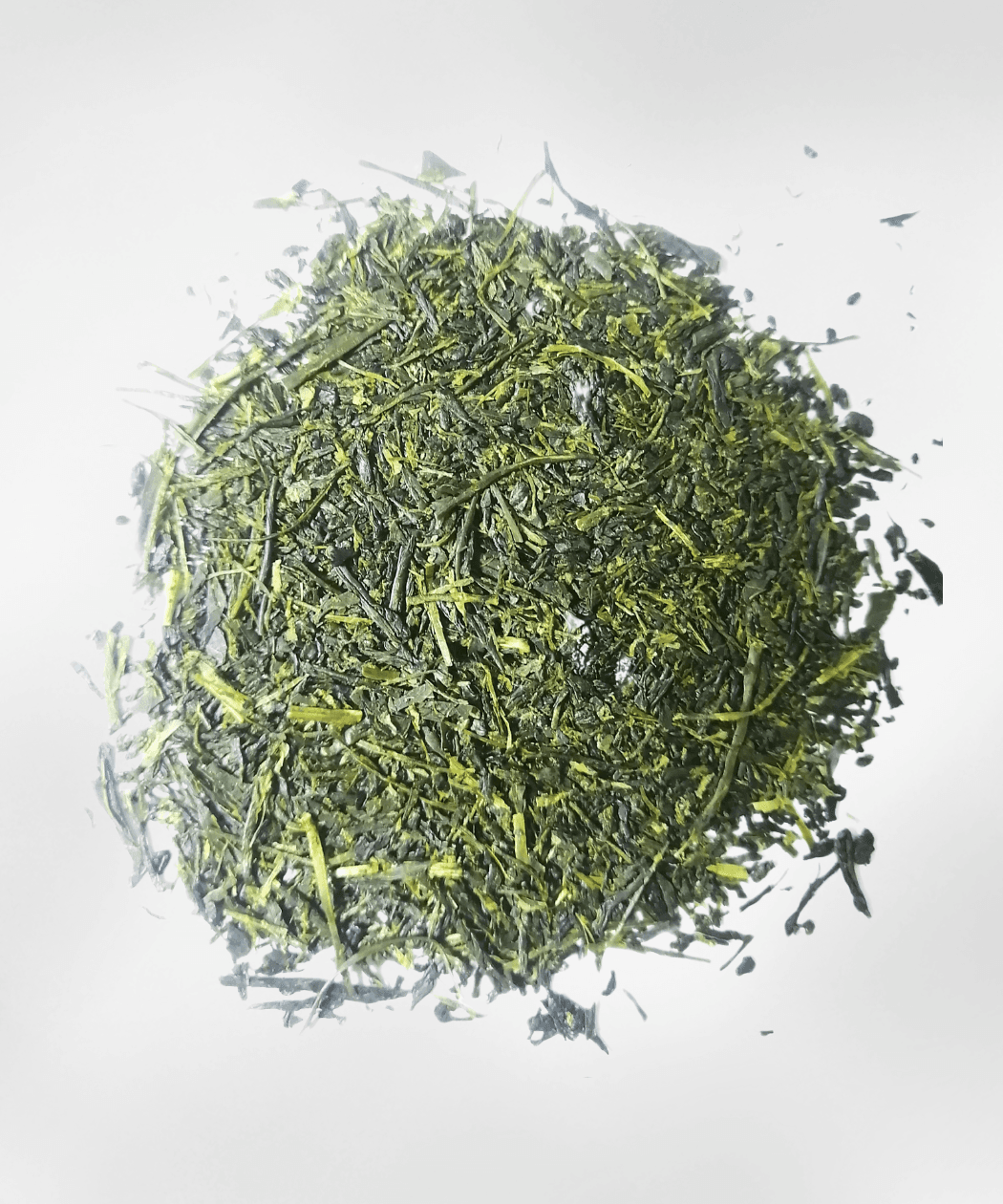
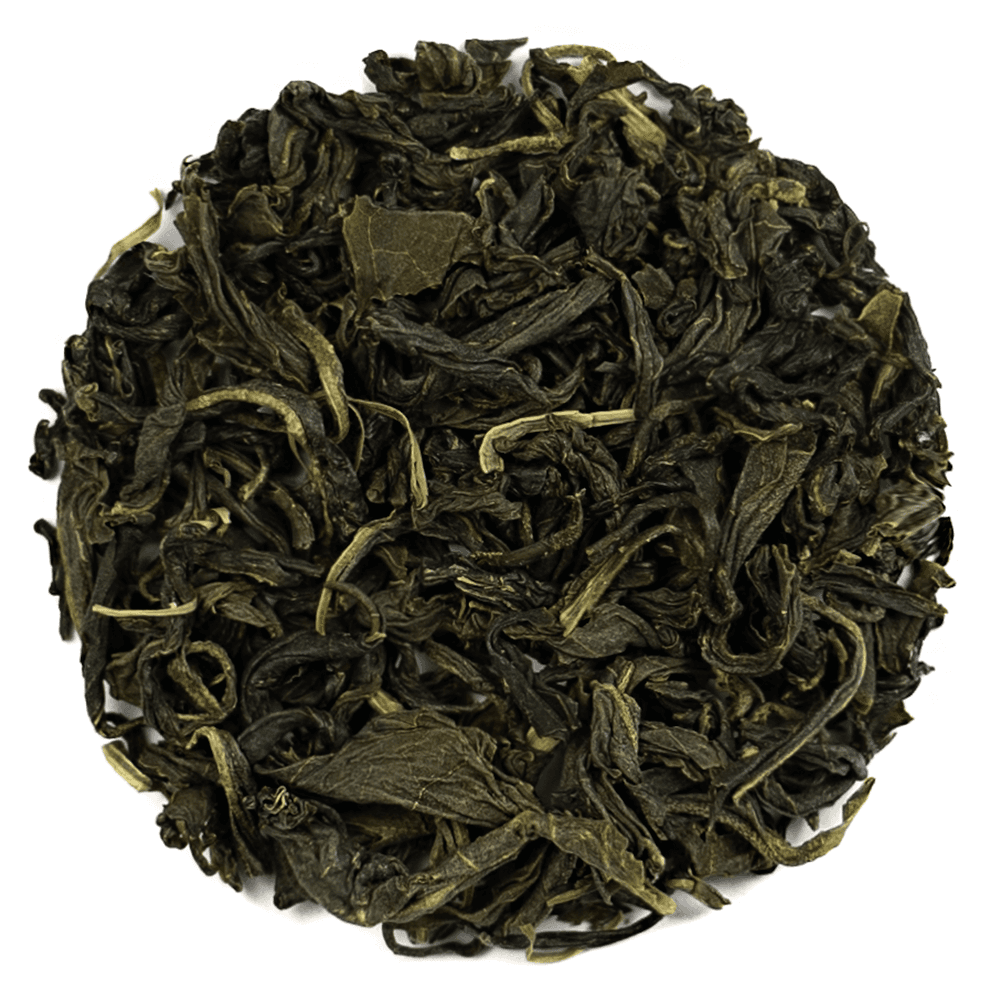
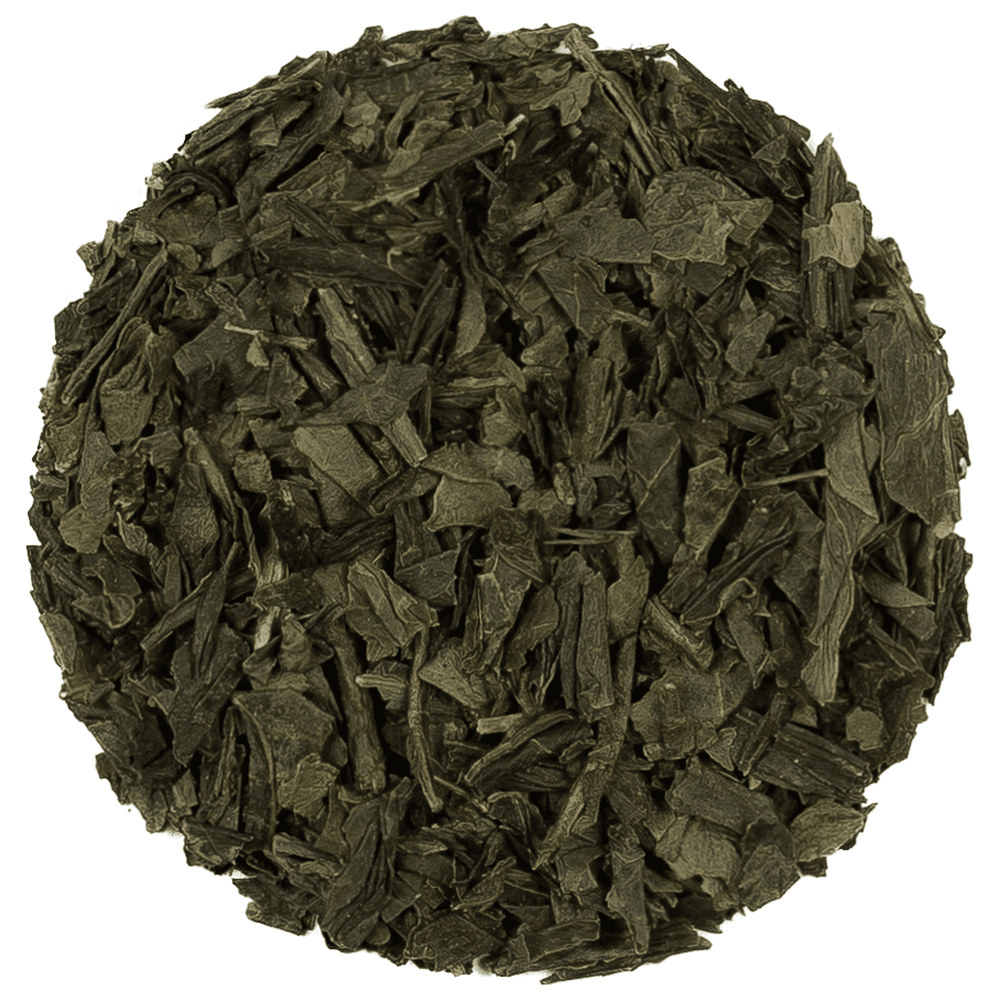
Grown in Shizuoka, at the foot of Mount Fuji, this green tea takes its character from the volcanic soil beneath it, mineral, faintly smoky, with a savoury edge that shows up in the cup as much as the more expected grass and lemon. The leaves are picked young, in early spring, then steamed rather than pan-fired, the method Japanese green tea is known for. Steaming locks in a bright colour and a delicate, vegetal taste before the leaves are rolled into tight, shiny, brittle strands. Brewed, they open into a liquor the colour of olive oil, sweet and grassy with notes of honey and, oddly, coffee, and a smooth mineral finish that reads as distinctly volcanic.
Tea reached Japan in the 8th century, when the monks Saicho and Kukai carried tea trees back from China. It stayed rare for hundreds of years until another monk, Eisai, reintroduced it in 1191 and wrote Kissa Yojoki, a book in praise of tea that helped root it in Japanese daily life. Mount Fuji green tea sits in that lineage, grown in a region prized for clean mountain air and rich soil as much as for its view.
It carries roughly 25 to 35 mg of caffeine per 8-ounce cup, well below coffee, and its L-theanine content is often credited with taking the edge off that caffeine, producing a steadier, calmer lift than a cup of coffee would. L-theanine has also long been associated with easing anxiety without making people drowsy, though that is worth taking as tradition rather than settled fact.
To brew it, use about a teaspoon of leaf per cup, water at 90°C, and let it steep for three minutes. It is good on its own, though a little honey or lemon suits it if you want more sweetness, and it pairs well with light, savoury snacks. Once opened, keep it in an airtight container somewhere cool and dark to hold onto its flavour.