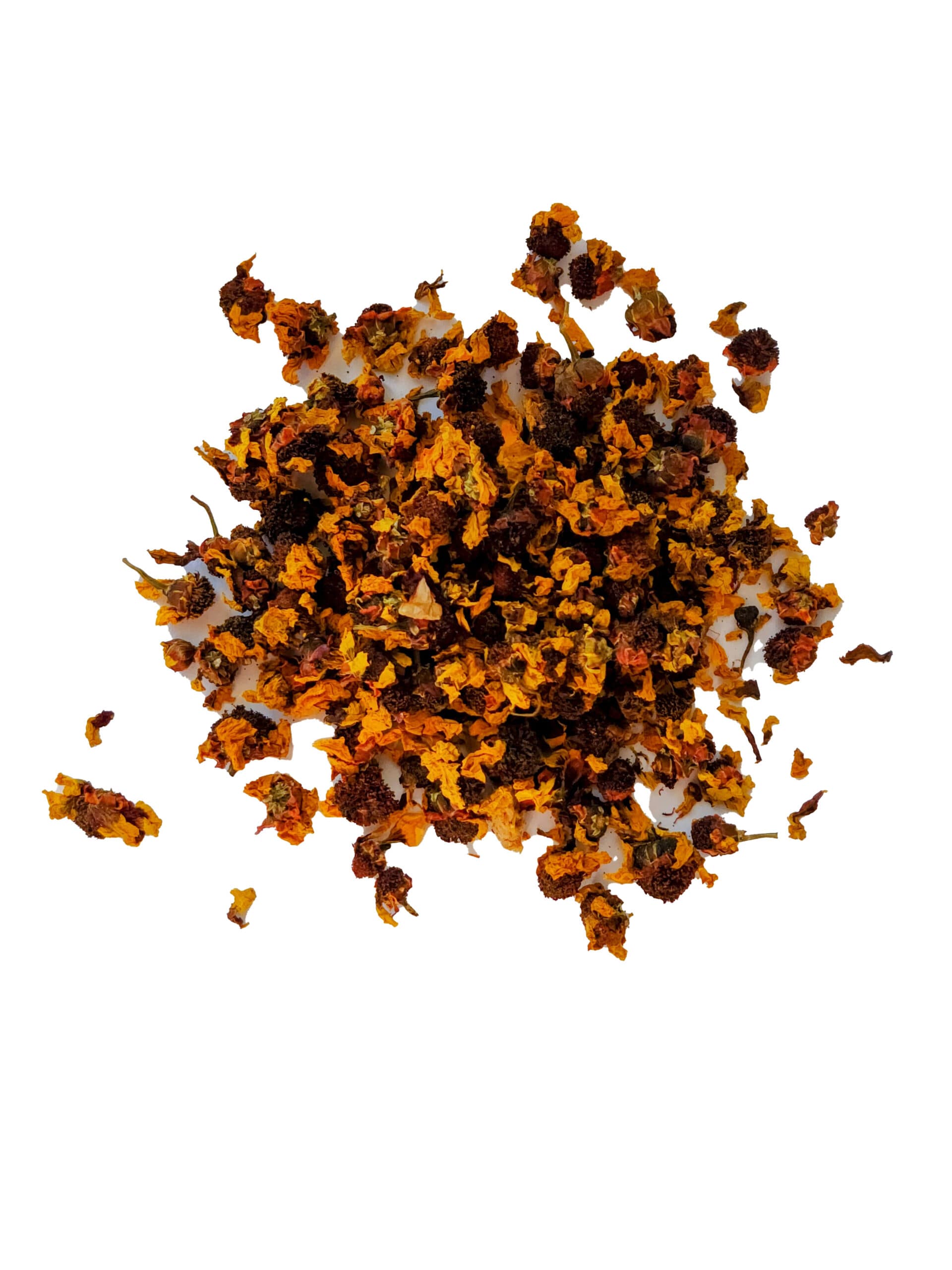
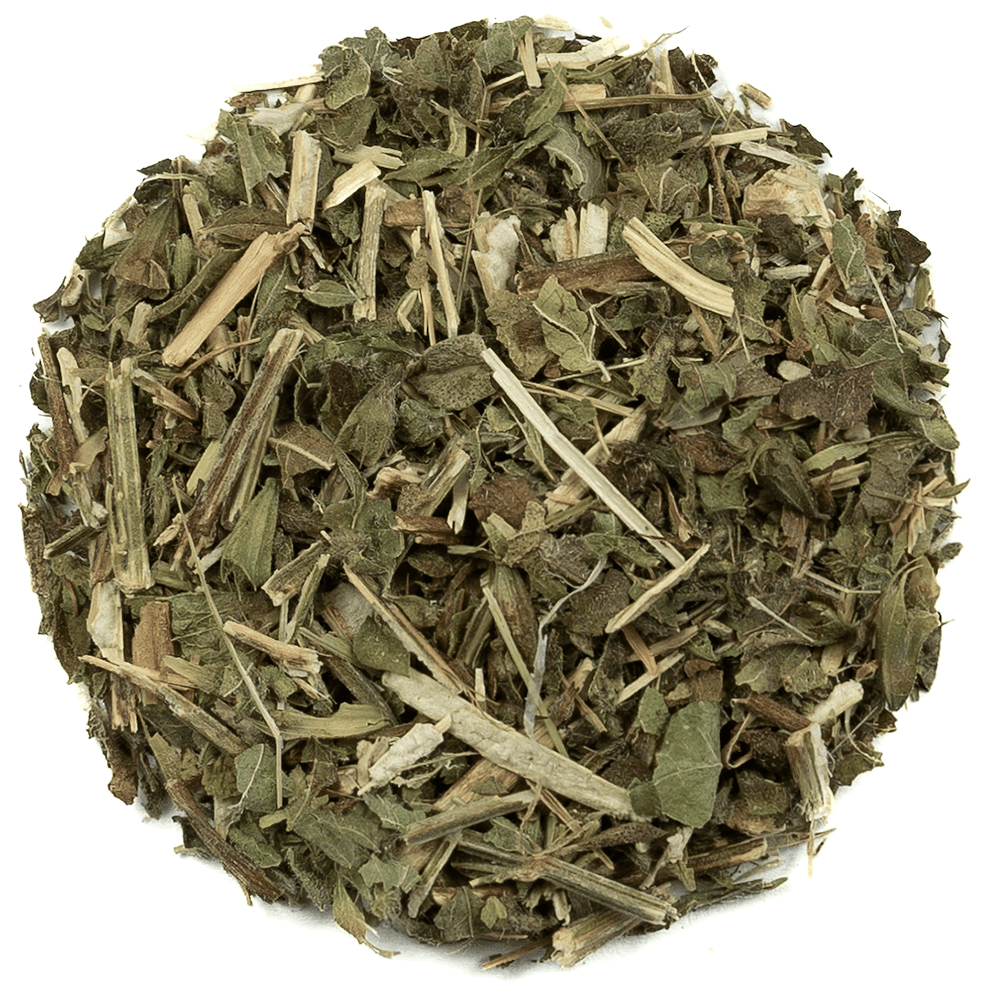
Rose petals brew into a cup that's more floral than most herbal blends manage — dried petals release a scent that carries honey and light spice notes alongside the rose itself, with a faint medicinal edge underneath. Steep them 10 minutes and the flavour deepens; shorter steeps keep things lighter if the full intensity is too much. Crushing larger petals before steeping helps release more of that flavour. It's naturally caffeine-free, so it works as an evening cup or for anyone cutting back on caffeine, and it pairs well with camomile if a softer, more balanced infusion is wanted. Sweetening with honey suits the floral character.
The rose plant is a member of the Rosaceae family, and drinking its petals as tea is thought to have started in China, where rose tea became part of Traditional Chinese Medicine practice tied to regulating qi, or life energy. Within that tradition it has long been used for fatigue, sleep troubles, irritability and mood swings, menstrual cramps, and digestive complaints — claims rooted in TCM rather than settled science, and modern research on them is still limited. Rose petals also carry a longer human history beyond tea: Cleopatra reportedly treated them as an aphrodisiac and had them scattered across the floor before meeting Mark Antony, and centuries later Napoleon had his officers apply them to gunshot wounds on the battlefield.
For storage, keep unused dried petals sealed away from moisture and light so the aroma holds. A teaspoon or two per cup, infuser or teapot, boiling water, and a covered steep is all it takes to get the floral, honeyed cup rose tea is known for.