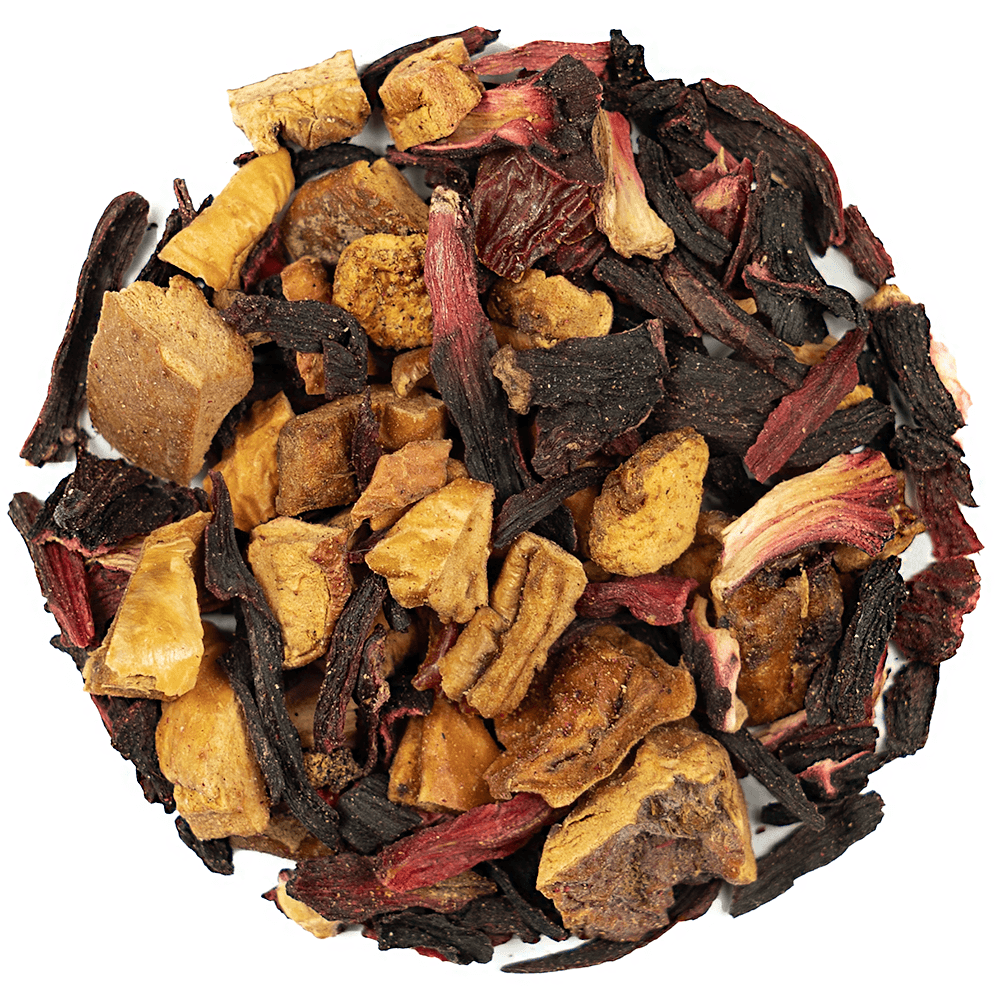
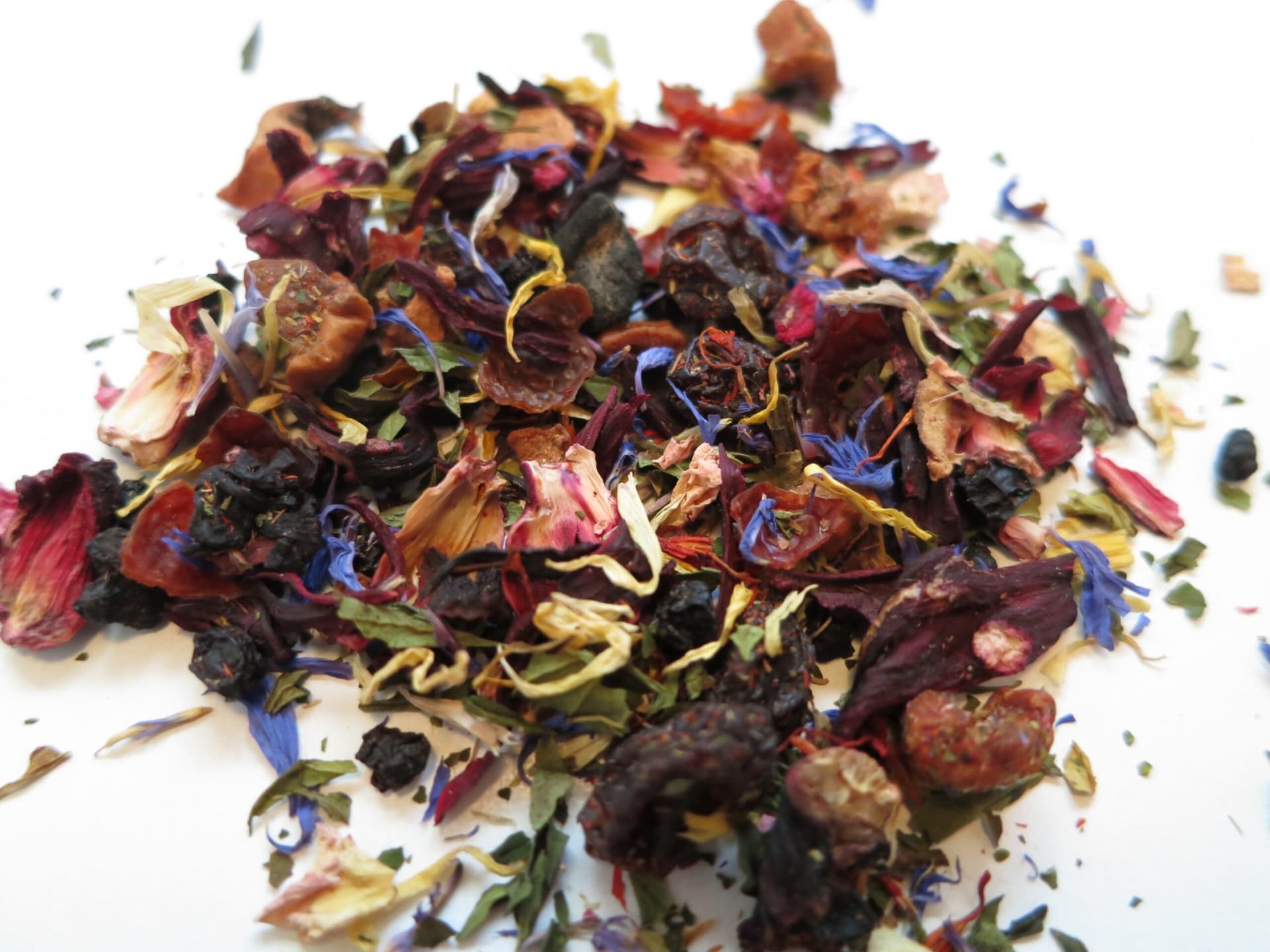
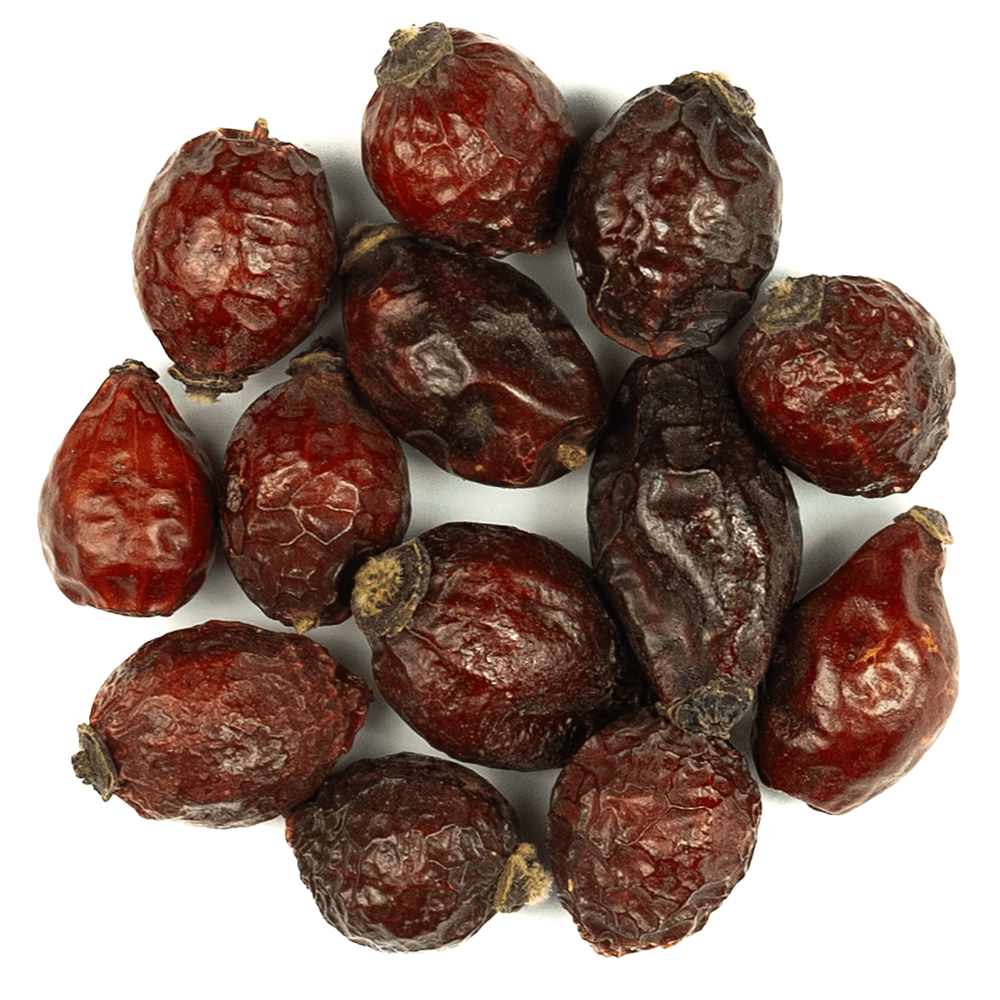
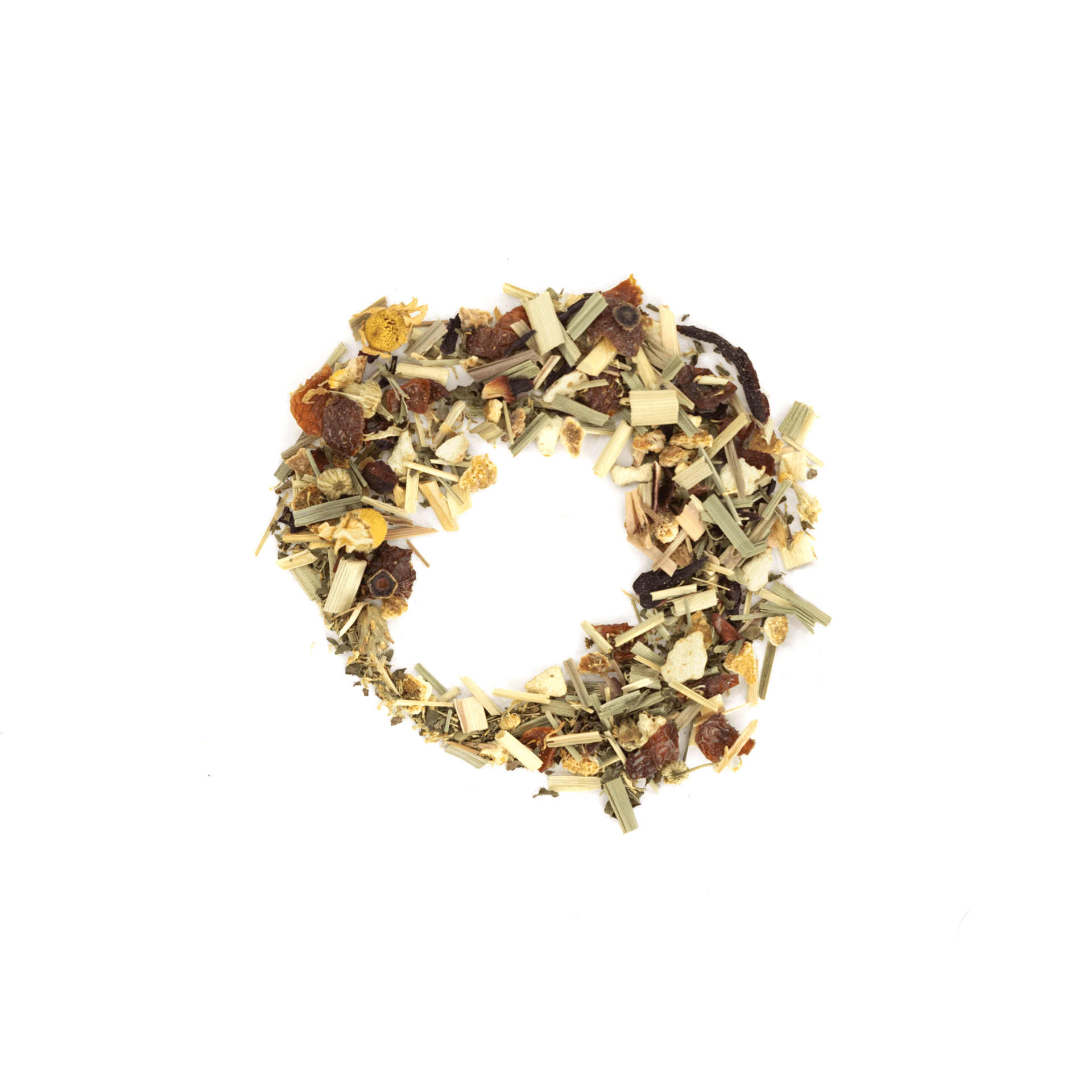
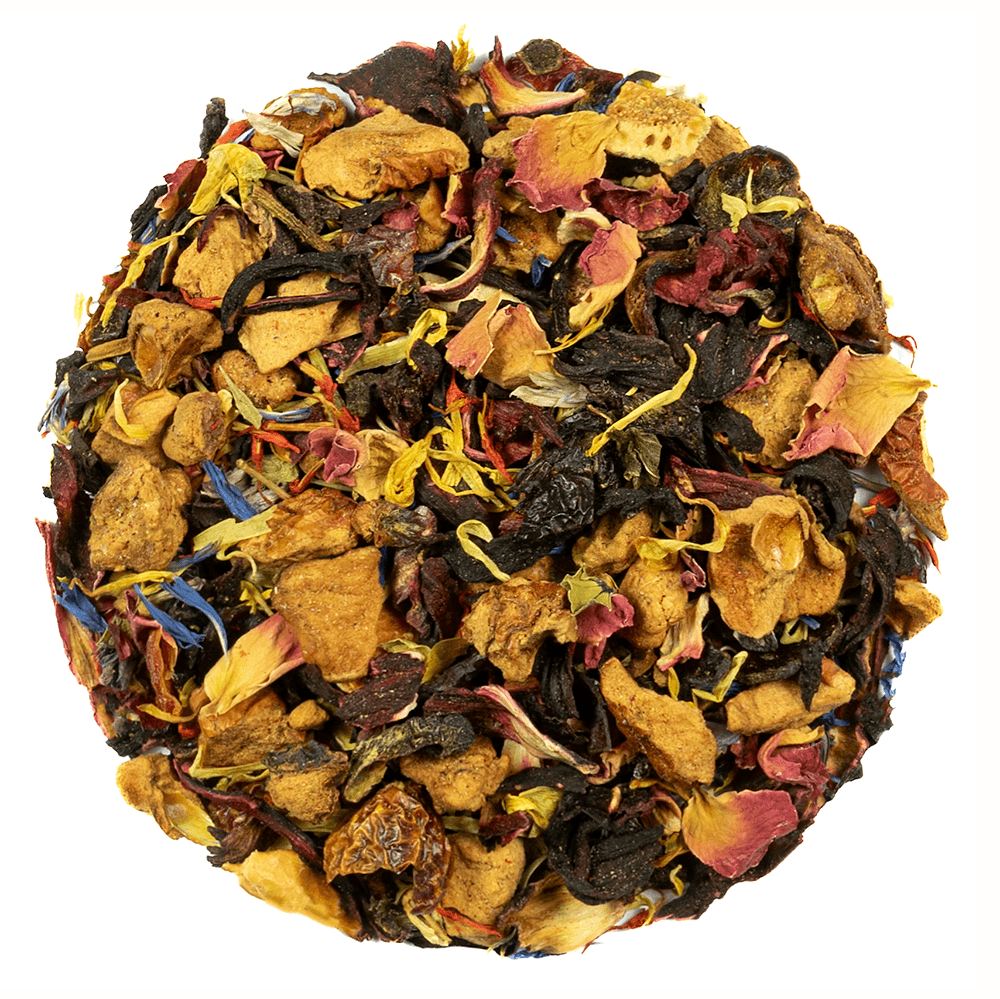
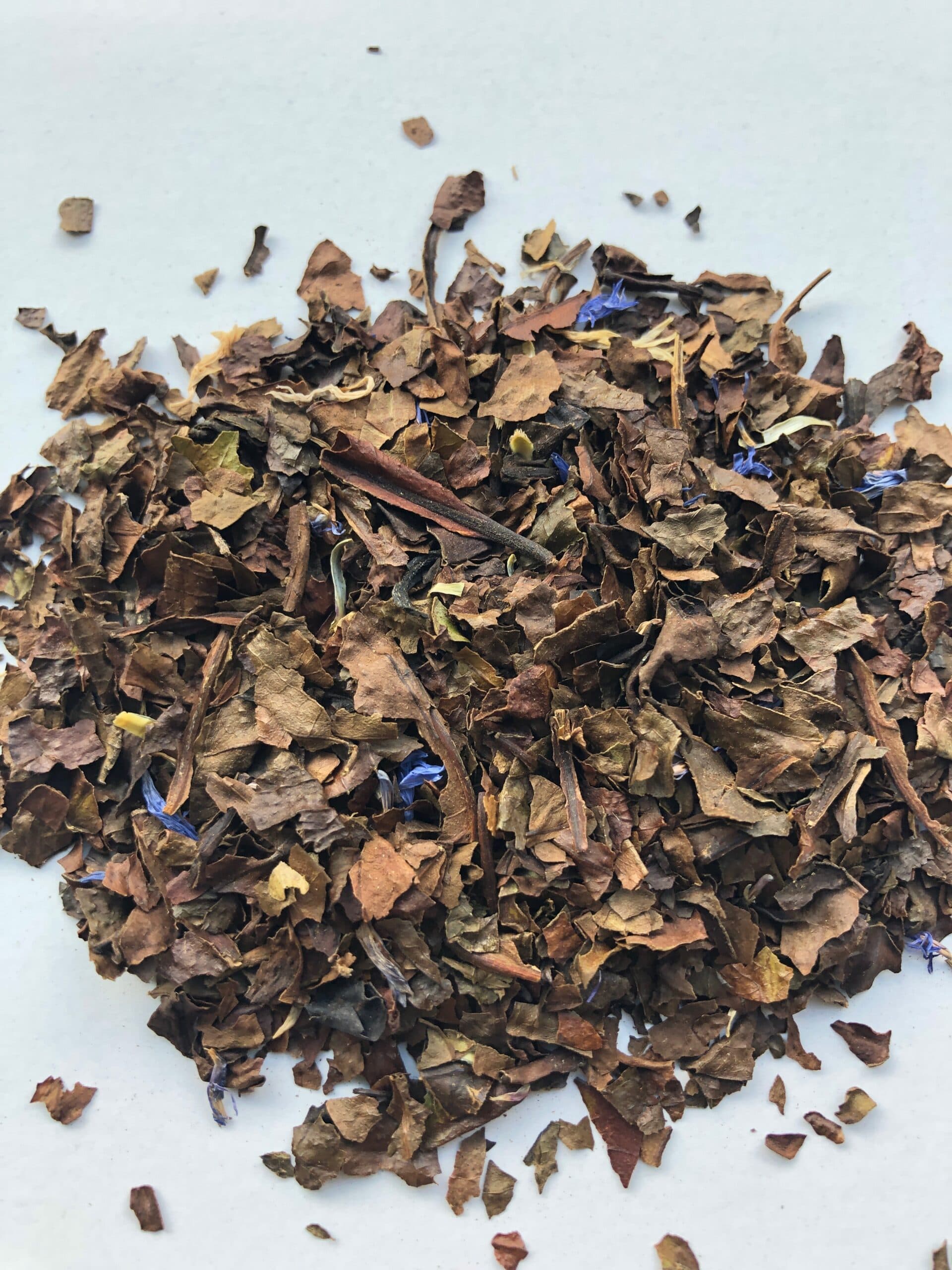
Rose plants produce more than fragrant flowers — after the blooms fade, the fruit that follows, the rosehip, looks something like a small crabapple and makes a tea of its own. The cut variety here gives a stronger cup than whole rosehips: floral and fruity, with rose and citrus notes brightened by orange, an herbal base, and even a faint coffee-like depth underneath. It brews up coppery-orange and light in the cup, earthy on the palate with a subtly sweet edge.
Rosa belongs to the Rosaceae family and grows as a shrub across both hemispheres, though it likely traces back to Persia, in what is now Iraq and Iran. People have been drinking rosehip tea since prehistoric times, but its modern popularity has a wartime story behind it. When German blockades cut Britain off from citrus fruit during the Second World War, the government urged the public to harvest rosehips as a vitamin C substitute, and the effort caught on widely. It faded once the war ended, then found favor again more recently.
That vitamin C is still one of rosehip's defining traits, alongside a broad range of other vitamins, minerals and antioxidants naturally present in the fruit, which have long been credited with supporting general health and wellbeing.
Tea & Coffee packs its rosehip tea fresh to order. Brew it with freshly boiled water and steep for five to ten minutes; it holds up well served plain, without milk or sweetener.