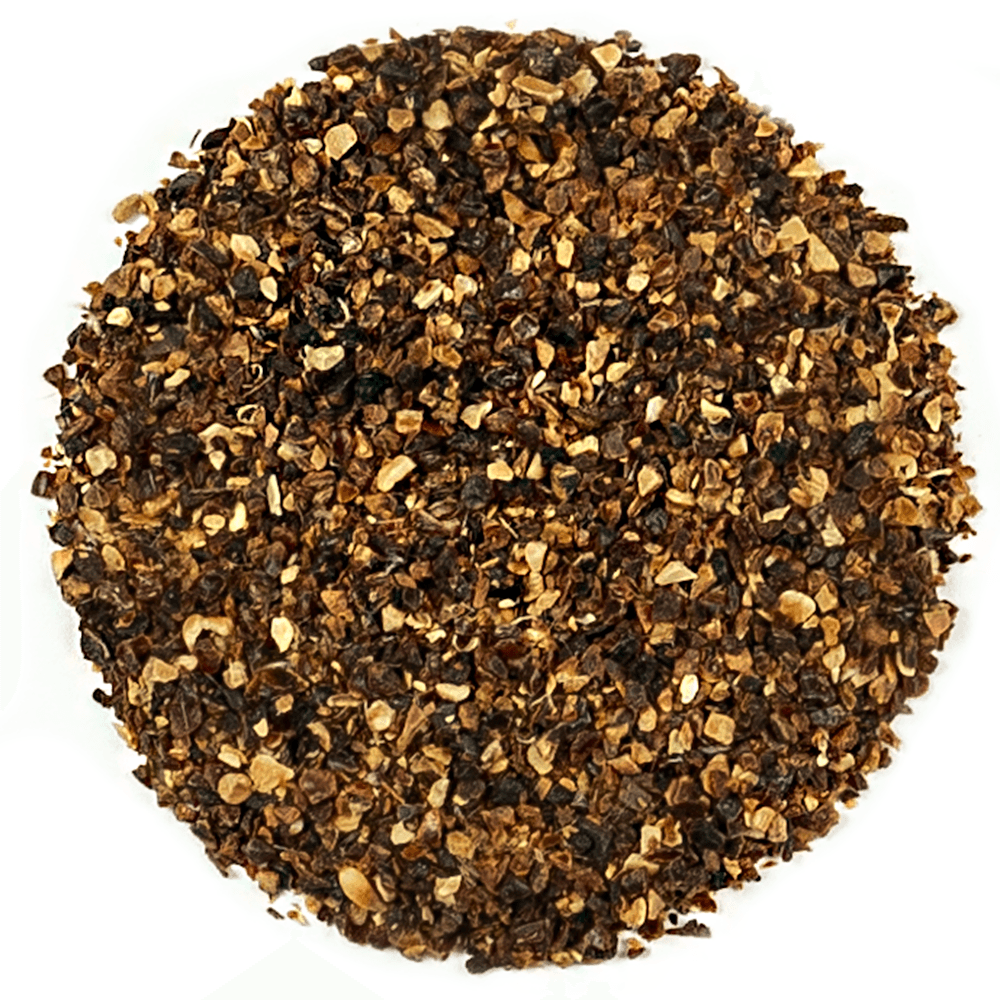
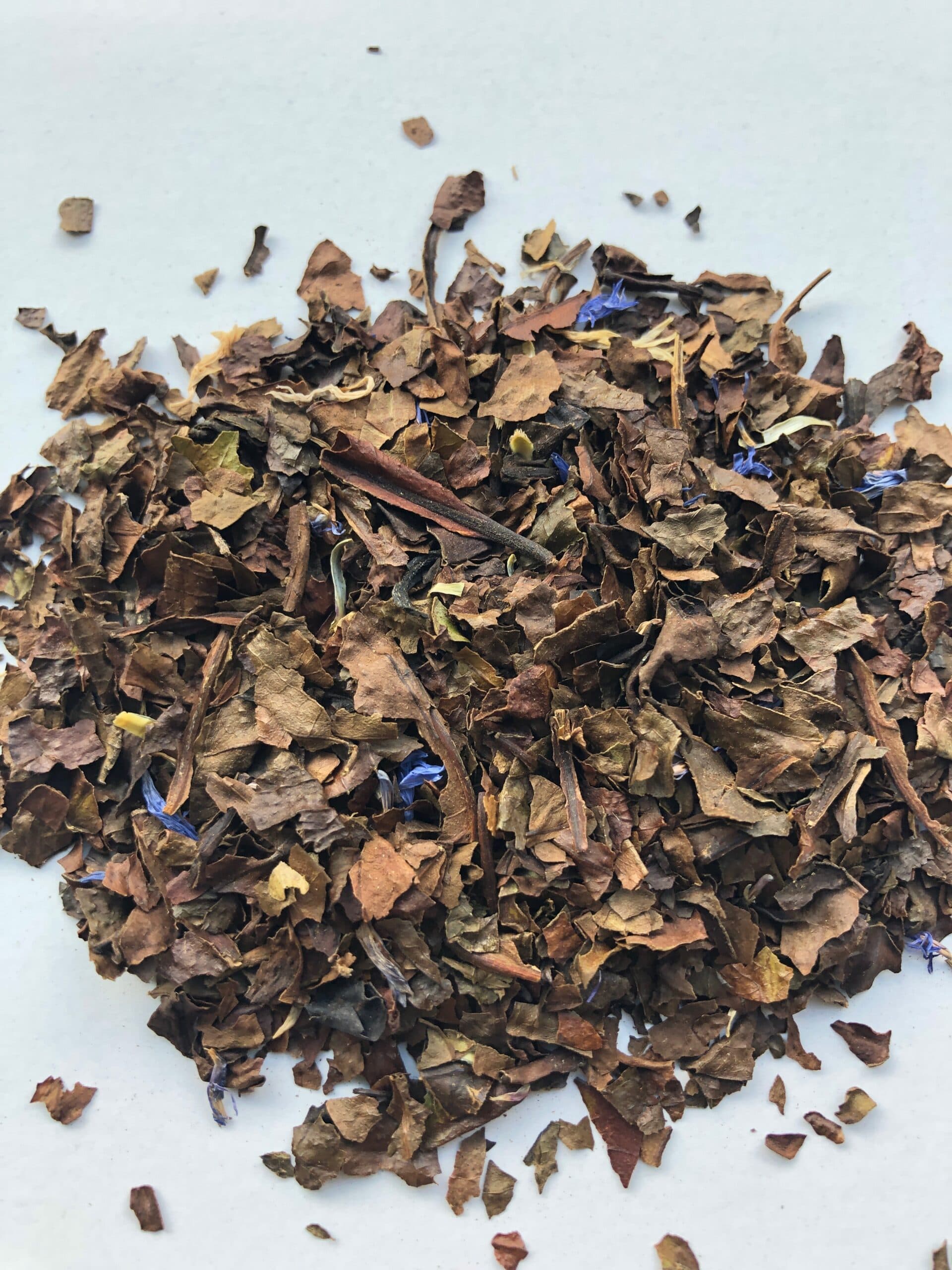
Rosehip's flavour is what draws people in first: tangy, almost sour, closer to cranberry or pomegranate than anything floral. This whole-cut version brews subtler than the cut-and-sifted kind, giving a pale peach liquor with an earthy-floral base, fruity undertones, and hints of rose, citrus, berries, and peach coming through the cup.
The rosehip itself is the fruit left behind once a rose's petals drop, sometimes called a haw, and it has a long history that has nothing to do with the flower's reputation for beauty. Indigenous peoples across the Americas gathered rosehips for their medicinal value, a practice mirrored in much of Europe and Asia. In Traditional Chinese Medicine, rosehip was used for kidney and urinary complaints, while Ayurvedic practice turned it into a tonic linked to mental clarity. Beyond medicine, rosehips have gone into jellies, jams, syrups, marmalades, breads, pies, and salads for centuries.
Their best-known moment came during the Second World War: with German blockades cutting off citrus imports to Britain, rosehips stepped in as a vitamin C source, brewed into tea and boiled down into syrup to guard against scurvy when other fruit was scarce. Whether that counts as helping win the war is a stretch, but it was a genuine boost to a country's health and spirits during rationing. The tea has long been credited with the same nutritional density that made it useful then, drawing on the vitamins, minerals, and antioxidants naturally present in the fruit.
Tea and Coffee recommends brewing with freshly boiled water for 10 to 15 minutes, longer than most herbal infusions need, and serving it straight, without milk.