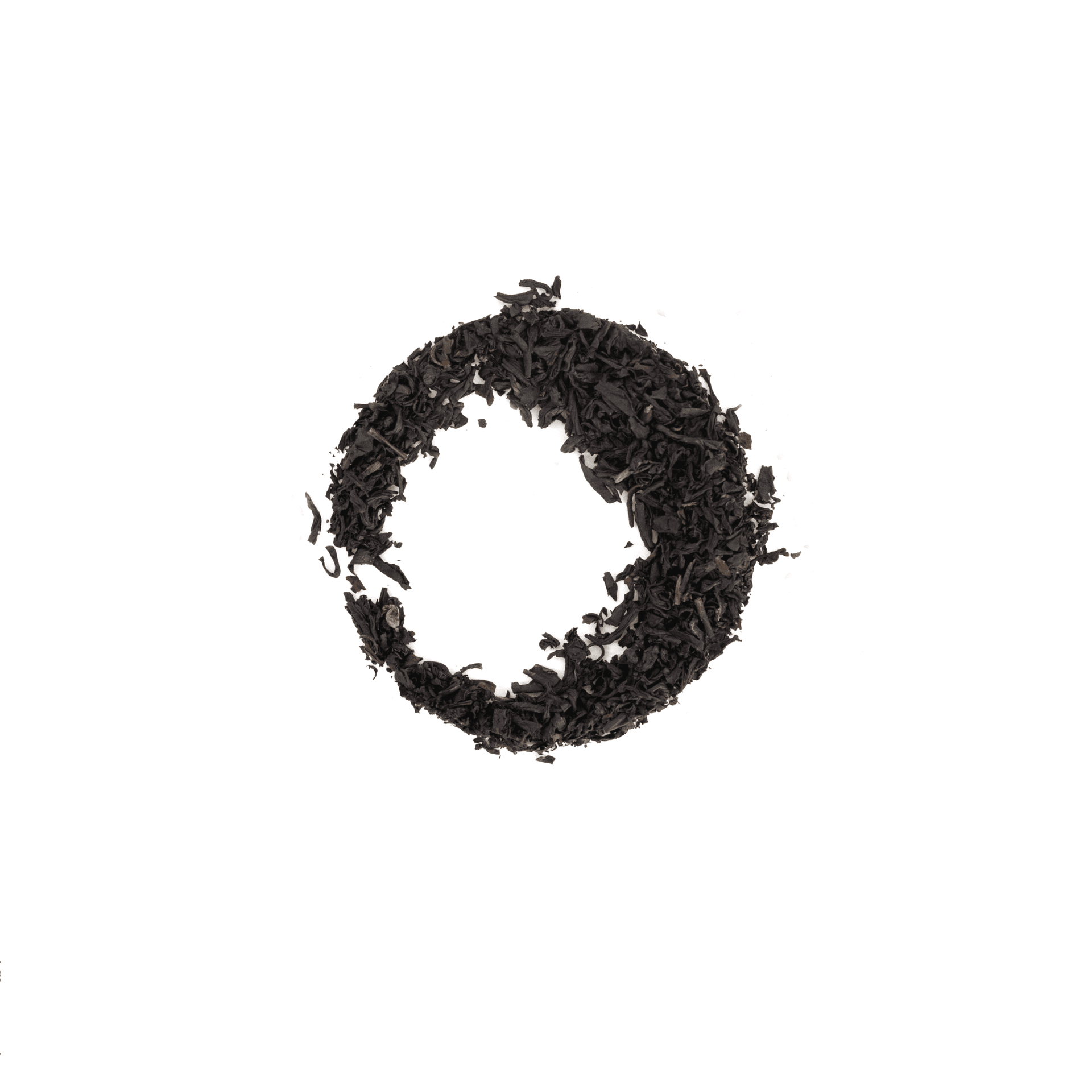
Chests of black tea travelling six thousand miles by camel, sometimes taking sixteen months to cross from China to Russia, picked up the scent of the caravan's campfires along the way, and that borrowed smokiness gave this blend its name. The tea itself is a mix of oolong, Keemun and Lapsang Souchong, and each does distinct work in the cup: Keemun brings a malty, honeyed sweetness, oolong adds a light tang, and the Lapsang Souchong contributes the tarry, campfire smoke that runs through the whole brew. The result pours dark and thick, with a lingering finish that holds the smoke without letting it dominate everything else.
The history behind it tracks the routes that carried it. In the eighteenth century the tea moved by caravan across some of the harshest terrain in Asia, reaching Russian aristocracy after a journey that could take well over a year. When the Trans-Siberian Railway opened in the nineteenth century, transport got faster and the tea reached far more drinkers across Russia and Europe, but the trade-off was less time near campfire smoke, and blends of the era leaned less heavily on Lapsang Souchong as a result. Its popularity dipped during the Soviet era, held back by political tension and economic strain, then picked back up once interest in traditional teas returned after the Soviet Union's collapse. It's now drunk well beyond Russia.
At home, a teaspoon of loose leaf per cup and water just off the boil, around 95 to 100 degrees Celsius, works well. Give it about four minutes to steep, then strain. It stands on its own, though milk, honey or sugar all suit it if you want to soften the smoke. Expect roughly 50 to 60 milligrams of caffeine per cup. Black tea of this kind has long been drunk as a support for digestion and general immunity, and some drinkers reach for it as part of a heart-healthy routine, though these are traditional uses rather than proven effects.