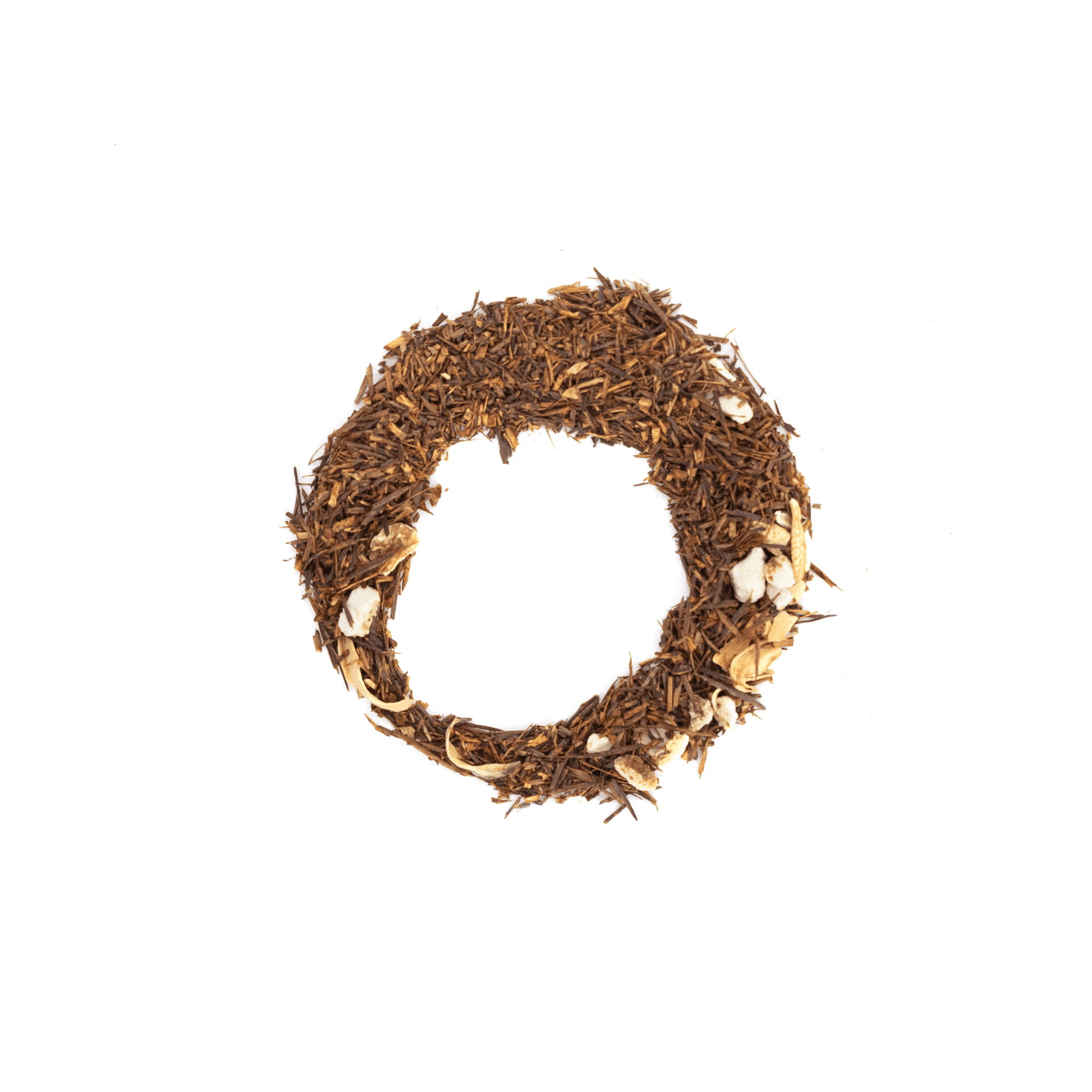
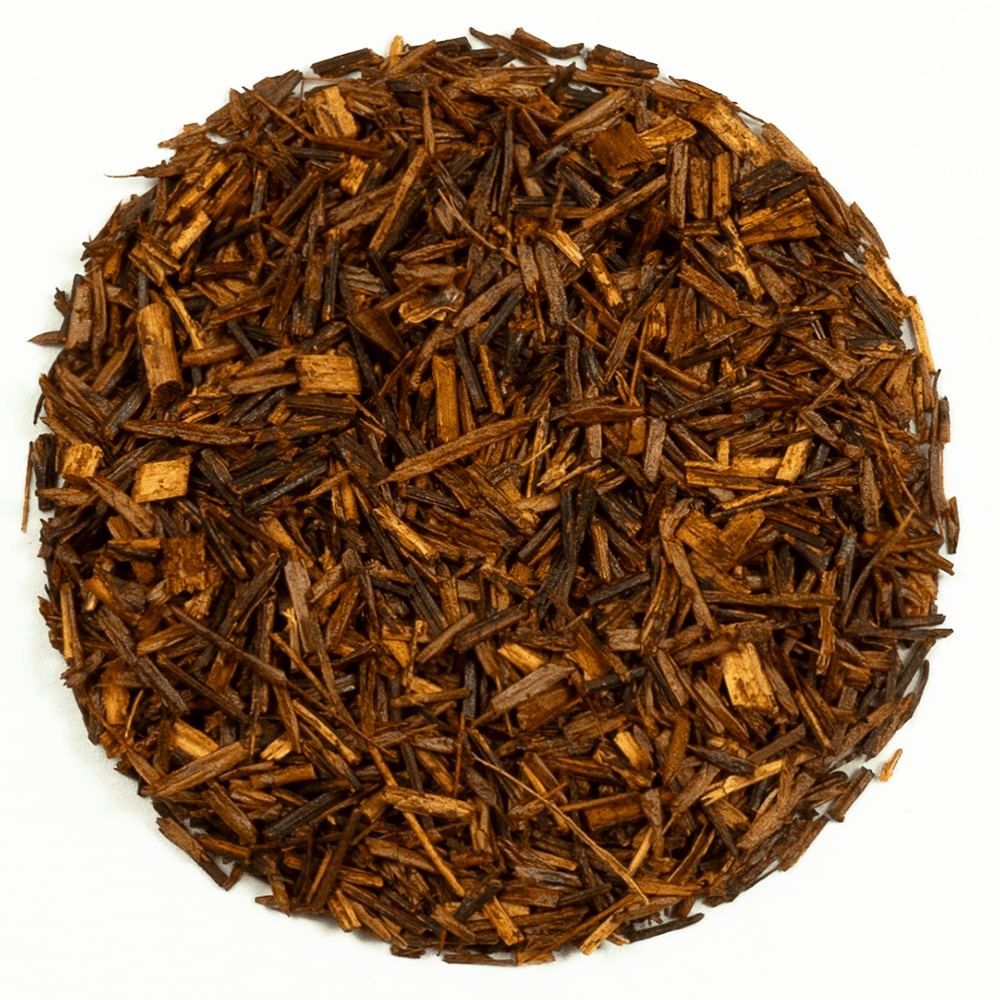
South Africa's Cederberg region, in the Western Cape, is the only place on earth where Aspalathus linearis, the rooibos plant, grows wild, and this blend layers blood orange on top of it. The cup comes out bold and citrusy, tart and herbaceous underneath, with tasting notes running from blood orange and lemon peel to a lingering honeyed sweetness against that familiar rooibos earthiness. It suits a hot cup through the colder months and works just as well iced in summer.
Rooibos goes by several other names, including redbush, bush tea and red tea, and comes in two unflavoured forms: red, which has been oxidised, and green, which keeps its natural structure. The Khoisan people of the region valued it for generations, though it only reached wider popularity from the 1960s, after a South African mother, Annique Theron, mixed it into her own milk to treat her 14-month-old daughter's colic, brought on by allergies. The child's symptoms reportedly cleared soon after, and the tea's reputation grew from there. Rooibos is related to honeybush tea, contains no caffeine, and is naturally low in tannins and high in antioxidants. People have long reached for it during allergy season too, an effect sometimes credited to its natural quercetin content, though that remains more folk wisdom than settled science.
Tea and Coffee Company, who supply this blend, pack it by hand to order. To brew, use about five grams of leaf per cup, pour water at a full boil, 100°C, over it, and let it steep for five to ten minutes, with the longer end drawing out more of the citrus. Serve it with honey or a slice of lemon, or drink it plain, no accompaniments needed.