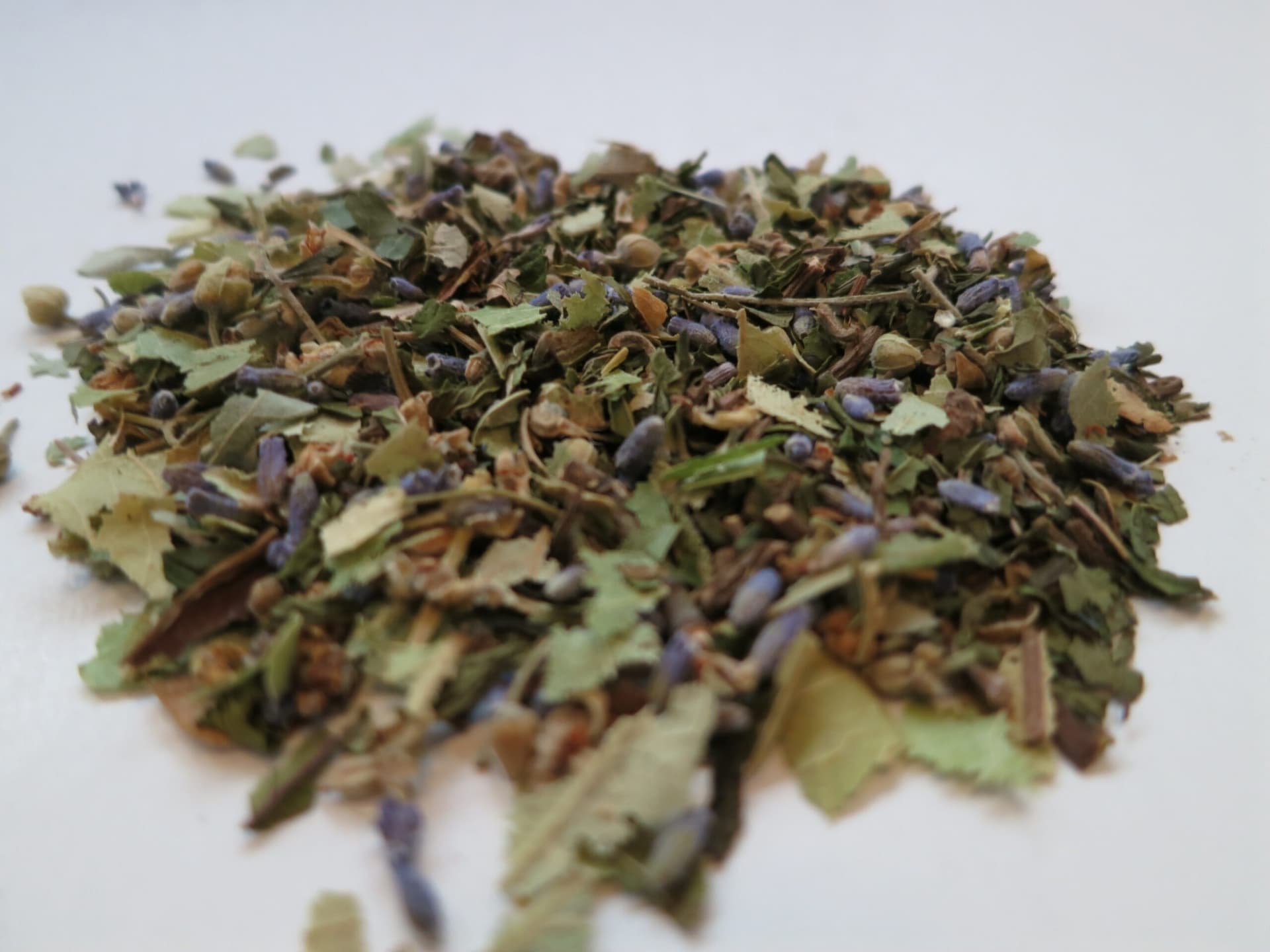
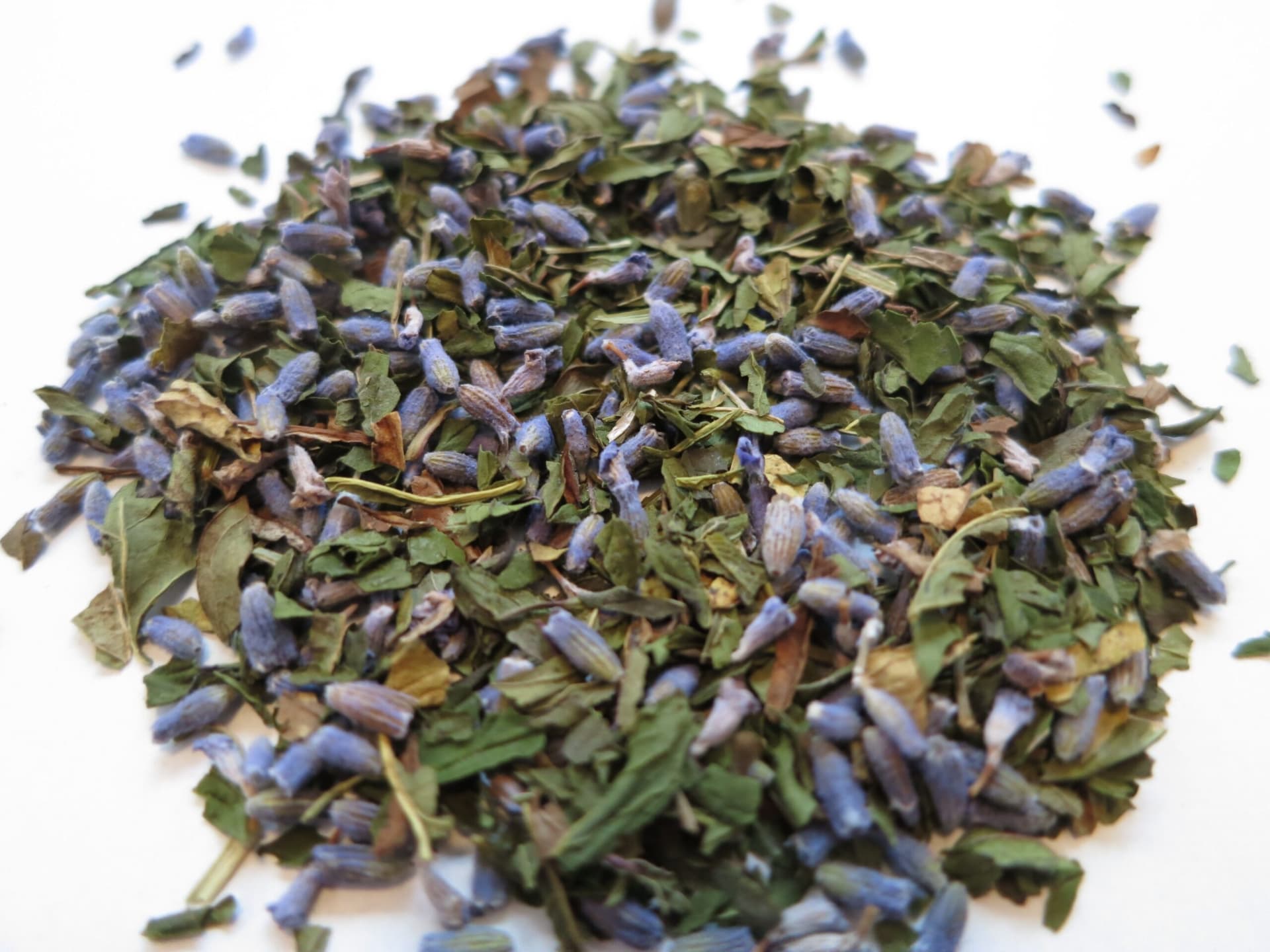
The scent hits before the taste does: dried buds of Lavandula angustifolia, once steeped, give off a fragrance stronger than most people expect from a tisane. Kent and Sussex Tea and Coffee Company packs it from the plant's slender purple flower heads. The species is native to the Mediterranean and North Africa, growing to about three feet on straight, branching stems, and it is technically a herbal infusion rather than tea proper, since no actual tea leaf is involved.
Lavender's history with tea runs long. People in the Mediterranean, the Middle East and India were working with the plant roughly 2500 years ago, and the ancient Egyptians pressed it into perfumes; traces of the scent have turned up in artefacts from Tutankhamun's tomb. Romans are thought to have carried it to Britain, where it was prized as a natural antiseptic and used on wounds. It settled into English gardens through the medieval period, crossed the Atlantic with colonists by the 1600s, and got a further boost in Britain when Queen Victoria took a liking to it during her reign. Aromatherapy has since made lavender's scent familiar well beyond the teapot.
In the cup, expect floral notes up front, woodiness underneath, a thread of honey sweetness, and hints of cream, butter, and even coffee, with a faint medicinal edge. Linalool and lavandulyl acetate are the compounds most often credited with lavender's calming character, and the tea has long been drunk in the evening as a way to wind down before sleep, or simply to ease tension after a long day. It is naturally caffeine-free, which suits that use.
To brew it, pour boiling water over one to two teaspoons of the dried buds and steep for five to ten minutes, using more petals if you want a stronger floral hit. A spoonful of honey rounds out the sweetness, and a splash of cream or butter cuts the bitterness while adding body and a softer texture. Serve it hot, or pour it over ice with a fresh lavender sprig for something to drink in the heat.