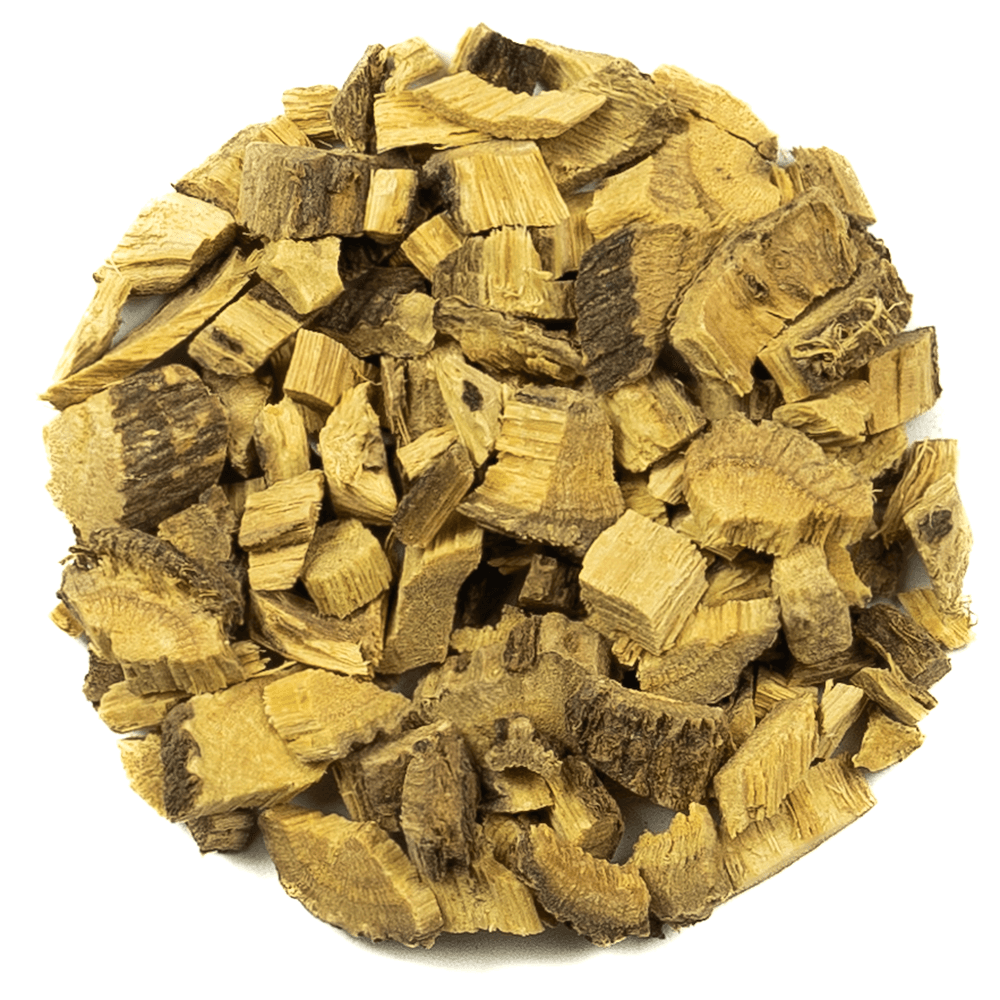
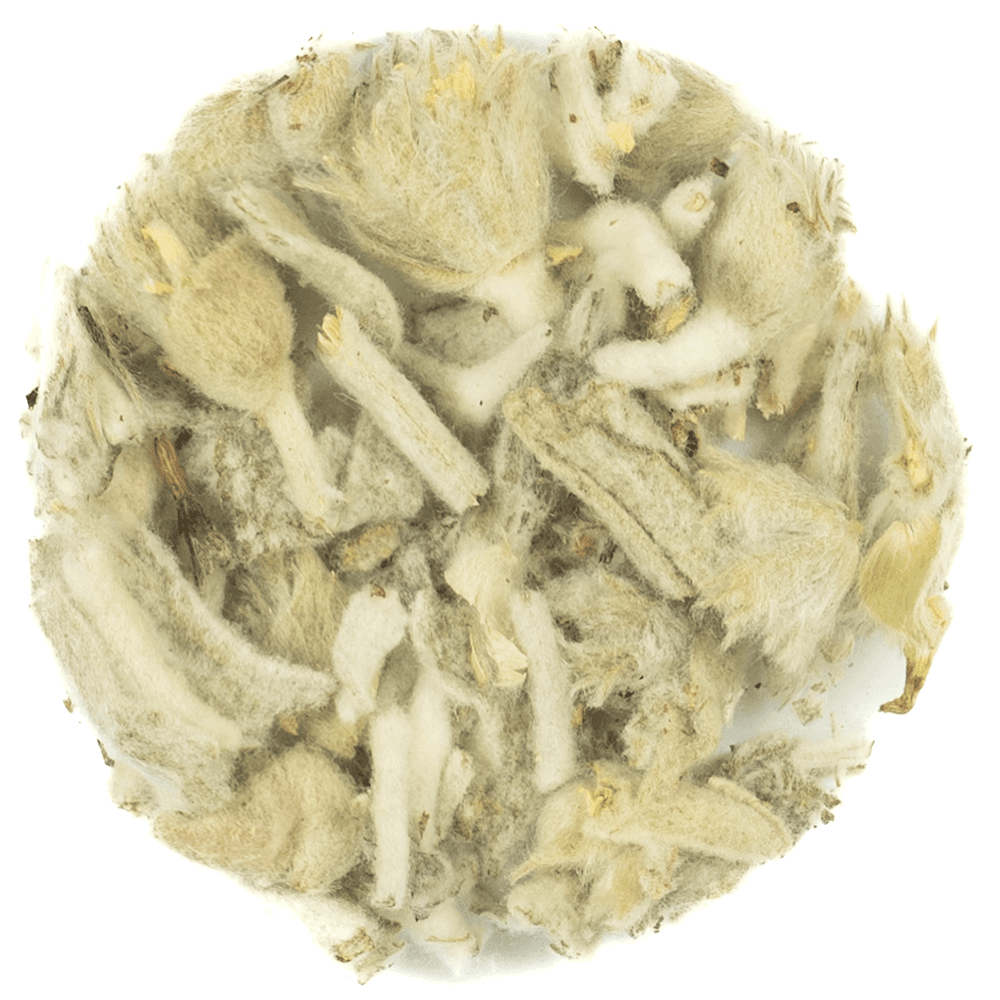
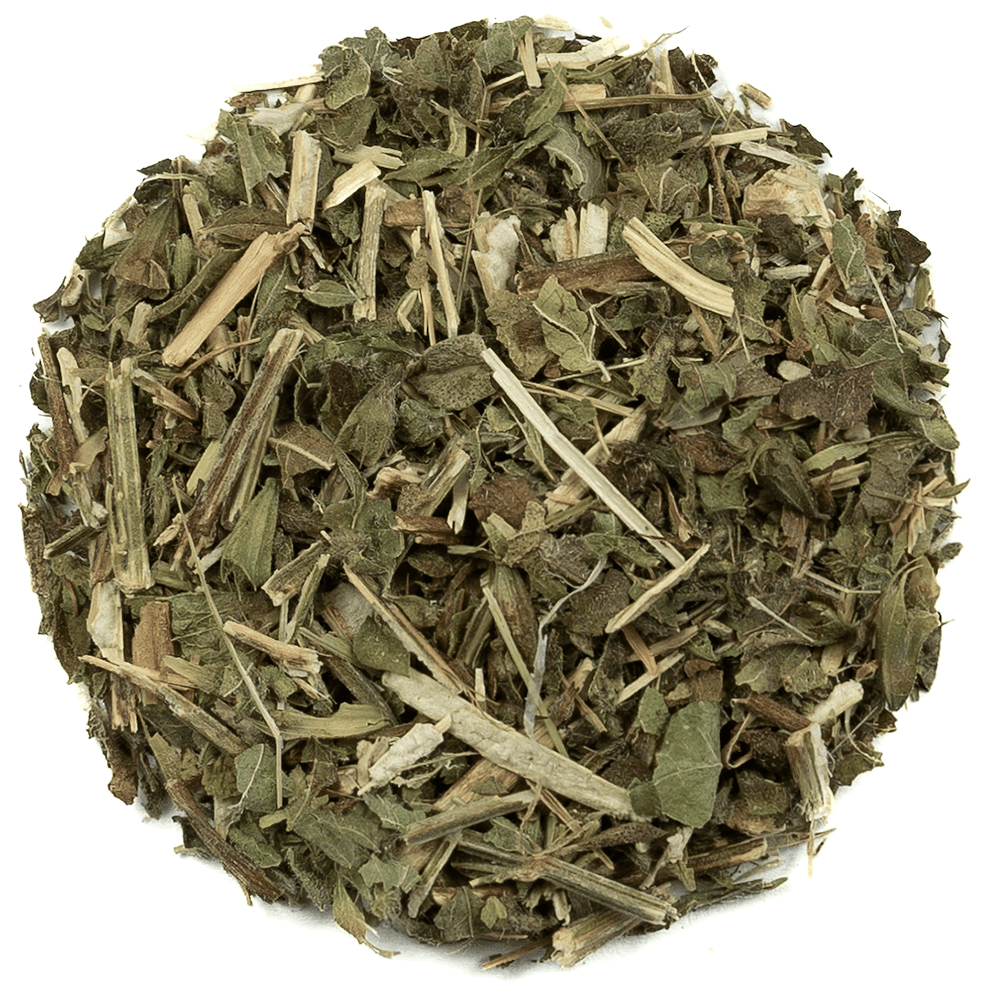
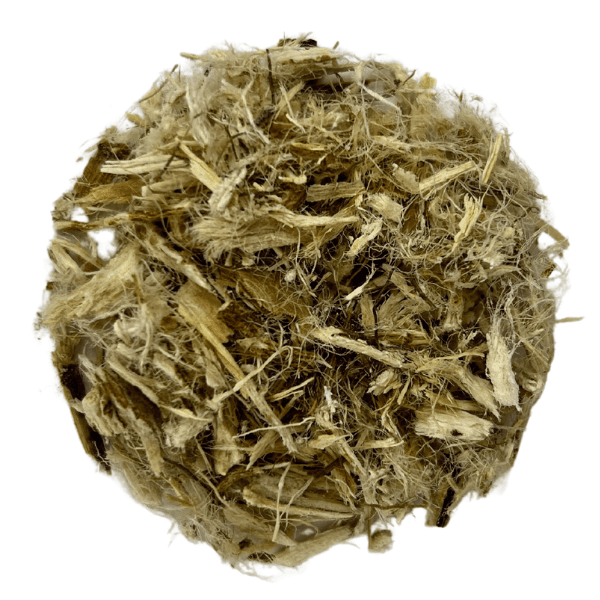
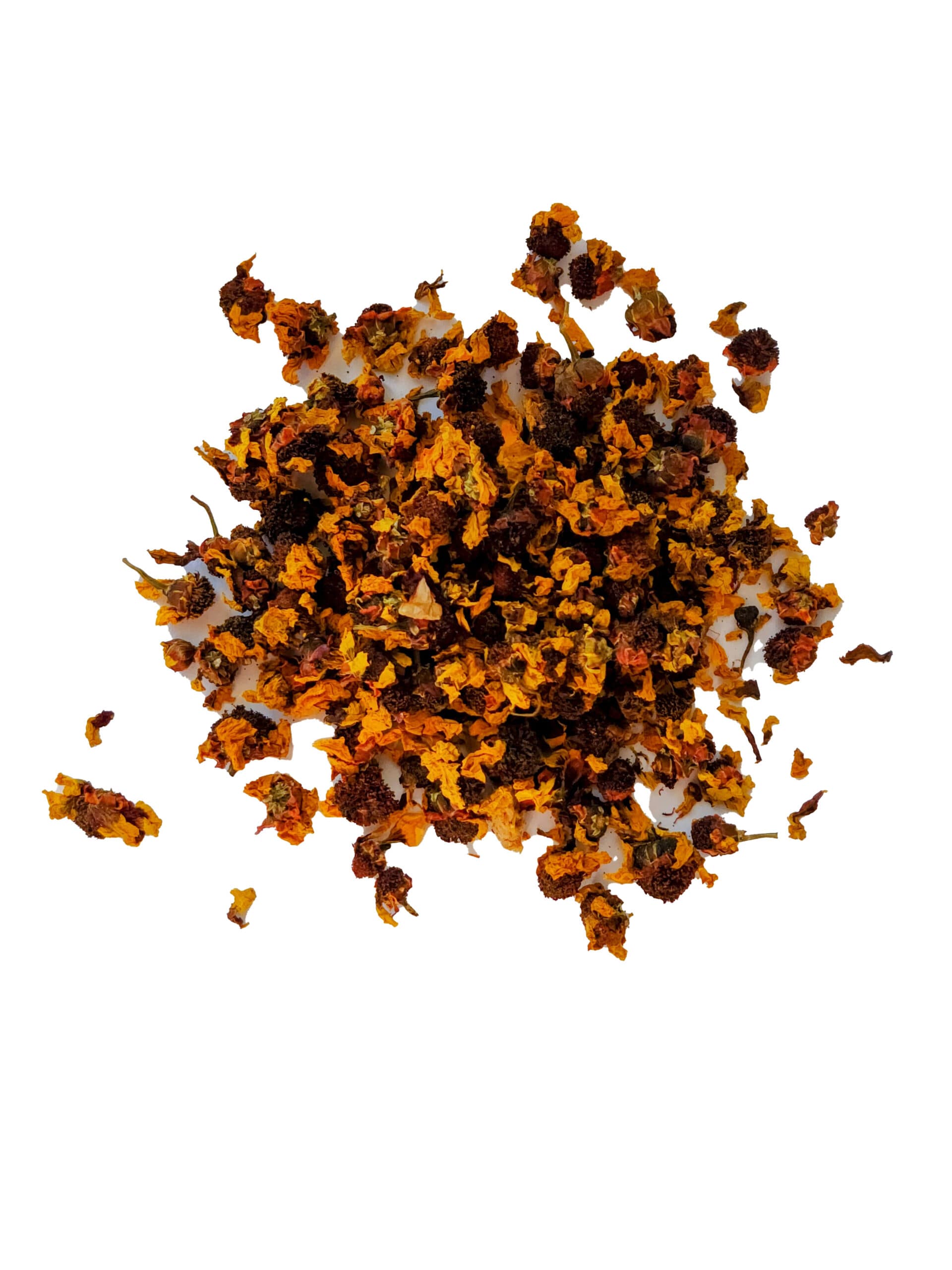
Mullein's charm as a tea is less about complexity than comfort: soft floral sweetness, a faint honeyed-hay aroma, and a smooth, silky texture that finishes gently rather than sharply. There's a touch of lemon brightness at the edges, and the overall effect is thick and soothing on the palate rather than brisk. It's naturally caffeine-free, which makes it as suited to a quiet evening as to any other time of day.
The plant behind it, Verbascum thapsus, is a tall, herbaceous member of the figwort family, easy to spot for its dense spikes of yellow flowers and velvety green leaves. It grows wild and abundantly across meadows, roadsides, and open forest edges throughout Europe, Asia, and North America, tolerant of poor soil as long as it gets sun and good drainage.
Mullein's use as a tea has old roots. The Greeks and Romans valued it medicinally, as did various North American tribes, who turned to it for breathing and skin complaints. It didn't really catch on as a drinking tea in Europe until the Middle Ages, when monks and herbalists began writing about it and brewing it in monasteries, particularly for lung and throat ailments. That reputation carried the plant into herbal medicine cabinets across Europe, Asia, and America, and it's still reached for today as a traditional remedy for the throat and lungs — especially the kind of thing people keep on hand during flu season, though that's a matter of tradition rather than proven fact.
To brew it, use freshly boiled water at 100°C over 1-2 teaspoons of dried leaf, and let it steep for a full 8 to 10 minutes — mullein needs the extra time to give up its flavor. Drink it plain, or add lemon or a little honey.