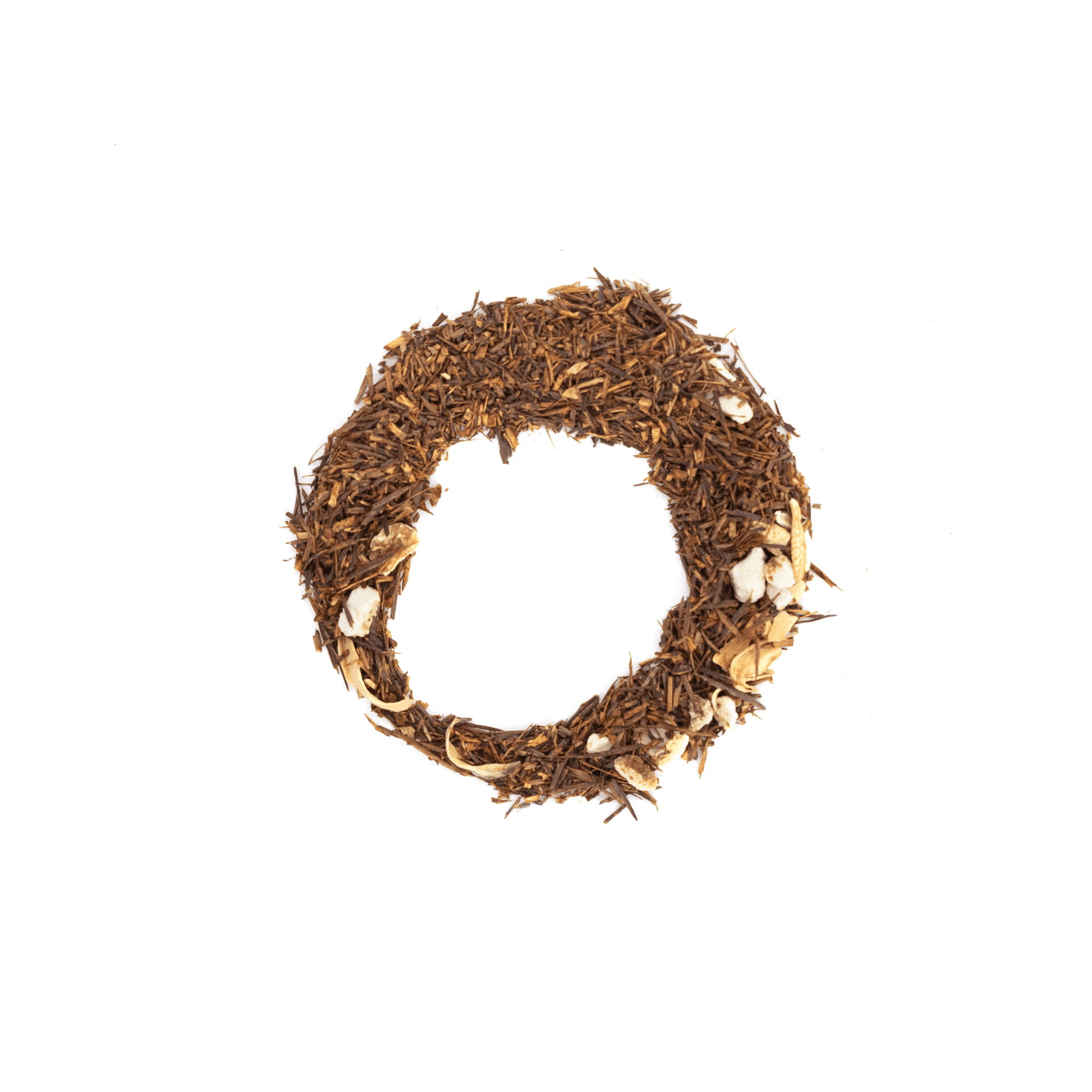
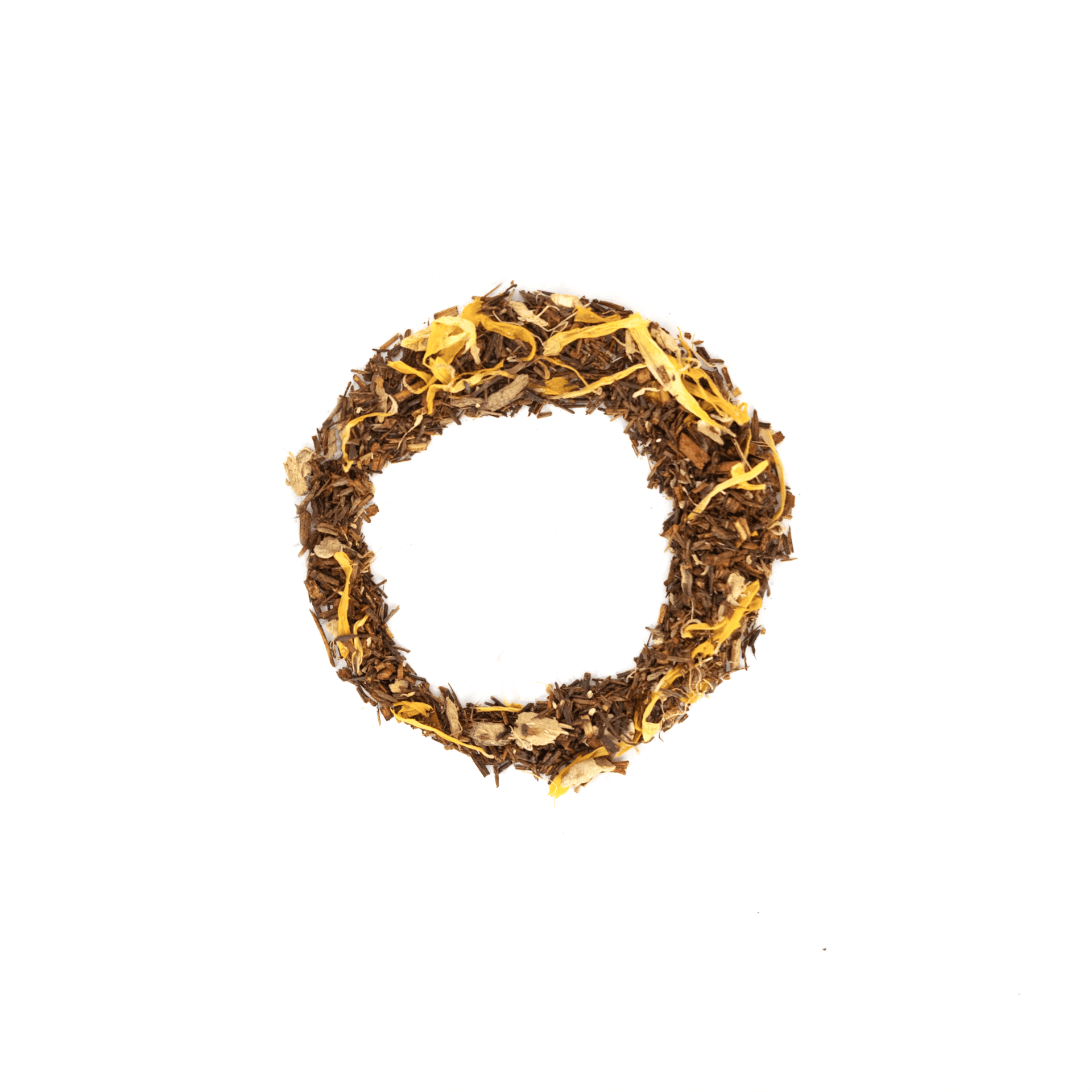
South Africa and Australia meet in this rooibos blend, where eucalyptus leaves are paired with dried Aspalathus linearis to produce a sharp menthol aroma running through soft peach and orange fruitiness. The tasting notes carry that same push and pull: citrus, lemon and honey sweetness working against cooling mint and eucalyptus, finishing clean and refreshing rather than sweet and heavy. In the cup it settles to a dark orange with coppery highlights, the kind of colour that tells you the rooibos base is doing most of the work.
Rooibos itself comes from the Cederberg region of South Africa, where the Khoisan people, the area's indigenous bushmen, brewed it for centuries. By the 18th century, European colonisation had pushed the Khoisan and their knowledge of the plant to the margins, and rooibos slipped toward obscurity. It might have stayed forgotten if the botanist Carl Humberg hadn't rediscovered it. The drink re-entered the market properly in 1904, when Benjamin Ginsberg, a Russian immigrant with ties to the tea trade, began marketing it as an alternative to conventional tea. Its standing grew further during the Second World War, when supply routes from Asia became unreliable and rooibos filled the gap left behind.
Being naturally caffeine-free, it suits the evening as easily as the morning, and it's traditionally been drunk to support relaxation and sleep, with a reputation for being rich in antioxidants. Tea & Coffee, who sell this blend as loose leaf, recommend infusing it in freshly boiled water, covered, for up to ten minutes. It stands on its own, though a spoon of honey or a squeeze of lemon rounds it out nicely, and it takes well to being served cold over ice through the warmer months.