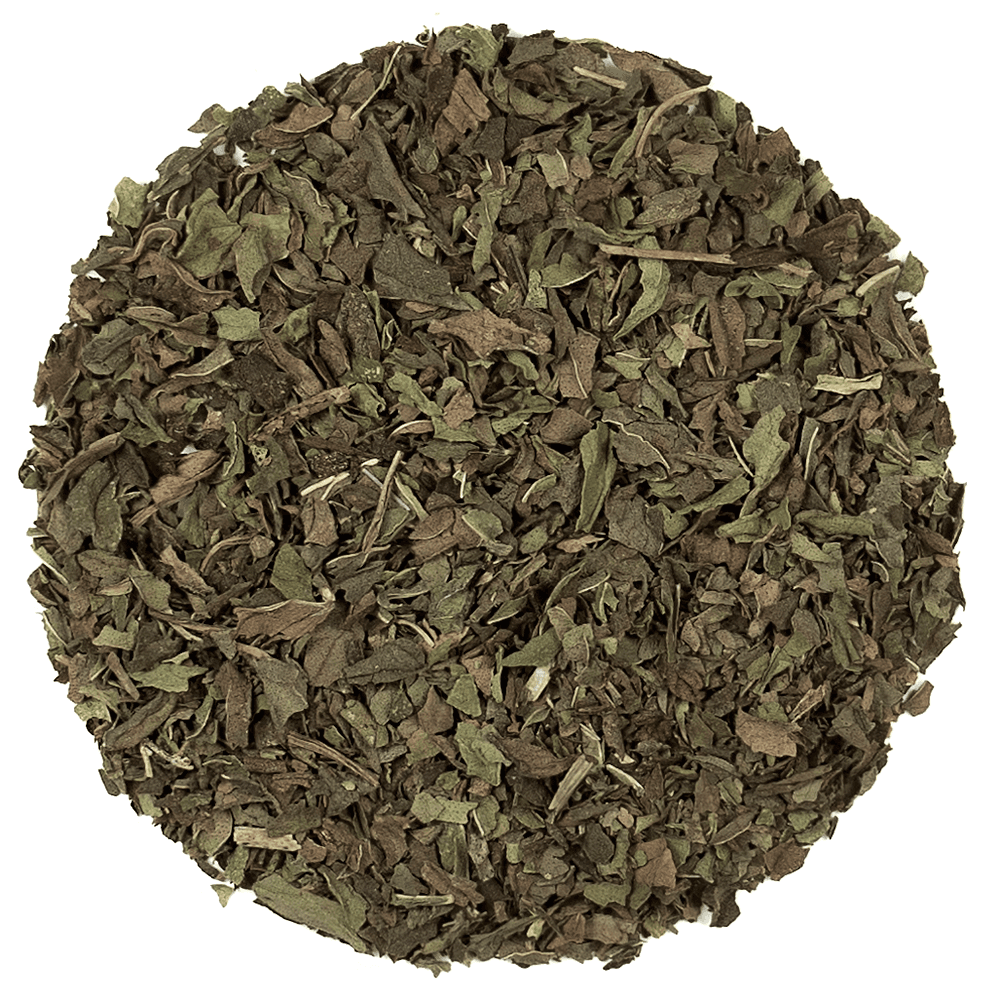
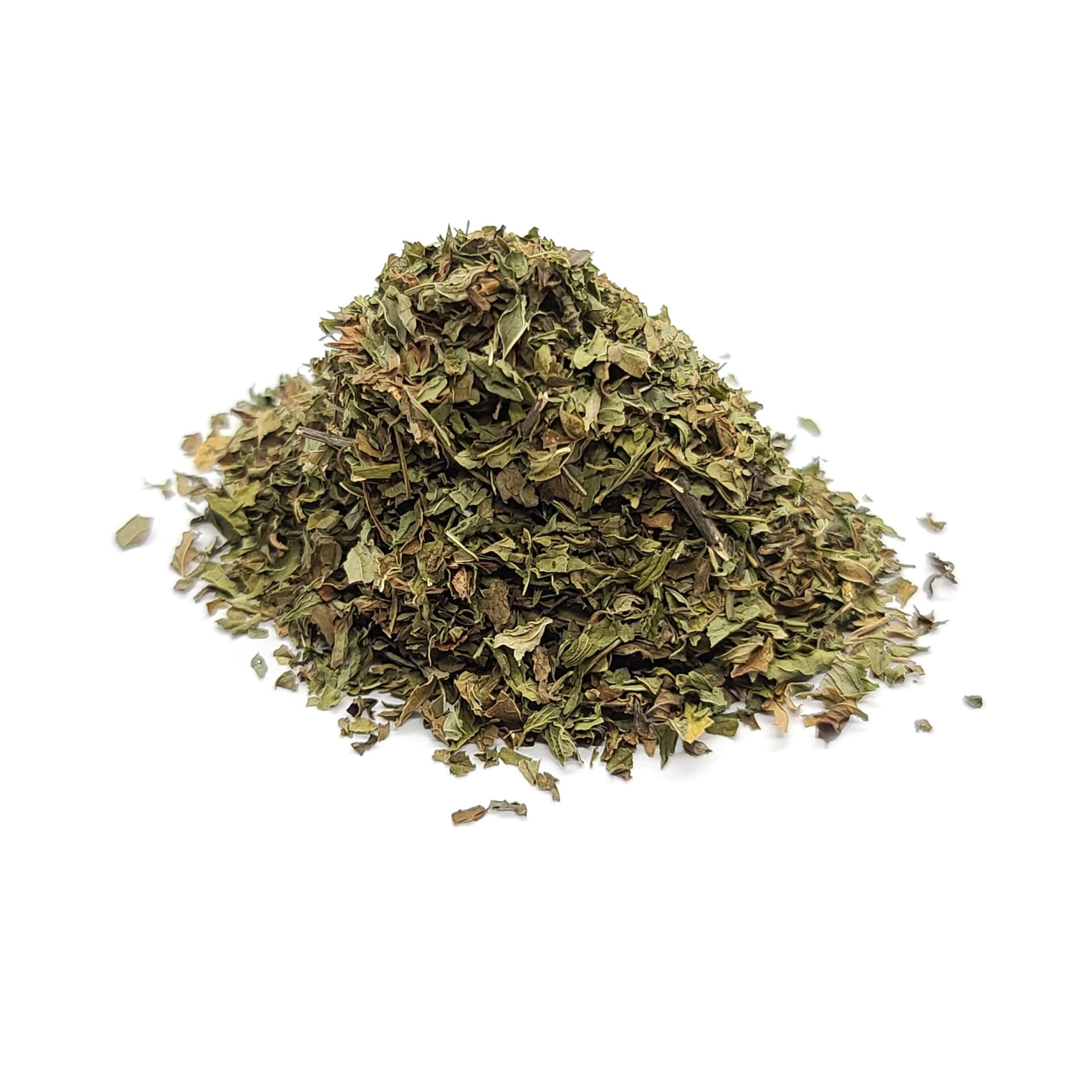
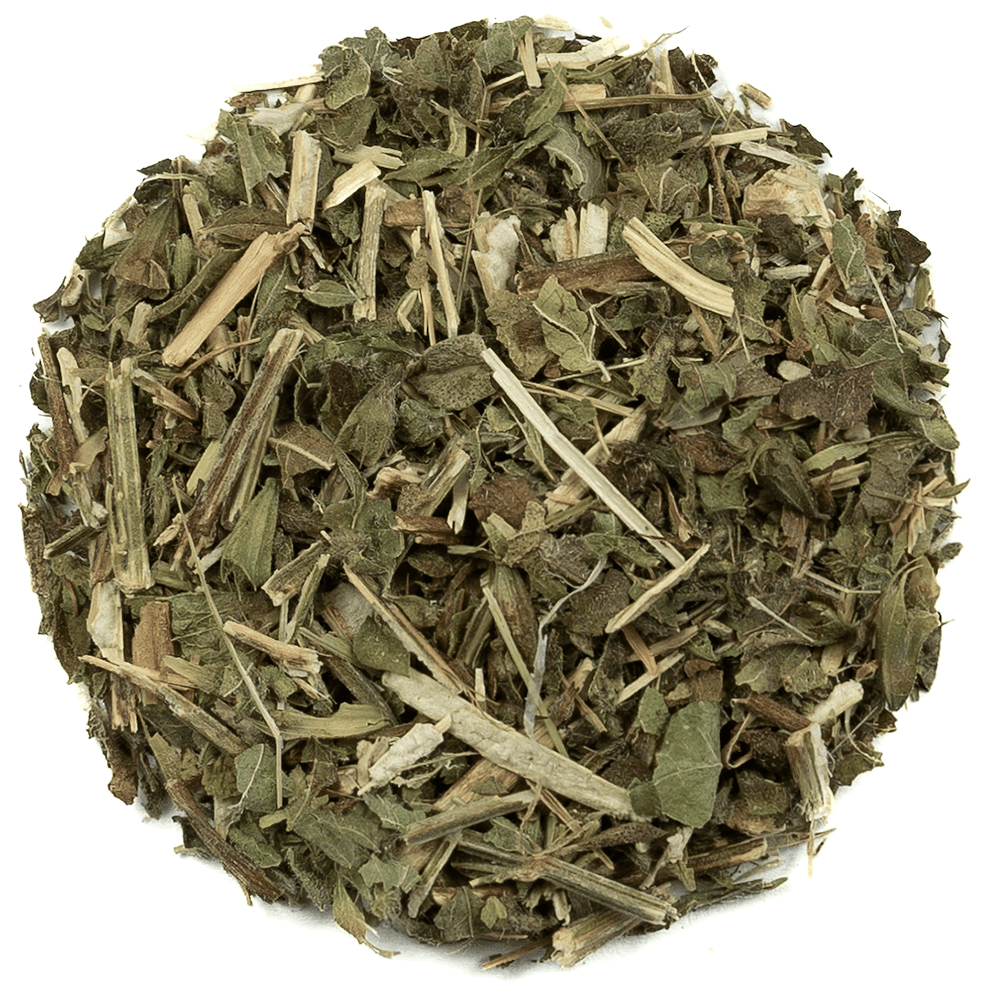
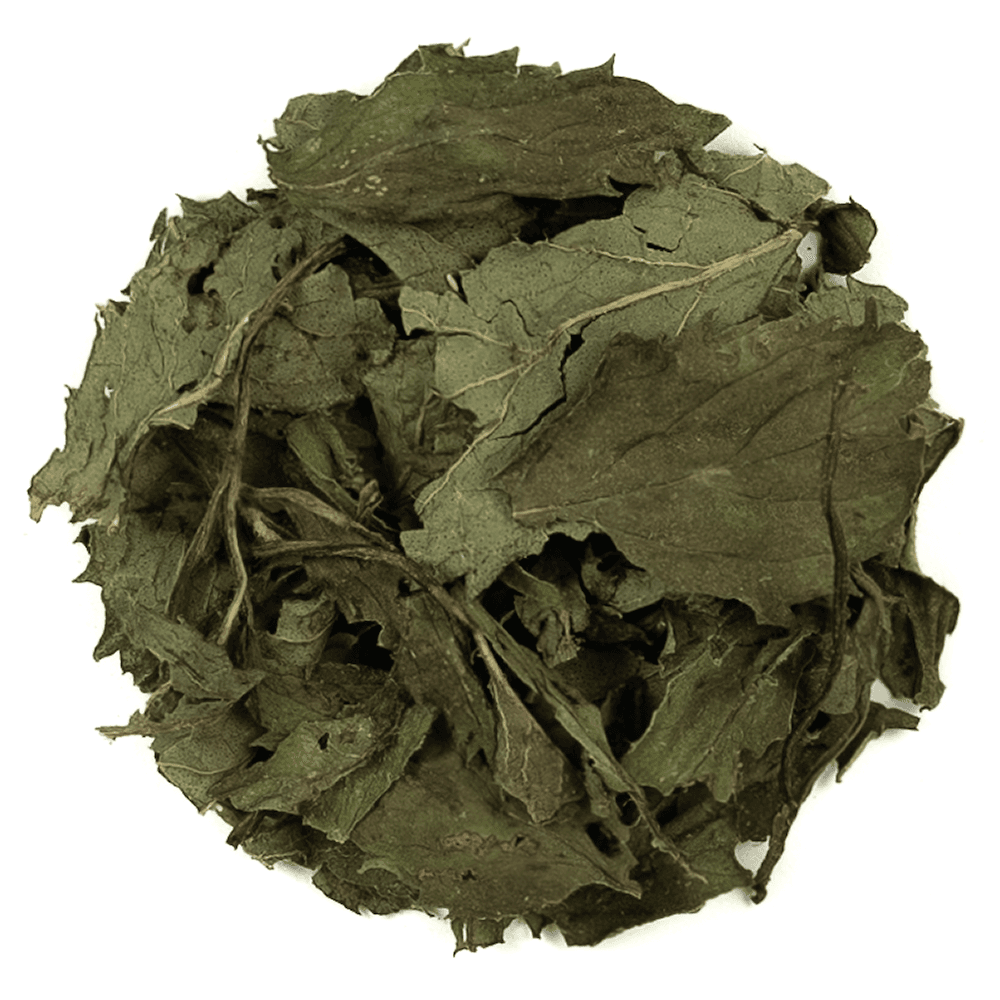
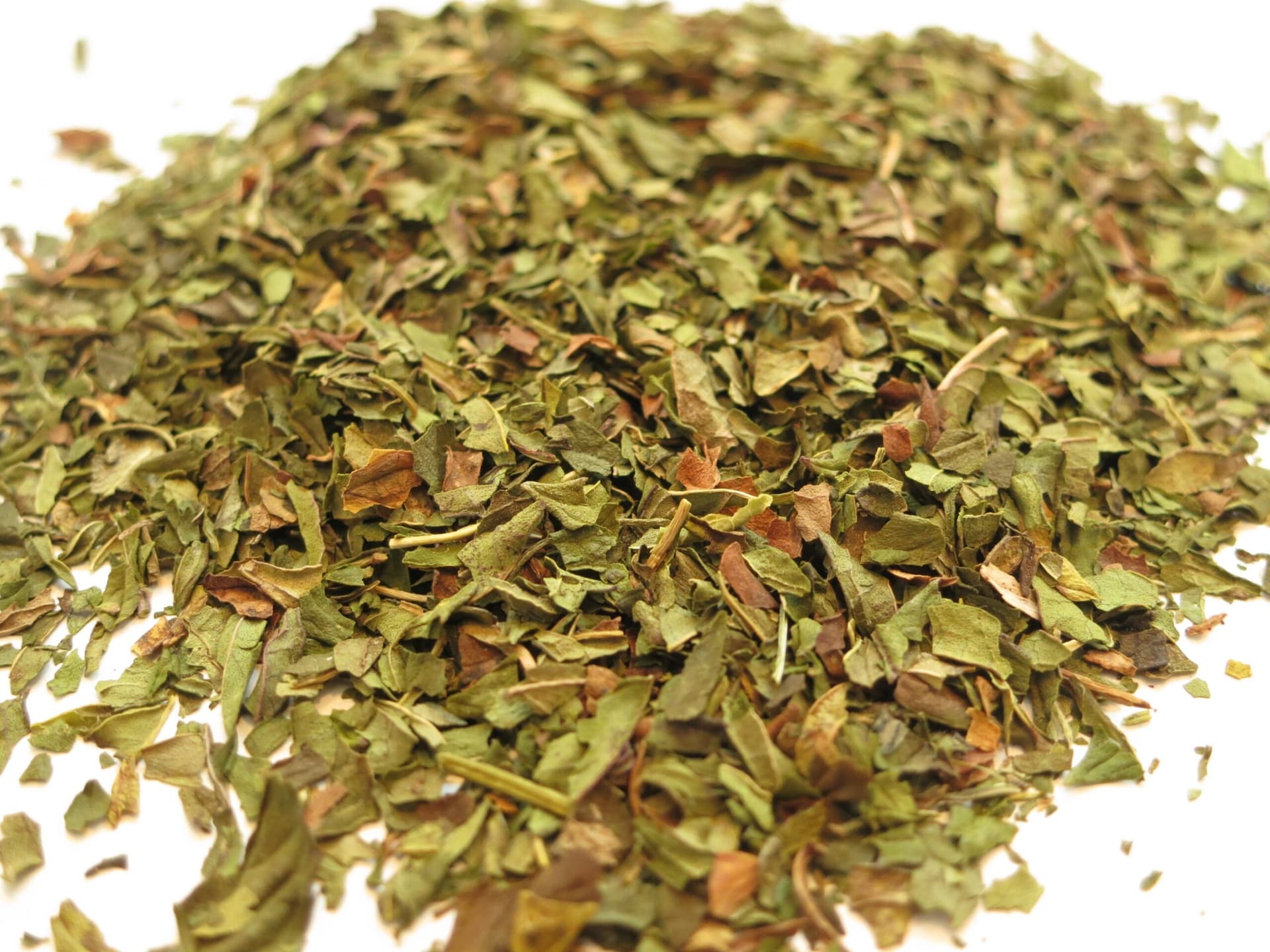
Peppermint gets its punch from menthol, and that's obvious the moment hot water hits the leaf: a cool, sharp aroma followed by a taste that's more medicinal than sweet, though a mellow honey-like note sits underneath the mint. The tasting profile runs from bright spearmint through true peppermint into something almost floral, with a trace of lemon on the finish. It's caffeine-free, which is part of why it's often reached for at night.
The plant behind it, Mentha piperita, is itself a hybrid of watermint and spearmint, native to Europe and the Middle East and now grown worldwide. It's a perennial with dark green leaves and purple flowers. People have been drying and steeping peppermint for a long time — leaves turned up in Egyptian pyramids, and the Greeks and Romans used it in wine and sauces as well as infusions. It stayed in use through medieval Europe for its soothing qualities, was under cultivation in Europe by the 1700s, and reached North America roughly a century after that. Traditionally it's been reached for to settle the stomach and ease a headache, though those are old habits rather than proven outcomes.
To brew it loose, use about a teaspoon per mug of freshly boiled water (100°C works well), then let it sit for five to ten minutes — longer if a stronger, more intense mint flavour is wanted. Strain before drinking. A little honey or a slice of lemon plays well against the menthol edge. Loose leaf gives more control over strength than a bagged version, since steeping time and quantity are both adjustable to taste.